

Key Takeaways
- A video of your cat coughing is the single most useful thing you can bring to the vet — it tells them more than any verbal description. Record one before your appointment.
- Chest X-rays are the most important diagnostic tool, but a normal X-ray does not rule out feline asthma. In early or mild cases, X-rays may look completely normal.
- Diagnosis is a process of elimination — your vet needs to rule out heartworm, lungworm, pneumonia, heart disease, and other conditions that mimic asthma symptoms.
- A bronchoalveolar lavage (BAL) can provide definitive evidence when X-rays and blood work are inconclusive, but it requires general anesthesia and is not a first-line test.
- The entire diagnostic process typically takes 1 to 3 weeks and costs $300 to $600 for a basic workup (exam, X-rays, blood work), with a BAL adding $200 to $500 if needed.
📖 The Complete Diagnosis & Monitoring Guide
This is the hub of our diagnosis cluster. The full diagnostic walkthrough is below — use this map to jump to specific questions about tests, vet visits, and at-home monitoring.
1. Before the Vet Visit
- Early Signs of Feline Asthma: What Owners Often Miss
- Feline Asthma vs. Hairball: How to Tell
- Why Does My Cat Cough After Running?
2. Conditions That Mimic Asthma (Rule-Outs)
- Feline Bronchitis vs. Asthma
- Cat Flu or Feline Asthma?
- Cat Sneezing? Guide to Feline Rhinitis
- Cat Cold & URI Home Treatment
3. At-Home Monitoring & Emergencies
- Why Is My Cat Breathing Fast While Sleeping?
- Cat Breathing Fast at Night
- Cat Gasping for Air? Emergency vs. Manageable
- Cat Asthma Attack: Emergency Response
4. After Diagnosis

Feline asthma is diagnosed through a combination of tests — expect a physical exam, chest X-rays (which reveal characteristic "donut-shaped" bronchi and overinflated lungs), blood and fecal panels to rule out heartworm and lungworm, and sometimes a bronchoalveolar lavage if initial results are inconclusive. Early diagnosis matters because each untreated episode causes airway remodeling — permanent damage that makes future attacks harder to control; once confirmed, most cats are managed long-term with daily inhaled corticosteroids through a Neobay spacer chamber with Visual Flow Indicator. Below: exactly what each test involves, what the results mean, and how to prepare so the vet visit produces a clear answer rather than more uncertainty.
What to Do Before the Vet Visit
A little preparation goes a long way. Before your appointment:
-
Record a video of your cat coughing. This is the single most useful thing you can bring. The posture, sound, and breathing pattern in a video tell your vet more than any verbal description. If you haven't caught a coughing episode on video yet, try to do so before the visit — even a short clip helps.
-
Write down the pattern. How often does your cat cough? Does it happen after exercise, eating, or exposure to dust or smoke? How long does each episode last? Does anything seem to trigger it?
-
List all medications and supplements your cat is currently taking, including flea and heartworm preventives.
-
Note any other symptoms — even ones that seem unrelated. Vomiting, sneezing, lethargy, weight loss, or changes in appetite can all be relevant.
Read more about the warning signs: Why Does My Cat Cough After Running or Playing?

Step 1: Physical Examination
Your vet will start with a thorough physical exam. This isn't just a formality — it provides critical clues.
What they're listening for:
- Wheezing or crackles when they listen to your cat's lungs with a stethoscope. Wheezing (a high-pitched whistling sound) suggests narrowed airways — a hallmark of asthma.
- Increased respiratory effort. If your cat is working harder than normal to breathe, even at rest, that's a significant finding.
- Heart sounds. Your vet needs to confirm the heart sounds normal, because heart disease can also cause coughing and breathing difficulty in cats. Distinguishing between the two is essential.
What they're looking for:
- Posture. A cat in respiratory distress may sit with their elbows out and neck extended — a position that maximizes airflow.
- Gum color. Pale or bluish gums suggest oxygen deprivation, which would indicate a more severe respiratory problem.
- Nasal discharge or eye inflammation. These could point toward upper respiratory infection rather than asthma.
The physical exam alone usually can't confirm asthma — but it can rule out several other conditions and tell your vet which tests to prioritize.

Step 2: Chest X-Rays (Radiographs)
If your vet suspects a respiratory problem, chest X-rays are almost always the next step. This is the most important single diagnostic tool for feline asthma.
What X-rays can reveal:
- Overinflated lungs. In asthmatic cats, the small airways are narrowed, which traps air inside the lungs. This makes the lungs appear larger and darker on the X-ray than normal. The diaphragm may also appear flattened.
- "Donut-shaped" bronchi. When the walls of the bronchi (the large airway tubes) thicken from chronic inflammation, they appear as ring-shaped or "donut" shadows on the X-ray. This is one of the most characteristic signs of feline asthma.
- Bronchial patterns. A diffuse "bronchial pattern" — where the branching airways are visible throughout the lung fields — is typical of asthma and other bronchial diseases.
What X-rays can rule out:
- Pneumonia (shows as white patches in the lungs)
- Pleural effusion (fluid in the chest cavity, which can compress the lungs)
- Heart enlargement (which would suggest heart disease rather than asthma)
- Tumors or masses in the chest
Important note: Not all asthmatic cats have abnormal X-rays. In early or mild cases, the X-ray may look completely normal. A normal X-ray does not rule out asthma — it just means your vet needs to look further.
Most cats tolerate X-rays well. The procedure itself takes only a few minutes, and sedation is usually not needed unless the cat is extremely stressed or in severe respiratory distress.
Step 3: Blood Work
Blood tests don't diagnose asthma directly, but they serve two important purposes: ruling out other conditions and providing supporting evidence.
Complete Blood Count (CBC):
- An elevated eosinophil count (a type of white blood cell) is common in cats with asthma. Eosinophils are associated with allergic and parasitic responses. While an elevated eosinophil count alone doesn't confirm asthma, it adds weight to the diagnosis when combined with other findings.
- However, a normal eosinophil count does not rule out asthma — many asthmatic cats have normal blood work.
Heartworm Antigen Test:
- Heartworm disease can cause coughing and breathing difficulty that looks almost identical to feline asthma. Because heartworm requires a completely different treatment approach, ruling it out is critical — especially in areas where heartworm is prevalent.
- Your vet may recommend a heartworm antigen test and an antibody test, since no single test catches all heartworm infections in cats.
Fecal Examination:
- Lungworm (Aelurostrongylus abstrusus) is a parasite that causes coughing and respiratory signs in cats. It's diagnosed through a fecal flotation test or a Baermann test. Like heartworm, lungworm requires anti-parasitic treatment, not asthma medication.
Learn more about what triggers these symptoms: Common Triggers That Make Your Cat's Asthma Worse
Step 4: Bronchoalveolar Lavage (BAL)
If X-rays and blood work are inconclusive — or if your vet wants to confirm the diagnosis with more certainty — they may recommend a bronchoalveolar lavage, or BAL.
What it is: A BAL is a procedure where a small amount of sterile saline is flushed into the lungs through a tube and then suctioned back out. The fluid collects cells from the lower airways and alveoli (air sacs), which are then examined under a microscope.
What it reveals:
- A high percentage of eosinophils in the BAL fluid strongly supports a diagnosis of feline asthma.
- The presence of bacteria, fungi, or parasites would point to an infection rather than asthma.
- Neutrophils (another type of white blood cell) in high numbers may suggest bronchitis or infection rather than pure asthma.
What to expect:
- The procedure requires general anesthesia or heavy sedation, because a tube needs to be passed into your cat's airway.
- It's generally safe, but does carry the usual risks associated with anesthesia — especially in a cat that already has compromised breathing.
- The procedure itself takes 15–30 minutes. Most cats recover quickly afterward.
Your vet will only recommend a BAL if the less invasive tests haven't provided a clear answer. It's not a first-line test, but it can be decisive when the diagnosis is uncertain.
Step 5: Additional Tests (When Needed)
Some cases require further investigation. Your vet may recommend one or more of these if the standard workup doesn't provide a clear diagnosis:
Tracheal Wash:
- Similar to a BAL but collects cells from the upper airways (trachea) rather than the lower airways. It's less invasive and doesn't always require general anesthesia — sometimes a mild sedative is enough. However, it provides less information about what's happening deep in the lungs.
CT Scan:
- A computed tomography (CT) scan provides a detailed 3D image of the lungs and airways. It can detect subtle changes that don't show up on regular X-rays — such as small areas of airway thickening or early-stage mucus plugging.
- CT scans require general anesthesia (the cat must hold completely still) and are more expensive than X-rays. They're typically reserved for complicated or unclear cases.
Response to Treatment (Therapeutic Trial):
- In some cases, when test results are ambiguous, your vet may recommend a therapeutic trial: starting your cat on asthma medication and monitoring their response. If the coughing resolves or significantly improves with inhaled corticosteroids and/or bronchodilators, that response itself becomes a diagnostic indicator.
- This approach is more common in mild or early cases where the risks of a BAL or CT scan may not be justified.
Allergy Testing:
- While allergy testing (intradermal skin testing or serum IgE testing) can identify specific allergens your cat reacts to, it's not typically used to diagnose asthma. Instead, it's sometimes used after diagnosis to identify triggers that could be reduced in your cat's environment.
Ruling Out Other Conditions
One of the most important parts of the diagnostic process is ruling out conditions that mimic feline asthma. These include:
| Condition | Key Difference | How It's Ruled Out |
|---|---|---|
| Heartworm disease | Similar coughing and wheezing | Heartworm antigen/antibody test |
| Lungworm | Similar coughing and respiratory signs | Fecal flotation or Baermann test |
| Bacterial pneumonia | Fever, productive cough, white patches on X-ray | X-ray, CBC, BAL culture |
| Heart disease | Heart enlargement, fluid in or around lungs | X-ray, cardiac ultrasound (echocardiogram) |
| Upper respiratory infection | Nasal discharge, sneezing, conjunctivitis | Physical exam, history |
| Foreign body in airway | Sudden onset, often one-sided | X-ray, bronchoscopy |
| Lung cancer | Mass visible on X-ray, weight loss | X-ray, CT scan, biopsy |
Getting the right diagnosis matters because the treatments for these conditions are completely different. Giving asthma medication to a cat with heartworm or pneumonia won't help — and could make things worse.

What Happens After Diagnosis
If your vet confirms feline asthma, the conversation shifts to treatment. The good news: feline asthma is very manageable. Most cats live full, normal lives with proper treatment.
The standard approach involves two types of inhaled medication:
- Rescue inhaler (albuterol/salbutamol): Opens the airways during an active coughing episode. Works within minutes. Not for daily use — only as needed.
- Controller inhaler (fluticasone): Reduces airway inflammation on an ongoing basis. Used daily to prevent attacks. Takes 1–2 weeks to reach full effect.
Both medications are delivered through a spacer chamber — a device that holds the medication so your cat can breathe it in slowly through a mask, instead of trying to coordinate a quick puff from an inhaler (which cats can't do).
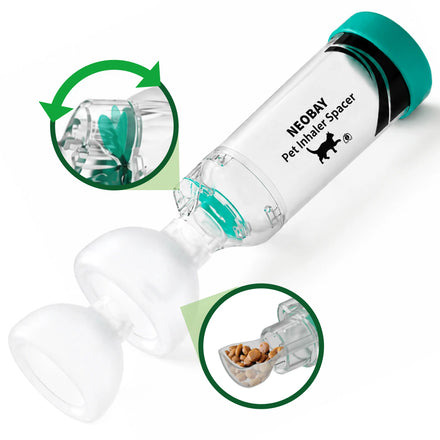
Neobay Cat Aerosol Chamber with Comfort Feeder — Green
- See each breath with the Breath Indicator
- Built-in treat holder makes mask practice easier
- Anti-static chamber helps keep medication airborne
This is where the design of the spacer matters. Two features make a real difference in whether treatment actually works in practice:
Visual Flow Indicator. You need to know your cat is actually breathing in the medication. A Visual Flow Indicator moves with each breath, giving you real-time confirmation. Without it, you're holding a mask on your cat's face and hoping for the best.
Comfort Feeder Design. The hardest part of inhaled treatment isn't the medication — it's getting your cat to accept the mask. A Comfort Feeder design holds a squeeze treat at the mask rim — your cat voluntarily presses their face in to reach the food, which reduces panic and resistance. This is especially critical during the first 1–2 weeks when your cat is learning the routine.
Read more about the treatment process: How to Administer Inhaled Medication Stress-Free
How to Prepare Your Cat for Vet Visits
Vet visits are stressful for most cats. A few practical steps can reduce that stress:
- Use a carrier your cat is already familiar with. Leave it out at home with a blanket inside so it's not associated only with vet trips.
- Cover the carrier with a towel during transport — this reduces visual stimuli that can cause anxiety.
- Ask your vet about anti-anxiety medication if your cat becomes extremely stressed. A small dose of gabapentin given 1–2 hours before the visit can make a significant difference.
- Schedule the appointment for a quiet time of day if possible — early morning or mid-afternoon are often less busy.
- Bring your cat's favorite treats. Positive associations help, even at the vet.
Related: Read our guide on why your vet may recommend inhaled over oral steroids — including the research on efficacy and side effects.
Frequently Asked Questions
How much does feline asthma diagnosis cost?
Costs vary by location and clinic, but a basic diagnostic workup (physical exam, chest X-rays, and blood work) typically ranges from $300–$600. A BAL adds $200–$500 depending on the clinic. CT scans are more expensive, often $500–$1,000 or more. Talk to your vet about costs upfront — they can often prioritize tests and stagger them over multiple visits if budget is a concern.
Can a vet diagnose asthma from just an X-ray?
An X-ray can provide strong evidence for asthma — especially if it shows the classic "donut" bronchi and overinflated lungs. But because other conditions can produce similar findings, most vets want to combine X-ray results with blood work and sometimes a BAL before making a definitive diagnosis. A therapeutic trial (response to medication) may also support the diagnosis.
What if my cat's X-rays are normal?
A normal X-ray does not rule out feline asthma. In early or mild cases, X-rays may look completely normal. If your vet still suspects asthma based on your cat's symptoms and physical exam, they may recommend a BAL, a therapeutic trial, or monitoring over time with repeat X-rays.
Is the BAL procedure safe?
BAL is generally safe when performed by an experienced veterinarian. It does require general anesthesia, which always carries some risk — especially for a cat with respiratory compromise. Your vet will assess whether the benefits of the procedure outweigh the risks for your specific cat. In most cases, the information gained from a BAL is well worth the small additional risk.
How long does the whole diagnostic process take?
A basic workup (physical exam, X-rays, blood work) can often be completed in a single visit — you may have results the same day or within 1–2 days. If a BAL is needed, it's usually scheduled as a separate procedure. The entire process from first suspicion to confirmed diagnosis typically takes 1–3 weeks, depending on how quickly you can schedule appointments and whether additional tests are needed.
Do I need to see a veterinary specialist?
Most general practice veterinarians can diagnose and manage feline asthma. However, if your cat's case is complicated — if the diagnosis is unclear after standard testing, if symptoms aren't responding to treatment, or if your cat has other health conditions — your vet may refer you to a board-certified veterinary internist or pulmonologist for further evaluation.
Related: How to Monitor Your Cat's Breathing Rate at Home — a step-by-step guide to checking your cat's respiratory rate, with normal vs. concerning ranges and a simple decision framework.
What to Do Next
If you suspect your cat has feline asthma, don't wait for the next coughing episode to take action.
- Record a video of your cat coughing the next time it happens. This is the most valuable piece of evidence you can bring to your vet.
- Schedule a vet visit. Mention your concerns about feline asthma specifically when you book — this helps the clinic allocate enough time and prepare for the necessary tests.
- Prepare your observations — frequency, triggers, duration, and any other symptoms you've noticed.
- If asthma is diagnosed, ask your vet about inhaled medication delivered through a spacer chamber. It's the safest, most effective long-term approach for most cats.
The Neobay Cat Aerosol Chamber is designed specifically for feline use, with a Visual Flow Indicator so you can confirm medication delivery and a Comfort Feeder design that helps cats accept the mask faster.
Have questions? Visit our FAQ page or contact us — we're here to help.
Sources: - Reinero CR. "Advances in the understanding of pathogenesis, and diagnostics and therapeutics for feline allergic asthma." The Veterinary Journal, 2011; 190(1): 28-33. - Padrid P. "Feline asthma. Diagnosis and treatment." Veterinary Clinics of North America: Small Animal Practice, 2000; 30(6): 1279-1293. - Cornell Feline Health Center. "Feline Asthma: What You Need to Know." Cornell University College of Veterinary Medicine. https://www.vet.cornell.edu/departments-centers-and-institutes/cornell-feline-health-center/health-information/feline-health-topics/feline-asthma-what-you-need-know - Ybarra WL, Johnson LR, Drazenovich TL. "Interpretation of multisegment bronchoalveolar lavage in cats (1/2001-1/2011)." Journal of Veterinary Internal Medicine, 2012; 26(6): 1281-1287. - Traversa D, Di Cesare A. "Feline lungworms: what a dilemma." Trends in Parasitology, 2013; 29(9): 423-430.


