

Key Takeaways
- Normal resting breathing rate for cats is 15-30 breaths per minute. Anything consistently above 30 while sleeping warrants attention. Above 40 at rest means call your vet today.
- Count when your cat is truly asleep — not purring, not dreaming, not just settled. Purring masks the natural breathing rhythm and gives you a falsely high count.
- One breath = one full rise and fall of the chest. Count for 30 seconds and multiply by 2. Do this 2-3 times per session and take the average.
- An upward trend over 3-5 days is more significant than a single high reading. One high count after playtime is normal. A sleeping rate that climbs from 18 to 28 over a week is an early warning signal.
- For asthmatic cats, breathing rate is often the first sign a flare-up is coming — before coughing or wheezing appear. Weekly monitoring gives you a head start on adjusting treatment.
Your cat is lying on the couch, fast asleep. You glance over and notice their sides moving a little faster than usual. Is that normal? Should you be worried?
Learning to check your cat's breathing rate at home is one of the simplest, most underrated monitoring tools you have. It takes 60 seconds, costs nothing, and can catch problems — asthma flares, heart issues, respiratory infections — days before visible symptoms show up.
Here's exactly how to do it, what the numbers mean, and when to act.
Why Breathing Rate Matters
A cat's resting breathing rate is remarkably consistent. Unlike heart rate, which jumps around with excitement or stress, the respiratory rate during deep sleep stays within a narrow band. When it starts creeping up, something is forcing the lungs to work harder — inflammation, fluid, airway constriction, or pain.
For cats with asthma, this is the earliest warning system you have. Airway inflammation builds gradually. By the time your cat coughs or wheezes, the inflammation has been simmering for days. But the breathing rate starts climbing much earlier. Catch it at 28 breaths per minute instead of 22, and you can increase the inhaler dose or schedule a vet visit before it becomes an emergency.
For cats with heart disease or at risk of congestive heart failure, the sleeping respiratory rate is the single most reliable at-home monitoring tool. VCA and veterinary cardiologists use it as a standard discharge instruction for cardiac patients.

What's Normal: The Numbers
| Breathing Rate (sleeping) | What It Means |
|---|---|
| 15-24 breaths/min | Normal, healthy resting rate |
| 25-30 breaths/min | Upper end of normal — note and recheck in a few days |
| 31-40 breaths/min | Consistently higher-than-normal — call your vet within 24-48 hours |
| 40+ breaths/min at rest | Urgent — same-day vet visit |
| Any rate + open-mouth breathing, abdominal effort, or blue gums | Emergency — go now |
These ranges apply to cats at rest or sleeping. An awake cat watching birds through the window will naturally breathe faster. The key is: count when they're truly asleep.
One important note: kittens breathe faster than adult cats (20-40 breaths per minute is normal for them). These adult ranges apply to cats over 1 year old.
Step-by-Step: How to Count
Step 1: Wait for deep sleep. Not "settled." Not "resting with eyes half-open." Your cat should be fully conked out — sprawled on their side, twitching whiskers, the works. Avoid counting during REM sleep (twitching, eye movement), as breathing becomes irregular during dreams.
Step 2: Watch the chest or belly. Each rise AND fall together = one breath. Don't count the rise and fall separately. If you're unsure, watch for a few cycles first to get the rhythm.
Step 3: Count for 30 seconds. Use your phone's timer or a watch with a second hand. Count each complete breath cycle. Multiply by 2 for breaths per minute. If you have time, count a full 60 seconds for maximum accuracy.
Step 4: Repeat and average. Take 2-3 readings in the same session. If you get 26, 24, and 22 — your cat is at 24, which is fine. One outlier doesn't matter.
Step 5: Write it down. A note on your phone or a mark on the calendar. The trend over time is what tells you something is changing.

Troubleshooting: When the Count Isn't Working
Cat won't sleep when you're watching. Don't stare directly at them. Sit nearby and count from the corner of your eye, or take a video with your phone and count later.
Cat is purring. Purring disrupts the natural breathing rhythm and will give you a falsely high count. Wait until they stop purring, or gently stroke a spot that makes them pause (often under the chin).
You can't see the chest move. Watch the belly instead — it's often more visible, especially in fluffy cats. In low light, the silhouette against a lighter surface helps.
Cat wakes up every time you get close. Count from across the room. If you can see their sides moving, you can count. You don't need to be next to them.
When to Worry: The Decision Framework
Ask yourself three questions after each count:
- Is the number above 30? If yes, repeat the count in 30 minutes. Still above 30 → call your vet.
- Is there an upward trend? If the rate was 20 last week, 24 three days ago, and 29 today — that's a pattern. Your cat's lungs are working harder. Call your vet before visible symptoms appear.
- Are there other signs? Coughing, wheezing, labored breathing, decreased appetite, hiding, or restlessness during sleep — any of these plus a high resting rate = same-day vet visit.
Red flags that override the numbers: open-mouth breathing (cats are obligate nose-breathers — mouth breathing always means distress), abdominal effort (belly heaving), extended neck posture, blue or pale gums. Do not wait. Go to the emergency vet.
Breathing Rate and Asthma Management
If your cat has diagnosed asthma, track their breathing rate once a week at minimum. Twice a week is better during pollen season, after medication changes, or when you notice any subtle behavior shifts.
A rate that climbs from the low 20s to the high 20s over two weeks, without coughing, is still actionable. It suggests the current inhaled steroid dose may be losing effectiveness. Talk to your vet about whether a dose adjustment is appropriate before you're dealing with a full-blown attack.
For cats on inhaled medication delivered through a spacer, consistent breathing rate monitoring also confirms whether the medication is getting into the lungs effectively. If the rate isn't improving after starting inhaler therapy, technique or dose may need adjustment.
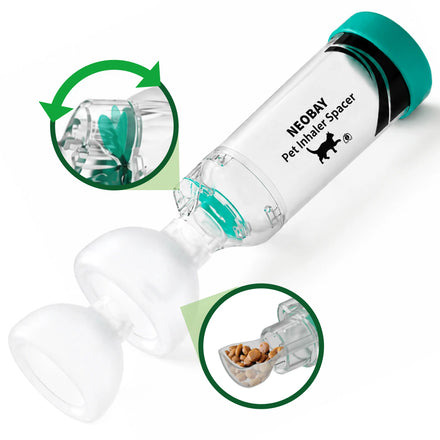
Neobay Cat Aerosol Chamber with Comfort Feeder — Green
- See each breath with the Flow Indicator
- Built-in treat holder makes mask practice easier
- Anti-static chamber helps keep medication airborne
Frequently Asked Questions
How often should I check my cat's breathing rate?
For healthy cats, once a month is fine to establish a baseline. For cats with asthma, once a week minimum. For cats with both asthma and heart disease, every 2-3 days is recommended.
My cat's rate was 32 while sleeping but they seem fine. Should I panic?
Don't panic. One slightly high reading means recheck in 30 minutes and again the next day. An isolated 32 could be a warm room, a full stomach, or an active dream. What matters is whether it stays high on repeat checks.
Do I count when my cat is purring?
No. Purring masks the natural breathing pattern and almost always raises the count. Wait for a non-purring moment, or count between purr cycles if your cat purrs in bursts.
What's the difference between panting and fast breathing?
Panting is open-mouth, shallow, rapid breathing — usually with the tongue out. Fast breathing (tachypnea) is closed-mouth but rapid. Panting in cats is always abnormal (unlike dogs) and requires immediate vet attention. Fast breathing at rest is concerning but slightly less urgent than panting.
Can I use a phone app to count my cat's breathing rate?
Yes. Apps like Cardalis and Cat Breath Monitor use your phone's camera or manual tap-to-count to record respiratory rate. They're not more accurate than counting by eye, but they make tracking trends over time easier by storing a history. Manual counting with a notepad works just as well.
What to Do Next
- Tonight: count your cat's sleeping breathing rate. Write down the number. That's your baseline.
- Track for one week: check 3-4 times to establish your cat's personal normal range. Most cats settle between 18-24.
- Keep a simple log: date, time, breaths per minute, any notes (weather, activity level, medication changes). A phone note is enough.
- If your cat has asthma: share your log at the next vet visit. Objective data beats "I think they're breathing a little faster lately."
Consistent monitoring turns vague worry into actionable information. Knowing your cat's normal breathing rate — and catching changes early — is one of the most effective things you can do between vet visits.
Need an inhaler spacer for your cat's medication? Neobay's aerosol chamber includes a visual flow indicator so you can count breaths during treatment as well as during sleep.
Related Reading
This article is part of our How Vets Diagnose Feline Asthma — a complete guide to diagnostic tests, x-rays, and what to expect at the vet's office.
Sources:
- VCA Animal Hospitals. "Home Breathing Rate Evaluation."
- Cat Specialist Services. "Checking a Resting Breathing Rate in Your Cat."
- Quimby J, et al. "Respiratory rate of clinically healthy cats measured in veterinary consultation rooms." *Veterinary Record*, 2018.
- Feline Asthma Support Community (groups.io). Owner-reported monitoring experiences and best practices.


