

Key Takeaways
- A cat's normal sleeping breathing rate is 15-30 breaths per minute. Anything consistently above 30 at rest warrants attention, and above 40 is a potential emergency.
- Feline asthma is the most common cause of nighttime fast breathing in otherwise healthy cats, but heart disease, respiratory infections, and stress can all produce similar symptoms.
- The most useful thing you can do right now: count your cat's breaths per minute while they're asleep using the step-by-step method below. Write it down. Your vet will need this number.
- Open-mouth breathing, panting, or abdominal straining are emergencies regardless of the time of day. If you see these, skip the Google search and head to the nearest emergency vet. Learn exactly what counts as a respiratory emergency and what to do in the first 15 minutes.
- Cats with asthma-related nighttime breathing issues benefit from inhaled medication delivered through a spacer chamber — it works faster than oral steroids and targets the lungs directly without the systemic side effects that keep cats (and their owners) up at night.
It's 2 a.m. and you're staring at your sleeping cat, watching their chest rise and fall a little too quickly. Your mind is already racing: Is this normal? Should I wake them up? Do I need to drive to the emergency vet right now?
You're not the first cat owner to have this exact experience. Nighttime is when most people first notice their cat's breathing seems off — partly because the house is quiet enough to pay attention, and partly because some respiratory conditions genuinely worsen at night.
This article walks you through exactly what to check, what the possible causes are, and most importantly, what to do next — whether that's monitoring at home or heading to the vet.
What's a Normal Breathing Rate for a Cat at Rest?
Before you can decide if something is wrong, you need a baseline.
A healthy cat at rest breathes 15 to 30 times per minute. One breath = one full rise and fall of the chest. Cats naturally breathe faster than humans (we average 12-20 breaths per minute at rest), so what looks fast to you might actually be normal.

REM Sleep and Dreaming: When Fast Breathing Is Actually Normal
Here's something most articles won't tell you: cats sometimes breathe faster during REM sleep, and that's completely fine.
When a cat is dreaming, their breathing pattern can become irregular — speeding up for 10-20 seconds, then returning to normal. You might also see their whiskers twitch, paws paddle, or eyelids flutter. This is the feline equivalent of a human having an intense dream and waking up with a pounding heart.
The difference between dreaming and a real problem:
- Dreaming: breathing speeds up briefly (under 30 seconds), then returns to a calm rhythm. The cat looks relaxed otherwise.
- Pathological: breathing stays fast, looks labored, or involves abdominal effort. The cat may look uncomfortable even while "sleeping."
How to Count Your Cat's Breathing Rate (Step by Step)
This is the single most useful piece of information you can give your vet. Do this tonight.
- Wait until your cat is in deep sleep — not just dozing. Look for a relaxed body posture, no eye movement, no purring. Purring can artificially raise the perceived breathing rate.
- Set a timer for 30 seconds. Watch their chest or flank rise and fall. Count each full breath cycle (up + down = 1 breath).
- Multiply by 2. That's the breaths per minute.
- Write it down. Repeat over 2-3 nights to establish your cat's personal baseline. A consistent reading of 18 vs. 26 both fall within "normal," but a sudden jump from 18 to 26 in your specific cat is more informative than either number alone.
If counting by sight is hard (long-haired cats, dark rooms), place your hand lightly on their ribcage and feel the rise and fall instead.
6 Causes of Fast Breathing at Night in Cats
Nighttime breathing changes aren't a diagnosis on their own — they're a symptom. Here are the most common underlying causes, ranked by how often veterinarians see them.
1. Feline Asthma (Most Common Cause)
Feline asthma affects an estimated 1-5% of all cats, and nighttime symptoms are characteristic of the condition. If your cat hasn't been formally diagnosed yet, learn how vets diagnose feline asthma. Why worse at night? Several reasons: cooler air can trigger bronchoconstriction, dust mites in bedding are a common allergen, and the cat's natural cortisol levels dip at night (cortisol has anti-inflammatory effects, so less of it means more airway inflammation).
- Wheezing or a soft whistling sound during exhalation
- A dry, hacking cough (often mistaken for a hairball)
- Rapid shallow breathing that persists beyond a few minutes
- Breathing that seems to take more effort — you might see the abdomen moving more than usual
If your cat has been diagnosed with asthma and nighttime episodes are frequent, this may indicate their current treatment plan is insufficient. Inhaled corticosteroids delivered through a spacer chamber like the
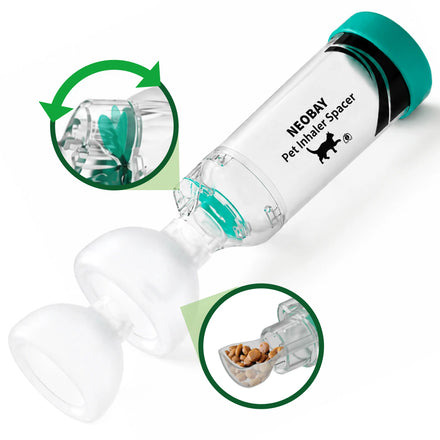
Neobay Cat Aerosol Chamber with Comfort Feeder — Green
- See each breath with the Breath Indicator
- Built-in treat holder makes mask practice easier
- Anti-static chamber helps keep medication airborne
2. Heart Disease and Congestive Heart Failure
An elevated sleeping respiratory rate is one of the earliest and most reliable warning signs of heart disease in cats. This is well-documented in veterinary cardiology: a persistently elevated resting respiratory rate (above 30 breaths per minute while asleep) is a red flag for congestive heart failure.
Hypertrophic cardiomyopathy (HCM) is the most common heart disease in cats, and many owners first notice something wrong when their cat's nighttime breathing pattern changes. If your cat is a Maine Coon, Ragdoll, British Shorthair, or Sphynx, heart disease risk is higher and nighttime breathing monitoring is especially important.
3. Respiratory Infections
Upper respiratory infections (URI) can cause fast breathing at night because mucus buildup in the nasal passages and throat becomes more bothersome when a cat is lying down. The horizontal position allows secretions to pool, partially obstructing the airway.
Most URIs in cats are viral (feline herpesvirus, calicivirus) and self-limiting, but secondary bacterial infections can develop. If fast breathing is accompanied by thick yellow or green nasal discharge, your cat needs a vet visit.
4. Stress, Anxiety, and Nighttime Restlessness
Cats are crepuscular — naturally most active at dawn and dusk. Some cats experience nighttime anxiety, especially in multi-cat households where territorial tensions play out after dark, or in homes where the owner's schedule changed recently.
Stress-induced fast breathing differs from medical causes in that it typically resolves once the cat settles down. You'll see it during the "pacing" phase of nighttime restlessness, not during deep sleep.
5. Anemia and Hyperthyroidism
Both conditions reduce oxygen delivery to tissues, and the body compensates by increasing the breathing rate.
- Anemia: fewer red blood cells to carry oxygen. Common causes in cats include chronic kidney disease, flea infestations (especially in kittens), and feline leukemia virus (FeLV).
- Hyperthyroidism: increased metabolic rate drives up heart rate and oxygen demand, which raises the breathing rate. More common in cats over 8 years old. Often accompanied by weight loss despite a ravenous appetite.
These conditions need bloodwork to diagnose. They won't cause dramatic breathing emergencies the way asthma or heart failure can, but they produce a gradually elevated respiratory rate that's easy to miss without baseline monitoring.
6. Heat, Pain, and Obesity
- Overheating: Cats don't pant efficiently like dogs. If your bedroom is warm or your cat has been lying against a radiator, faster breathing may simply be thermoregulation.
- Pain: Cats hide pain well, but an elevated respiratory rate can be a subtle sign. Arthritis pain worsening at night, dental pain, or abdominal discomfort can all raise the breathing rate.
- Obesity: Excess weight physically restricts lung expansion and increases metabolic demand. An obese cat breathes faster at rest simply because every breath does less.
When to Worry: A Nighttime Emergency Decision Guide
This is the section to bookmark on your phone. If you're reading this at 2 a.m., here's exactly how to decide what to do.

Emergency Signs: Go to the Vet NOW
These signs mean your cat needs immediate veterinary care — do not wait until morning:
- Open-mouth breathing (unless it's a brief 5-second pant after vigorous play that resolves immediately). A cat breathing with its mouth open at rest is in respiratory distress.
- Abdominal breathing — the belly is visibly straining in and out with each breath, and you can see the cat is using their abdominal muscles to move air.
- Gums or tongue turning blue, purple, or pale (check by gently lifting the upper lip). This indicates poor oxygenation.
- Respiratory rate above 60 breaths per minute at rest and not slowing down.
- The cat cannot lie down comfortably — they may adopt a "tripod" position (elbows out, neck extended) trying to open their airway.
- Any collapse, inability to stand, or loss of consciousness.
The nearest emergency vet is the right answer for any of these. Do not try home remedies, do not wait to see if it passes.
Concerning Signs: Call Your Vet in the Morning
These signs warrant a vet visit, but can safely wait until your regular clinic opens:
- Respiratory rate consistently between 30-40 breaths per minute during deep sleep for more than 2-3 nights in a row.
- Coughing or wheezing episodes that wake the cat (or you) from sleep, but resolve within a few minutes.
- Breathing that looks slightly "heavier" than normal, but the cat is still able to sleep comfortably.
- Any breathing change in a cat with known heart disease — these should be reported sooner rather than later.
Probably OK: Monitor and Check Again
These scenarios are usually benign:
- Breathing speeds up for 20-30 seconds during a dream, then normalizes.
- Cat was playing or zooming 5 minutes ago and hasn't fully settled yet — give it 10-15 minutes of quiet rest before counting.
- One-time fast breathing during a thunderstorm, fireworks, or an obvious stressor.
- A kitten breathing at 30-35 breaths per minute — kittens have higher metabolic rates and normally breathe faster than adult cats.
How to Help a Cat Breathing Fast at Night
Immediate Steps (Right Now)
If you've ruled out emergency signs and are waiting to contact your vet, here's what you can do tonight:
- Don't move or restrain the cat. Stress makes breathing worse. Let them stay where they are.
- Cool the room slightly — open a window or turn on a fan. Cool, fresh air can reduce respiratory effort.
- Dim the lights and reduce noise. A calm environment helps the cat's nervous system down-regulate.
- Do NOT give any human medications — this includes antihistamines, decongestants, or pain relievers. Many are toxic to cats.
- Record a 30-second video of your cat breathing for your vet. This is often more useful than a verbal description.
Optimizing Your Bedroom for a Cat with Breathing Issues
If your cat sleeps in your bedroom, these environmental changes can reduce nighttime breathing episodes:
- Run a HEPA air purifier in the bedroom. This removes airborne allergens including dust mite particles, pollen, and mold spores — all common asthma triggers.
- Wash bedding weekly in hot water (130°F+) to kill dust mites. This includes your sheets and any blankets the cat sleeps on.
- Use low-dust, fragrance-free cat litter. Switch from clay-based litters to paper, wood pellet, or silica gel alternatives. If the litter box is in or near the bedroom, this matters even more.
- Keep humidity between 40-50%. Air that's too dry irritates airways; air that's too humid promotes mold and dust mite growth. A basic hygrometer costs under $10.
- Avoid scented products in the bedroom — candles, plug-in air fresheners, essential oil diffusers, and fabric sprays can all irritate feline airways. Some essential oils (tea tree, eucalyptus, pine) are directly toxic to cats.
- Vacuum carpets and under the bed weekly with a vacuum that has a HEPA filter.
Managing Feline Asthma at Night
If your cat's fast breathing is asthma-related, the goal is to reduce airway inflammation so nighttime symptoms don't happen in the first place. Here's what evidence-based management looks like:
Long-Term Monitoring: Catching Problems Early
The resting respiratory rate (RRR) is one of the most underutilized health monitoring tools available to cat owners. It costs nothing, takes one minute, and can detect heart failure, asthma flare-ups, and respiratory infections days before visible symptoms appear.
Here's how to build it into your routine:
- Pick a consistent time. The easiest window is when your cat is sleeping deeply — often mid-morning or early afternoon. Nighttime counts are also useful if that's when symptoms appear.
- Keep a simple log. A note on your phone is fine. "Monday: 22 bpm. Tuesday: 24 bpm. Wednesday: 34 bpm" — a 50% jump from baseline is the signal to call the vet.
- Record video when something looks off. A 30-second clip of your cat breathing during a suspected episode is one of the most useful diagnostic tools your vet has.
There are apps designed for this (Cardalis for tracking resting respiratory rate, though it's marketed for dogs, the same principle applies), but a stopwatch and a notes app work just as well.
Frequently Asked Questions
Why does my cat breathe fast for a few seconds then stop?
Brief bursts of rapid breathing during sleep are usually REM-related dreaming and are completely normal. If the fast breathing lasts under 30 seconds, resolves on its own, and the cat appears relaxed, there's no cause for concern.
Can purring affect my cat's breathing rate?
Yes. A purring cat often breathes faster than a non-purring cat at rest. Purring creates vibrations in the chest wall that can make manual breath counting difficult. Wait until your cat is in a quiet, non-purring deep sleep before measuring their respiratory rate.
Is it normal for kittens to breathe faster at night?
Yes. Kittens have higher metabolic rates than adult cats and normally breathe faster — a sleeping kitten breathing 30-35 times per minute is within the normal range. Their nervous system is also less mature, so you may see more irregular breathing patterns during sleep. This typically stabilizes by 6-8 months of age.
Should I wake my cat up if they're breathing fast?
Generally no — unless you're observing emergency signs (open-mouth breathing, blue gums, collapse). Waking a cat will increase their heart and breathing rate further due to the startle response. If you're concerned, quietly record a video for your vet instead of disturbing them.
How is nighttime breathing related to feline asthma specifically?
Feline asthma symptoms often worsen at night due to a combination of factors: the body's natural cortisol levels dip overnight (reducing natural anti-inflammatory protection), airway cooling from lower ambient temperatures triggers bronchoconstriction in sensitive cats, and prolonged exposure to bedroom allergens (dust mites, dander) during sleep can provoke airway inflammation. Cats whose asthma is well-controlled with inhaled medication typically experience fewer nighttime episodes.
What if I don't have an emergency vet nearby?
If you're far from emergency veterinary care and your cat is showing concerning but not clearly emergency-level signs, call your regular vet's after-hours number. Many practices have an on-call veterinarian who can help you triage by phone. Keep your cat calm, cool, and undisturbed while you wait for guidance. Have your cat's respiratory rate count, a brief video of the breathing, and your cat's medical history ready before you call.
Can an air purifier really help my cat breathe better at night?
The evidence is moderate but positive. HEPA air purifiers reduce airborne particulate matter, which includes common feline asthma triggers like dust mite allergens, pollen, and mold spores. A 2019 study in the Journal of Feline Medicine and Surgery found that environmental allergen reduction — including HEPA filtration — was associated with decreased bronchoalveolar lavage eosinophil counts in asthmatic cats, indicating reduced airway inflammation. It's not a replacement for medication, but it's a low-risk, evidence-supported environmental intervention.
Sources and Further Reading:
- Cornell Feline Health Center. "Feline Asthma: What You Need to Know." Cornell University College of Veterinary Medicine. https://www.vet.cornell.edu/departments-centers-and-institutes/cornell-feline-health-center/health-information/feline-health-topics/feline-asthma-what-you-need-know
- VCA Animal Hospitals — Breathing Difficulties in Cats
- Journal of Feline Medicine and Surgery (2019) — Environmental Allergen Reduction in Feline Asthma
- American College of Veterinary Internal Medicine — Resting Respiratory Rate Monitoring Guidelines
- PDSA — Breathing Problems in Cats: When to Contact Your Vet
Related Reading
This article is part of our How Vets Diagnose Feline Asthma — covering tests, X-rays, at-home monitoring, and what to expect at every step of the diagnostic process.
If your cat's fast breathing is accompanied by lethargy or loss of appetite, it could indicate something more than anxiety — pneumonia or fluid in the lungs requires immediate attention.


