

Key Takeaways
- Cat flu (feline upper respiratory infection) and feline asthma share overlapping symptoms — coughing, wheezing, and labored breathing can indicate either condition, but they require completely different treatments.
- Cat flu is caused by viruses (feline calicivirus or feline herpesvirus) and typically resolves within 1–3 weeks with supportive care, while feline asthma is a chronic inflammatory condition that requires lifelong management.
- Approximately 80% of cats with feline herpesvirus become lifelong carriers, meaning symptoms can recur during times of stress — which can mimic asthma flare-ups and cause misdiagnosis.
- A veterinarian diagnosis is essential because treating asthma with flu remedies (or flu with asthma medication) can delay recovery and worsen your cat's condition.
- If your cat is diagnosed with feline asthma, inhaled medication delivered through a spacer chamber is the gold-standard treatment — it targets the lungs directly with minimal side effects.
You notice your cat sneezing, coughing, and breathing with more effort than usual. Your first thought might be a simple cold — after all, cats get sick just like we do. But what if it's something more serious?
Cat flu and feline asthma are two of the most common respiratory conditions in cats, and they share enough symptoms to confuse even attentive pet owners. The problem? They require completely different treatments. Giving asthma medication to a cat with the flu won't help, and treating a cat with asthma as if it only has a cold can allow the disease to progress unchecked.
This guide breaks down how these two conditions differ — in causes, symptoms, duration, and treatment — so you can have a more informed conversation with your veterinarian and get your cat the right care faster.
What Is Cat Flu?
Cat flu (feline upper respiratory infection, or URI) is a contagious viral or bacterial infection of the upper airways — the nose, throat, and sinuses. It's one of the most common illnesses seen in veterinary clinics, especially among kittens, shelter cats, and newly adopted cats.

The two primary causes are:
- Feline calicivirus (FCV) — one of the two most common viral causes of upper respiratory infection in cats. Causes oral ulcers, limping, and respiratory symptoms.
- Feline herpesvirus type 1 (FHV-1) — the other leading viral cause, typically producing more severe eye and nasal discharge. Cornell Feline Health Center notes that up to 97% of cats are exposed to FHV-1 in their lifetime, up to 80% of exposed cats develop a lifelong infection, and up to 45% of those periodically shed the virus — usually when stressed.
Less commonly, bacteria such as Bordetella bronchiseptica or Chlamydophila felis can cause or contribute to cat flu.
Cat flu spreads through direct contact with an infected cat, contaminated surfaces, or airborne droplets from sneezing. It's highly contagious in multi-cat households, shelters, and catteries.
What Is Feline Asthma?
Feline asthma is a chronic inflammatory disease of the lower airways — specifically the bronchi and bronchioles within the lungs. When a cat with asthma is exposed to a trigger, the airways constrict, mucus production increases, and the cat experiences difficulty breathing.
Feline asthma affects approximately 1–5% of all cats (Cornell Feline Health Center, 2024), making it one of the most common lower respiratory diseases in felines. It is not contagious — it's an immune-mediated condition, meaning the cat's own immune system overreacts to environmental triggers.
Common asthma triggers include dust, pollen, smoke, scented litter, household cleaners, and stress. If you want to understand what makes asthma flare-ups worse, our guide to common feline asthma triggers covers the most significant ones and how to reduce them.
Unlike cat flu, feline asthma is a lifelong condition. There is no cure, but with proper management — particularly inhaled corticosteroids delivered through a spacer chamber — most cats live normal, comfortable lives.
Key Differences Between Cat Flu and Feline Asthma
The table below highlights the most important distinctions. If you're comparing your cat's symptoms against these categories, keep in mind that only a veterinarian can make a definitive diagnosis.
| Feature | Cat Flu (URI) | Feline Asthma |
|---|---|---|
| Cause | Viral (FCV, FHV-1) or bacterial infection | Immune-mediated inflammation of lower airways |
| Location | Upper airways (nose, throat, sinuses) | Lower airways (bronchi, bronchioles) |
| Duration | Acute: 1–3 weeks (may recur in carriers) | Chronic: lifelong, with periodic flare-ups |
| Contagious? | Yes — highly contagious to other cats | No — not contagious |
| Key symptoms | Sneezing, nasal/eye discharge, oral ulcers, fever | Coughing, wheezing, labored breathing, crouched posture |
| Cough type | Occasional, often with gagging | Persistent dry cough, often after activity |
| Breathing pattern | Usually normal unless severe | Increased rate, abdominal effort, open-mouth in crisis |
| Treatment | Supportive care, sometimes antibiotics | Inhaled corticosteroids ± bronchodilators via spacer |
| Prognosis | Most cats recover fully | Manageable with lifelong treatment |
Duration: The Biggest Clue
One of the clearest differentiators is how long symptoms last. Cat flu runs its course in 1–3 weeks in a healthy adult cat. If your cat has been coughing or wheezing for more than three weeks — or if the same symptoms keep coming back every few weeks — that pattern points much more strongly toward asthma than a simple respiratory infection.
That said, FHV-1 carrier cats can have recurrent flare-ups that mimic chronic disease. A veterinary diagnosis that includes chest X-rays is the only way to tell the difference with certainty.
Symptom Patterns: What to Watch For
Here are the symptom patterns that most strongly suggest one condition over the other:
More likely cat flu: - Sneezing with thick nasal discharge (green or yellow) - Red, watery eyes or conjunctivitis - Oral ulcers or drooling (especially with FCV) - Fever (rectal temperature above 102.5°F / 39.2°C) - Loss of appetite due to nasal congestion (cats rely on smell to eat) - Symptoms appeared after contact with a new cat or boarding
More likely feline asthma: - Dry, hacking cough that persists for weeks - Wheezing sound when breathing (especially during exhalation) - Crouched posture with neck extended during breathing difficulty - Symptoms triggered by dust, smoke, scented litter, or stress - Normal appetite and energy between episodes - No discharge from eyes or nose
The Overlap Zone: When Both Look the Same
Both conditions can cause coughing, labored breathing, and lethargy — especially in the early stages or during a severe flare-up. This is where self-diagnosis becomes dangerous.
A cat with a severe URI can develop lower airway inflammation that looks and sounds exactly like asthma. Conversely, a cat with asthma may have a mild URI that masks the underlying chronic condition. In both cases, the wrong treatment wastes time and can make things worse.
Can a Cat Have Both?
Yes. A cat with feline asthma can also catch cat flu, and the combination can be serious. The viral infection inflames the upper airways while asthma simultaneously constricts the lower airways, creating a double burden on the respiratory system.
If your cat is already being treated for asthma and develops flu symptoms (sneezing, discharge, fever), contact your veterinarian promptly. The asthma treatment plan may need to be temporarily adjusted, and supportive care for the URI should begin immediately.
How Vets Tell the Difference
If you bring your cat to the vet with respiratory symptoms, here's what the diagnostic process typically involves:
-
Physical examination — Listening to the lungs with a stethoscope. Asthma often produces characteristic wheezing sounds in the lower airways, while URI primarily affects the upper respiratory tract.
-
Medical history — Your vet will ask about duration, pattern (constant vs. episodic), triggers, exposure to other cats, and vaccination status.
-
Chest X-rays — The most important diagnostic tool. Feline asthma typically shows a characteristic pattern called "bronchial pattern" — thickened airway walls visible as "donuts" and "tram lines" on the X-ray. Cat flu does not produce these changes unless it has progressed to pneumonia.
-
Blood work — Elevated eosinophils (a type of white blood cell) are present in approximately 50% of cats with asthma and can support the diagnosis.
-
Fecal test — To rule out lungworm, which can mimic asthma symptoms.
For a deeper dive into what each of these tests involves and what to expect, our article on how veterinarians diagnose feline asthma walks through the complete process.
Treatment for Cat Flu
Most cases of cat flu are managed with supportive care at home:
- Keep your cat eating — Offer warm, strong-smelling food (tuna, boiled chicken). Nasal congestion reduces appetite because cats depend on smell to eat.
- Humidify the air — Use a humidifier or bring your cat into a steamy bathroom for 10–15 minutes twice daily to loosen nasal discharge.
- Wipe discharge — Gently clean eyes and nose with a warm, damp cloth.
- Encourage hydration — Provide fresh water, add water to food, or offer low-sodium chicken broth.
- Isolate from other cats — Cat flu is highly contagious.
Your veterinarian may prescribe: - Antibiotics — Only if a secondary bacterial infection is present (they do not treat viruses). - Eye medication — For conjunctivitis or corneal ulcers (especially with FHV-1). - L-lysine supplementation — Some evidence suggests it may reduce FHV-1 replication (Maggs et al., American Journal of Veterinary Research, 2003).
Most cats recover within 1–3 weeks. Kittens, senior cats, and immunocompromised cats are at higher risk for complications such as pneumonia.
Treatment for Feline Asthma
Feline asthma requires lifelong management. The goal is to reduce airway inflammation and prevent flare-ups — not just treat symptoms when they appear.
The gold standard treatment is inhaled corticosteroids (typically fluticasone propionate) delivered through a spacer chamber with a fitted face mask. This approach delivers medication directly to the lungs, where it's needed, while minimizing systemic absorption and side effects.
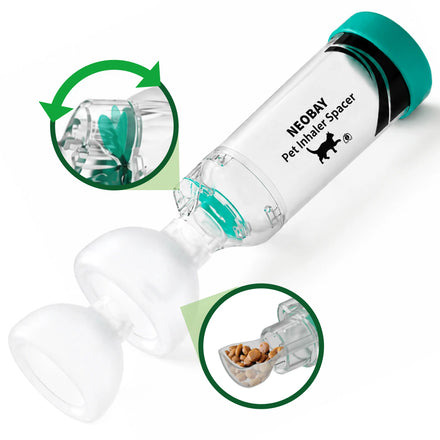
Neobay Cat Aerosol Chamber with Comfort Feeder — Green
- See each breath with the Breath Indicator
- Built-in treat holder makes mask practice easier
- Anti-static chamber helps keep medication airborne
During an acute asthma attack, a bronchodilator (albuterol/salbutamol) may be used to quickly open the airways. This is also delivered via inhaler and spacer — never directly into the cat's mouth, as the force and dose of a direct inhaler puff is inappropriate for feline use. For more on why this matters, see our article on whether cats can use human inhalers.
Oral or injectable corticosteroids (such as prednisolone or Depo-Medrol) may be used short-term to bring severe inflammation under control, but long-term use carries significant side effects including weight gain, diabetes, and immune suppression. Inhaled therapy is the preferred long-term approach.
Key advantages of inhaled medication via spacer chamber: - Higher drug doses delivered directly to the airways with fewer systemic side effects than oral steroids (Barchilon and Reinero, Journal of Feline Medicine and Surgery, 2023) - Significantly fewer systemic side effects than oral steroids — the medication stays in the lungs where it belongs - A visual flow indicator on some chambers (like the Neobay aerosol chamber) lets you see your cat's breathing pattern and confirm the medication is being inhaled
If your cat is newly diagnosed, our step-by-step guide on how to train your cat to accept an inhaler mask can make the transition much smoother.
When to Seek Emergency Care
Regardless of whether your cat has flu or asthma, certain symptoms require immediate veterinary attention:
- Open-mouth breathing at rest (not after play or stress)
- Gums or tongue turning blue or pale — a sign of oxygen deprivation
- Severe lethargy — your cat is unresponsive or barely moving
- No eating or drinking for more than 24 hours
- Coughing or wheezing that does not improve with prescribed treatment
Do not wait to see if things improve on their own. Respiratory distress can escalate quickly in cats, and prompt treatment makes a significant difference in outcome.
Related: Read our complete home treatment for cat colds and upper respiratory infections for at-home care steps, recovery timelines, and when to see a vet.
Frequently Asked Questions
Can cats get the flu from humans?
Most human influenza viruses cannot infect cats. However, there have been rare documented cases of cats contracting certain strains of human flu (H1N1) after close contact with sick owners. The risk is very low, but if you're sick, practice good hygiene — wash your hands before handling your cat, and avoid coughing or sneezing near them. Cats get their own "flu" from feline-specific viruses (FCV and FHV-1), not from humans.
How long does cat flu last?
Most healthy adult cats recover from cat flu within 1–3 weeks with supportive care. Kittens, senior cats, and cats with weakened immune systems may take longer and are at higher risk for complications such as pneumonia. Cats infected with feline herpesvirus (FHV-1) often become lifelong carriers, meaning symptoms can recur during periods of stress.
Is cat flu dangerous?
Cat flu is usually mild to moderate in healthy adult cats and resolves with supportive care. However, it can be dangerous or even life-threatening in kittens, senior cats, and immunocompromised cats. Severe cases can progress to pneumonia, and FHV-1 can cause permanent eye damage if corneal ulcers go untreated. Always consult your veterinarian, especially if your cat is very young, very old, or not improving after a few days.
Can cat flu turn into asthma?
Cat flu does not directly cause asthma — they are fundamentally different conditions (infectious vs. immune-mediated). However, severe or recurrent upper respiratory infections can cause chronic airway inflammation, which may contribute to airway hypersensitivity. If your cat seems to have recurring respiratory symptoms long after a flu episode, ask your vet about the possibility of underlying feline asthma.
What does a cat asthma cough sound like?
A cat asthma cough is typically a dry, hacking sound that many owners describe as similar to a hairball — but without producing anything. The cat usually crouches low to the ground with neck extended. Unlike a hairball cough, an asthma cough may be triggered by activity, stress, or exposure to irritants like dust or scented litter. For more on distinguishing these, our article on feline asthma vs. hairballs goes into detail.
Can my cat catch the flu if I have it?
The risk is extremely low. While there have been isolated cases of cats contracting human H1N1 influenza, these are rare exceptions. The viruses that cause cat flu (feline calicivirus and feline herpesvirus) are species-specific and cannot be transmitted between humans and cats. Still, if you're sick, basic hygiene around your cat is always a good practice.

- Schedule a vet visit if your cat has respiratory symptoms lasting more than a few days, or if symptoms are severe (open-mouth breathing, lethargy, refusal to eat). A proper diagnosis is the foundation of effective treatment.
- Keep a symptom log — note when symptoms occur, how long they last, and any potential triggers. This information helps your veterinarian distinguish between cat flu and feline asthma.
- If your cat is diagnosed with feline asthma, talk to your vet about inhaled medication delivered through a spacer chamber — it's the most effective long-term treatment with the fewest side effects. Learn more about the Neobay Cat Aerosol Chamber, designed specifically for feline inhaled therapy.
Have questions? Visit our FAQ page or contact us directly.
Sources: - Cornell Feline Health Center. "Feline Asthma: What You Need to Know." Cornell University College of Veterinary Medicine. https://www.vet.cornell.edu/departments-centers-and-institutes/cornell-feline-health-center/health-information/feline-health-topics/feline-asthma-what-you-need-know - Cornell Feline Health Center. "Respiratory Infections." Cornell University College of Veterinary Medicine. https://www.vet.cornell.edu/departments-centers-and-institutes/cornell-feline-health-center/health-information/feline-health-topics/respiratory-infections - Trzil JE. "Feline asthma: diagnostic and treatment update." Veterinary Clinics of North America: Small Animal Practice, 2020; 50(2): 375-391. - Maggs DJ, et al. "Efficacy of oral supplementation with L-lysine in cats latently infected with feline herpesvirus." American Journal of Veterinary Research, 2003; 64(1): 37-42.
Related Reading
This article is part of our Feline Asthma: The Complete Owner's Guide — covering everything from causes and symptoms to treatment and daily management.


