

Key Takeaways
- A cat breathing fast while sleeping is not always normal — the key is knowing when fast breathing signals an underlying condition like feline asthma.
- A healthy sleeping cat breathes 20–30 times per minute. Consistently faster rates at rest often indicate a respiratory problem.
- Feline asthma is one of the most common causes of persistently elevated breathing rates, especially if your cat also coughs, wheezes, or breathes with visible abdominal effort.
- Inhaled medication delivered through a spacer chamber is the gold-standard long-term treatment — and features like a Visual Flow Indicator help you confirm your cat is actually receiving the medication.
A healthy sleeping cat breathes 20–30 times per minute — consistently higher rates at rest are one of the earliest warning signs of a respiratory problem, with feline asthma being one of the most common culprits (especially if your cat also coughs, wheezes, or breathes with visible abdominal effort). To check at home: count chest rises for 30 seconds and multiply by 2; anything persistently above 30 breaths per minute at rest warrants a vet visit, and if asthma is diagnosed, daily inhaled corticosteroids through a Neobay spacer chamber with Visual Flow Indicator is the gold-standard long-term treatment. Below: how to measure your cat's resting rate, what causes fast breathing, when it's an emergency, and what treatment looks like at home.

What Is a Normal Breathing Rate for a Sleeping Cat?
Before you can tell whether your cat is breathing too fast, you need to know what "normal" looks like.
A healthy cat at rest breathes 20–30 times per minute. This is called the resting respiratory rate (RRR). For comparison, a healthy adult human breathes 12–20 times per minute at rest.
How to measure your cat's breathing rate:
- Wait until your cat is fully asleep or resting calmly.
- Watch their chest — one rise and one fall counts as one breath.
- Count breaths for 30 seconds, then multiply by 2 to get breaths per minute.
- Take 2–3 measurements over different resting periods for accuracy.
Normal ranges by state:
| State | Breaths Per Minute |
|---|---|
| Deep sleep | 20–30 |
| Light sleep / drowsy | 24–40 |
| After mild activity | 40–60 (temporary) |
| Active play | 60+ (temporary) |
A breathing rate above 30 bpm while your cat is deeply asleep, especially if it persists, is worth monitoring. A rate above 40 bpm at rest warrants a vet visit.
When Is Fast Breathing While Sleeping Normal?
Not every instance of fast breathing is cause for alarm. Here are situations where it's expected:
After Exercise or Play
If your cat just finished a zooming session, their breathing will be elevated for several minutes — even if they fall asleep quickly afterward. This should return to normal within 10–15 minutes.
In Warm Environments
Cats don't sweat the way humans do. They regulate body temperature partly through breathing. In a warm room or during summer, you may notice faster respiratory rates. Ensure your cat has access to cool, shaded areas and fresh water.
During Dreams (REM Sleep)
Cats experience REM sleep just like humans. During dream states, you might notice faster breathing, twitching paws, or whisker movements. This is brief and intermittent — not a sustained pattern.
In Kittens and Senior Cats
Kittens naturally breathe faster (up to 40 bpm at rest) due to their smaller lung capacity and higher metabolism. Senior cats may breathe slightly faster than middle-aged adults due to reduced lung elasticity.
The key question is: Does the fast breathing persist even when none of these factors are present? If yes, it's time to investigate.

When Fast Breathing While Sleeping Is NOT Normal
Consistently fast breathing at rest — especially when your cat is deeply asleep in a cool environment — often points to an underlying medical condition. Here are the most common causes:
Feline Asthma
Feline asthma is one of the leading causes of elevated resting breathing rates in cats. In asthmatic cats, the airways are chronically inflamed and narrowed, which means every breath requires more effort. Even at rest, their body works harder to move air through restricted passages.
Signs that fast breathing may be asthma-related:
- Fast breathing that persists even during deep sleep
- Occasional coughing (especially after exercise or excitement)
- Wheezing or noisy breathing
- Breathing with visible abdominal effort (belly moving noticeably)
- Crouched posture with neck extended during breathing difficulty
Feline asthma affects an estimated 1–5% of all cats, and it's progressive if left untreated. Many cats go undiagnosed for months because owners assume the fast breathing or occasional cough is normal.
Read more: Feline Asthma vs. Hairball: How to Tell the Difference
Heart Disease
Conditions like hypertrophic cardiomyopathy (HCM) can cause fluid to accumulate in or around the lungs, forcing the cat to breathe faster and shallower to compensate. This is more common in older cats and certain breeds like Maine Coons and Ragdolls.
Warning signs:
- Fast breathing that worsens over days or weeks
- Lethargy or reluctance to move
- Sudden loss of appetite
- Open-mouth breathing at rest (an emergency sign)
Pleural Effusion
Fluid buildup in the chest cavity (outside the lungs) compresses the lungs and prevents them from expanding fully. Cats with pleural effusion breathe fast and shallow because they literally can't take a deep breath. This requires immediate veterinary attention.
Pneumonia or Respiratory Infections
Bacterial or viral infections in the lungs cause inflammation and fluid accumulation, increasing breathing rate. Often accompanied by fever, nasal discharge, and lethargy.
Pain or Fever
Any source of pain or elevated body temperature can increase breathing rate. If your cat is breathing fast and also seems reluctant to move, is hiding, or is warmer than usual, pain or fever may be the cause.
Anemia
When the blood doesn't have enough red blood cells to carry oxygen efficiently, the body compensates by breathing faster. Pale gums are a key indicator.
How to Tell the Difference: Normal vs. Concerning Fast Breathing
Use this checklist to assess your cat's breathing:
| Factor | Likely Normal | Possibly Concerning |
|---|---|---|
| Breathing rate at deep sleep | 20–30 bpm | Above 30 bpm consistently |
| Pattern | Steady, quiet | Irregular, labored, or shallow |
| Abdominal effort | Minimal | Belly heaves with each breath |
| Associated sounds | Silent | Wheezing, crackling, or gurgling |
| Posture | Relaxed, curled up | Crouched, neck extended |
| Gum color | Pink | Pale, blue, or gray |
| Duration | Returns to normal within minutes | Persists for hours or days |
| Other symptoms | None | Coughing, lethargy, appetite loss |
Red flag: Open-mouth breathing at rest. Cats are obligate nose breathers. If your cat is breathing through their mouth while at rest, this is an emergency — get to a vet immediately.
When Should You See a Vet?
Go to an emergency vet immediately if your cat shows:
- Open-mouth breathing at rest
- Blue, gray, or pale gums
- Breathing rate above 60 bpm at rest
- Labored breathing with significant abdominal effort
- Collapse or inability to stand
Schedule a vet visit within a few days if:
- Your cat's sleeping breathing rate is consistently above 30 bpm
- You've noticed coughing, wheezing, or noisy breathing
- Your cat seems less active or is hiding more than usual
- The fast breathing has been getting progressively worse
Before your vet visit:
- Measure and record your cat's resting breathing rate at 3 different times.
- Take a video of your cat breathing while asleep — this helps your vet assess the pattern.
- Note any other symptoms: coughing, sneezing, appetite changes, litter box habits.
- Bring a list of any environmental changes: new litter, cleaning products, smoke exposure.
Read more about what to expect at the vet: How Vets Diagnose Feline Asthma: Tests, X-Rays, and What to Expect
How Feline Asthma Is Diagnosed
If your vet suspects asthma, they'll typically run through several diagnostic steps:
Physical Examination
Your vet will listen to your cat's lungs with a stethoscope, looking for wheezing sounds, crackles, or areas of reduced airflow.
Chest X-Rays
X-rays are the most important diagnostic tool for feline asthma. Classic signs include a "donut" or "tramline" appearance of the airways (thickened bronchial walls), overinflation of the lungs, and flattening of the diaphragm.
Blood Work
A complete blood count (CBC) can reveal elevated eosinophils — a type of white blood cell associated with allergic responses, which is common in asthmatic cats.
Bronchoalveolar Lavage (BAL)
In some cases, your vet may flush a small amount of saline into the airways and suction it back out to collect cells for examination. This helps confirm asthma and rule out infections.
Trial Treatment
When diagnostics are inconclusive, your vet may start a trial of corticosteroids. A positive response (reduced coughing and improved breathing) supports an asthma diagnosis.
Treatment Options for Feline Asthma
If your cat is diagnosed with feline asthma, treatment typically involves two components:
1. Trigger Management
Reducing exposure to common asthma triggers can significantly decrease flare-ups:
- Switch to unscented, low-dust cat litter
- Eliminate smoke (cigarettes, candles, fireplaces)
- Avoid aerosol sprays and strong cleaning products
- Use HEPA air purifiers in rooms where your cat spends time
- Minimize dust and mold in the home
- Wildfire Smoke and Cats With Asthma: AQI Thresholds & Emergency Plan
Read more: Common Triggers That Make Your Cat's Asthma Worse
2. Medication
Rescue medication (albuterol or similar bronchodilators) — used during acute asthma attacks to open airways quickly. Acts within minutes.
Controller medication (inhaled corticosteroids like fluticasone) — used daily to reduce airway inflammation and prevent attacks. This is the cornerstone of long-term asthma management.
Why Inhaled Medication Is the Preferred Long-Term Approach
Oral corticosteroids (prednisolone) are still prescribed, but they carry significant long-term risks: weight gain, diabetes, immune suppression, and liver problems. Inhaled corticosteroids deliver medication directly to the lungs with minimal systemic absorption — the same anti-inflammatory benefit, far fewer side effects.
This is why veterinary specialists increasingly recommend inhaled medication as the first-line long-term treatment for feline asthma.
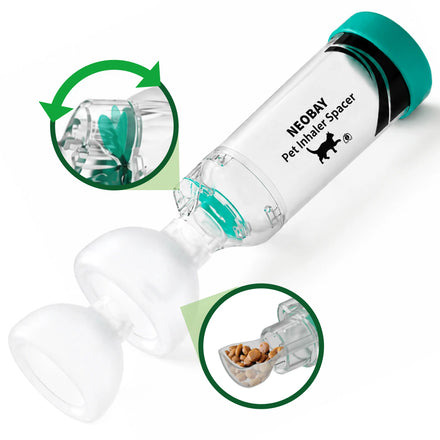
Neobay Cat Aerosol Chamber with Comfort Feeder — Green
- See each breath with the Flow Indicator
- Built-in treat holder makes mask practice easier
- Anti-static chamber helps keep medication airborne
The Challenge: Giving a Cat an Inhaler
Cats can't use an inhaler the way humans do. They need a spacer chamber (also called an aerosol chamber) — a device that holds the medication so the cat can breathe it in through a fitted mask.
But getting a cat to accept a mask over their face is the hardest part of the entire treatment. And this is where spacer design makes a real difference.
Visual Flow Indicator: Know the Medication Is Working
One of the biggest anxieties for cat owners is uncertainty: Is my cat actually inhaling the medication? With a basic spacer, you have no way to confirm this. A Visual Flow Indicator — a valve or flap that moves with each breath — shows you in real time that your cat is breathing in properly. You can count the breaths. You can see the medication being delivered. This turns hope into confidence.
Comfort Feeder Design: Help Your Cat Accept Treatment
The single biggest barrier to successful inhaled therapy is getting the cat to tolerate the mask. Most cats are suspicious of having something pressed against their face, and early sessions often end with the cat running away. A spacer with a Comfort Feeder design holds a squeeze treat at the mask rim, so your cat voluntarily presses their face in to reach the food. When the first few sessions are paired with food, your cat is far more likely to accept the routine long-term.
For step-by-step guidance, read: How to Administer Inhaled Medication Stress-Free
Monitoring Your Cat's Breathing at Home
If your cat has been diagnosed with asthma or you're monitoring a potential issue, tracking their resting respiratory rate (RRR) at home is one of the most valuable things you can do.
How to build an RRR log:
- Measure your cat's breathing rate once daily at the same time (e.g., evening when they're sleeping).
- Record the date, time, and breaths per minute.
- Note any coughing episodes, wheezing, or changes in activity level.
- Bring this log to every vet visit — it helps your vet assess whether treatment is working.
What the numbers mean:
- 20–30 bpm: Normal — treatment is likely effective.
- 30–40 bpm: Mildly elevated — monitor closely and contact your vet if it persists.
- Above 40 bpm: Significantly elevated — contact your vet promptly.
- Above 60 bpm or open-mouth breathing: Emergency — seek immediate veterinary care.
Related: Read our difference between hairball retching and asthma coughing — including when frequent hairballs signal something more serious than grooming.
Frequently Asked Questions
Is it normal for cats to breathe fast while sleeping?
It depends. A sleeping cat's normal breathing rate is 20–30 breaths per minute. Mild elevations can be normal after exercise, in warm rooms, or during dream states. But consistently fast breathing at rest (above 30 bpm) or labored breathing with abdominal effort warrants a vet visit.
How many breaths per minute is too many for a sleeping cat?
Anything above 30 breaths per minute during deep sleep is considered elevated. Above 40 bpm at rest is significantly abnormal. Above 60 bpm or any open-mouth breathing at rest is a medical emergency.
Can feline asthma cause fast breathing while sleeping?
Yes. Feline asthma causes chronic airway inflammation and narrowing, which makes every breath more effortful. Even at rest or during sleep, asthmatic cats often breathe faster than healthy cats to compensate for reduced airflow.
How can I tell if my cat's fast breathing is from asthma or something else?
Asthma-related fast breathing is usually accompanied by other signs: occasional coughing (especially after exercise), wheezing, or breathing with visible abdominal effort. Your vet can determine the cause through chest X-rays, blood work, and other diagnostics.
What should I do if my cat is breathing fast while sleeping?
First, measure their breathing rate. If it's above 30 bpm consistently, schedule a vet visit. If it's above 60 bpm, your cat is breathing with open mouth, or their gums are pale or blue, go to an emergency vet immediately. In the meantime, record a video of the breathing to show your vet.
Related: How to Monitor Your Cat's Breathing Rate at Home — step-by-step counting guide, normal vs. concerning ranges, and a decision framework for when to call the vet.
What to Do Next
If you've noticed your cat breathing fast while sleeping, take it seriously — especially if the pattern is persistent or getting worse.
- Measure your cat's resting breathing rate today using the method described above.
- Record a video of the fast breathing to show your veterinarian.
- Schedule a vet visit to get a proper diagnosis. Feline asthma is manageable, but it requires the right treatment approach.
- If your vet prescribes inhaled medication, choose a spacer chamber with a Visual Flow Indicator and Comfort Feeder design — so you can see the medication working and your cat can accept treatment more easily.
The Neobay Cat Aerosol Chamber is designed specifically for cats who need inhaled respiratory medication, with both a Visual Flow Indicator and Comfort Feeder built in.
Not sure if what you're seeing is early asthma? Read our guide on the early signs of feline asthma most owners dismiss as something else.
Have questions? Visit our FAQ page or contact us directly.
Sources: - Padrid P, et al. "Feline Asthma: Diagnosis and Treatment." Veterinary Clinics of North America: Small Animal Practice, 2000. - Reinero CR. "Advances in the Understanding of Feline Asthma." Journal of Veterinary Internal Medicine, 2011. - Cornell Feline Health Center, Cornell University College of Veterinary Medicine. "Feline Asthma: What You Need to Know." Accessed 2026. - Dorn ES, et al. "Feline Resting Respiratory Rate: Reference Interval and Effect of Body Weight." Journal of Feline Medicine and Surgery, 2023.
Related Reading
This article is part of our How Vets Diagnose Feline Asthma — covering tests, X-rays, at-home monitoring, and what to expect at every step of the diagnostic process.


