

Key Takeaways
- Cat pneumonia survival rates range from 80-90% with prompt veterinary treatment — outcomes drop sharply without it.
- Fluid in or around the lungs is not one condition. It can be pulmonary edema (inside lung tissue), pleural effusion (around lungs), or infectious fluid — each needs a different treatment.
- Most cats need 3-6 weeks to recover from moderate pneumonia, but full lung healing can take months.
- At-home care determines recovery speed. Nutrition, humidity, rest, and medication compliance are the difference between a smooth recovery and a relapse.
- Open-mouth breathing, blue gums, or respiratory rate above 40 at rest = emergency. Don't wait until morning.
Your cat just came home from the veterinary hospital. She's weak, she's on three medications, and the discharge papers say "pneumonia with pleural effusion" — words you've only ever heard in human medical dramas. You're staring at her while she sleeps, counting her breaths, wondering if she's going to make it through the night.
That fear is real. Pneumonia in cats looks terrifying — the labored breathing, the lethargy, the way they shrink into themselves. But here's what the discharge papers don't tell you: most cats recover. And what you do at home over the next few weeks will matter as much as what happened at the vet.
What "Fluid in the Lungs" Actually Means
Your vet may have used one of these terms. They're not interchangeable, and knowing which one applies to your cat changes the recovery plan.
Pulmonary edema is fluid inside the lung tissue itself — the sponge part of the lungs fills with liquid. Most commonly caused by heart failure in cats, but also near-drowning, electrocution, or severe allergic reactions. Treatment targets the underlying cause (diuretics + heart meds), not just the fluid.
Pleural effusion is fluid accumulating around the lungs — between the lung surface and chest wall, compressing the lungs from outside. Causes include infection (pyothorax), cancer, FIP, heart failure, or a ruptured thoracic duct. Treatment often involves draining the fluid with a needle (thoracocentesis) plus addressing the root cause.
Infectious pneumonia is inflammation and fluid inside the lung tissue driven by bacterial, viral, or fungal infection. The fluid is pus and inflammatory debris — not the clear transudate of heart failure. This is what antibiotics target.
A severe case might include both infected lung tissue and a secondary pleural effusion. Your vet's discharge instructions might include antibiotics, a diuretic, and instructions to watch for fluid returning — they're treating the whole picture.
Cat Pneumonia Survival Rates: What the Numbers Say
Let's get the scary question out of the way first.
A 2019 study in the Journal of Feline Medicine and Surgery found cats hospitalized for pneumonia had an 81-89% survival rate with aggressive treatment. Aspiration pneumonia — where a cat inhales food, vomit, or liquid into the lungs — has a lower rate of 60-75%, depending on treatment speed.
The single biggest predictor of survival? How fast the cat gets to a vet. Cats treated within 24 hours of symptom onset do significantly better than cats whose owners waited "to see if it would clear up." Pneumonia does not clear up on its own.
Young, healthy cats with bacterial pneumonia have the best prognosis. Senior cats and those with underlying heart disease have longer recoveries — but they still recover more often than not.
Recovery Timeline: What to Expect Week by Week
This is approximate. Your vet's timeline overrides this one. But owners say nobody told them what normal recovery looks like, so here it is.
Week 1: Your cat will sleep most of the time. The body is fighting an infection, and rest is the priority. Appetite may be reduced. Breathing should be easier than at the hospital but may still look effortful. Track every medication dose.
Week 2-3: Energy returns in short bursts. Coughing may temporarily increase — this can be a good sign, meaning secretions are loosening. Appetite should be back to normal. Continue all medications even if your cat looks "better."
Week 4-6: Most cats are visibly back to normal, but lung tissue heals slower than behavior. Your vet will likely want repeat chest X-rays before stopping antibiotics. Stopping early because the cat "looks fine" is the #1 cause of relapse.
Beyond 6 weeks: Cats recovering from severe aspiration or fungal pneumonia may take 2-3 months for full radiographic resolution. They'll act normal weeks before the X-rays look normal. Frustrating but not abnormal.
At-Home Care: 6 Things That Help
These are the things owners who've been through it say actually moved the needle. None of them replace veterinary care — they're what you do between vet visits.
1. Medication compliance — no shortcuts
Set phone alarms. Keep a paper log on the fridge. Missing doses is the #1 reason pneumonia drags on or relapses. Antibiotics typically run 3-4 weeks minimum; some cases need 6-8 weeks. Finish the entire course.
2. Steam therapy
Run a hot shower and sit with your cat in the steamy bathroom for 10-15 minutes, 2-3 times a day. Don't put the cat in the shower — just the steam-filled room. This loosens mucus and eases breathing. A cool-mist humidifier near your cat's sleeping spot helps between sessions.
3. Coupage — gentle chest tapping
Have your vet demonstrate this. Cup your hand and rhythmically tap both sides of the chest wall to physically loosen lung secretions so your cat can cough them out. Do it 3-4 times daily, ideally right after steam therapy when mucus is loosest.
4. Nutrition as medicine
A cat who won't eat won't heal. Offer strong-smelling wet food — fish flavors, warmed slightly, work best. If your cat refuses food for more than 24 hours, call your vet. Some cats need a temporary appetite stimulant. Dehydration thickens mucus; add water or low-sodium broth to wet food.
5. Chest-up sleeping position
Cats with fluid in or around their lungs breathe easier with a slight chest incline. Roll a towel under their upper body while they sleep. Many cats figure this out on their own and sleep propped against a pillow or couch arm.
6. Rest — real rest
Keep your cat in a single quiet room for the first week. No other pets, no kids, no vacuum cleaners. Lung tissue rebuilds during deep sleep, and every disturbance resets that process.
When to Go Back to the Vet — Immediately
Know these signs before you need them.
- Resting respiratory rate above 40 breaths per minute. Count while your cat is asleep. Set a timer for 15 seconds, count breaths, multiply by 4. Above 40 and staying there = call the vet.
- Open-mouth breathing or panting. Cats are obligate nose-breathers. An open mouth while breathing is never normal.
- Blue, grey, or pale gums. Lift the lip. Pink = oxygen is circulating. Anything else = emergency.
- Abdominal effort. If the belly is heaving with each breath, the diaphragm is working too hard.
- Not eating for 24+ hours. Cats who stop eating can develop hepatic lipidosis on top of pneumonia.
- Sudden collapse or inability to stand. Don't post on Reddit. Go.
Frequently Asked Questions
Can my cat die from pneumonia?
Yes, untreated pneumonia can be fatal. But with prompt veterinary care, 80-90% of cats survive. The outcome depends on the underlying cause, how quickly treatment started, and whether your cat has other health conditions.
How long can a cat have fluid in the lungs before it's too late?
There's no safe waiting period. Fluid compressing the lungs causes progressive oxygen deprivation — cats can deteriorate within hours. If your cat is breathing with effort, get to a vet the same day.
Can I treat cat pneumonia at home without a vet?
No. Pneumonia requires prescription antibiotics or antifungals that only a vet can prescribe after diagnostic testing. Steam therapy and coupage are supportive care, not replacements for medical treatment. Attempting home-only treatment carries a high risk of death from a treatable condition.
Why did my cat get pneumonia? She never goes outside.
Indoor cats get pneumonia too. Common causes: aspirating vomit during a hairball, a viral URI that moves into the lungs, underlying asthma that gets secondarily infected, or a weakened immune system from stress or another illness. Indoor life reduces exposure risk but doesn't eliminate it.
Will my cat have permanent lung damage?
Most cats recover with no lasting damage, especially with prompt treatment. Severe cases may leave minor scarring visible on X-rays, but this rarely causes clinical problems. Cats who had aspiration pneumonia are at slightly higher risk for recurrence.
How is this different from feline asthma?
Asthma is a chronic inflammatory airway disease — airways constrict and fill with mucus, usually triggered by allergies. Pneumonia is an active infection with fluid and pus in the lung tissue. A cat with asthma can develop pneumonia as a complication. Asthma is managed long-term (often with inhaled steroids via a spacer device); pneumonia is treated and resolved.
What to Do Next
- Follow your vet's discharge instructions exactly. Set alarms for medications. Don't skip doses.
- Start a recovery log. Track respiratory rate (twice daily), appetite, energy level, and medication times. This is invaluable at recheck appointments.
- Keep follow-up appointments. Your vet needs repeat chest X-rays to confirm the lungs are clear before stopping treatment.
- Know your emergency numbers. Program the nearest 24-hour emergency vet into your phone now, not at 2 AM.
- Eliminate respiratory irritants. While your cat recovers, remove smoke, candles, air fresheners, essential oil diffusers, and dusty litter — all of these slow lung healing.
If your cat has a chronic respiratory condition like asthma that contributed to this episode, a proper inhaler spacer designed for cats can help deliver daily medication consistently — reducing the risk of future lung crises. Talk to your vet about whether inhaled therapy fits your cat's long-term plan.
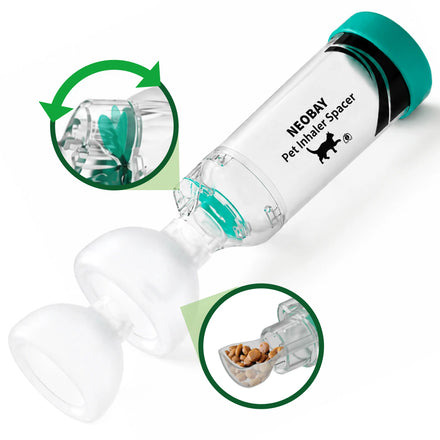
Neobay Cat Aerosol Chamber with Comfort Feeder — Green
- See each breath with the Breath Indicator
- Built-in treat holder makes mask practice easier
- Anti-static chamber helps keep medication airborne
Have questions? Visit our FAQ page or contact us.
Sources:
- Dear JD. "Bacterial pneumonia in dogs and cats." Veterinary Clinics of North America: Small Animal Practice, 2020.
- MacDonald ES et al. "Clinicopathologic and radiographic features in cats with pulmonary parenchymal disease." Journal of Feline Medicine and Surgery, 2019.
- Cornell Feline Health Center. "Respiratory Infections." Cornell University College of Veterinary Medicine. https://www.vet.cornell.edu/departments-centers-and-institutes/cornell-feline-health-center/health-information/feline-health-topics/respiratory-infections
- VCA Animal Hospitals. "Pneumonia in Cats." vcahospitals.com
Related Reading
This article is part of our Feline Asthma: The Complete Owner's Guide — covering everything from causes and symptoms to treatment and daily management.


