

Key Takeaways
- Cats with asthma are an AirNow "sensitive group" - respiratory symptoms can begin at AQI 101 (Orange), well below the 151 threshold where most healthy adults feel effects.
- The EPA's June 2026 fact sheet lists cats alongside dogs, birds, and livestock as animals at higher risk during smoke events, with the AVMA flagging coughing, open-mouth breathing, and increased respiratory rate as the warning signs to watch.
- Indoor PM2.5 can climb to 50-70% of outdoor levels even with windows closed if your building pulls outside air through shared vents - a HEPA-filtered "cleaner air room" is the EPA-recommended fix.
- A cat's normal resting respiratory rate is 15-30 breaths per minute; anything above 30 while sleeping, or any open-mouth breathing at rest, warrants a vet call during smoke events.
- Albuterol, a fast-acting rescue bronchodilator delivered through a spacer chamber like the Neobay aerosol chamber, is the standard at-home rescue medication for sudden asthma flares triggered by smoke - keep a loaded chamber in your emergency kit.
Wildfire smoke pushes cats with feline asthma into emergency territory far earlier than most owners expect. The AVMA and EPA's June 2026 guidance both flag cats with respiratory disease as a high-risk group, with symptoms starting at AirNow AQI 101 (Orange). The protective playbook is short: close windows and run AC on recirculate above AQI 100, set up one HEPA-filtered cleaner air room, have a Neobay aerosol chamber pre-loaded with albuterol, and call your vet if resting respiratory rate crosses 30 breaths per minute or open-mouth breathing appears.
The smoke from Canada, California, and Pacific Northwest fires no longer stays regional. Detroit and New York saw AQI readings above 300 in 2023, and the July 2026 Midwest smoke event pushed parts of Michigan into the Very Unhealthy range. Cats breathe the same particulate matter you do, through smaller airways that close faster under inflammation.
Why Wildfire Smoke Hits Cats With Asthma Harder
Wildfire smoke - a complex mixture of fine particulate matter (PM2.5), gases including carbon monoxide and nitrogen dioxide, and volatile organic compounds released by burning vegetation and structures, that can travel hundreds of miles downwind from the fire source.
Asthma is a chronic inflammatory disease of the small airways. The PM2.5 particles in smoke are small enough to bypass a cat's nasal filtration and deposit deep in the bronchi, exactly where asthma inflammation already lives. A cat whose asthma was well-controlled on daily Flovent may suddenly need a rescue inhaler twice a day instead of once a week.
The AVMA's 2026 guidance calls out cats with cardiovascular or respiratory disease as "especially at risk" from smoke, with asthma-like symptoms, increased breathing rate, and open-mouth breathing as the warning signs. The EPA's June 2026 fact sheet adds flat-faced breeds (Persians, Himalayans, Exotic Shorthairs) and pregnant, young, or senior animals to the high-risk list.
AQI Thresholds for Cats With Asthma
The Air Quality Index (AQI) is the EPA's 0-500 scale for daily air quality. Six color-coded bands tell you when to act.
| AQI | Color | What it Means for a Cat With Asthma |
|---|---|---|
| 0-50 | Green | No action. Normal outdoor exposure is fine. |
| 51-100 | Yellow | Caution for severely asthmatic cats. Keep windows closed if smoke is visible. |
| 101-150 | Orange | Trigger threshold. Sensitive groups including asthmatic cats may react. Stop all outdoor exposure. Run AC on recirculate. |
| 151-200 | Red | Unhealthy. Symptoms likely in asthmatic cats. Use rescue inhaler if coughing starts. Consider relocating. |
| 201-300 | Purple | Very Unhealthy. Emergency range for cats with asthma. Do not go outside, even briefly. |
| 301+ | Maroon | Hazardous. Evacuation or full HEPA-sealed room required. |
The key number: AQI 101 is where you stop letting your cat onto a catio, balcony, or screened porch, even briefly. Cats do not need outdoor bathroom breaks the way dogs do, which is one advantage here, but they need to stay inside from the moment local air quality alerts start.
My apartment building pulls outside air through hallway vents - is my cat still exposed at AQI 101?
Yes. Multi-unit buildings with shared HVAC can deliver 50-70% of outdoor PM2.5 into your unit even with your windows shut. A True HEPA purifier sized for the room your cat spends the most time in is the standard fix. See our best air purifier guide for cats with asthma.
Build a Cleaner Air Room
The EPA recommends designating one room in your home as a cleaner air room during smoke events. For most cat owners, this is the bedroom or the room where the cat already sleeps.
Three rules for the room:
- HEPA filtration running 24/7. A True HEPA purifier sized for the room, on the highest fan speed you can tolerate. CADR should be at least two-thirds of the room's square footage.
- No indoor pollution sources. No candles, no incense, no frying or broiling food, no smoking or vaping, and skip vacuuming (it stirs up settled particles). The litter box also generates dust and ammonia - keep it clean, or move it to another room during severe events.
- Windows and doors closed, with towels under the door if the room connects to a shared hallway.
Cats often self-select this room if it is the coolest one in the house. Make sure water, food, and the litter box are accessible inside.

Rescue Inhaler Protocol During Smoke Events
If your cat is already prescribed an albuterol rescue inhaler and a spacer chamber, smoke events are exactly the scenario that medication exists for.
Albuterol - a fast-acting rescue bronchodilator (ProAir, Ventolin) that opens constricted airways within 5-15 minutes; the standard at-home rescue medication for cats having an active asthma flare, delivered through a spacer chamber.
Your smoke-event protocol:
- Watch for early coughing, wheezing, or respiratory rate above 30 breaths per minute at rest.
- Administer one puff of albuterol through the chamber, following your vet's prescribed breath count (usually 7-10 breaths).
- Repeat once if symptoms have not resolved within 30 minutes, then call your vet.
- Do not exceed two rescue doses in 4 hours without veterinary guidance.
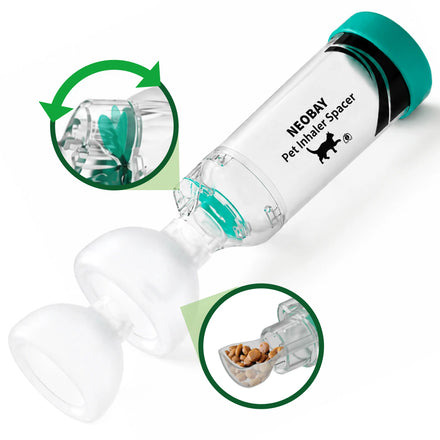
Keep your spacer chamber loaded and within reach during smoke events. Many owners keep a backup in their go-bag - if you evacuate without your primary device, you do not want to miss a rescue dose.
When to Call the Vet

The AVMA's warning signs warrant an immediate vet call during smoke events:
- Open-mouth breathing at rest (always an emergency in cats)
- Respiratory rate above 30 breaths per minute while sleeping
- Persistent coughing that does not respond to one rescue dose of albuterol
- Wheezing audible without a stethoscope
- Blue-tinged gums or tongue
- Lethargy, stumbling, or disorientation
- Refusal to eat or drink for more than 12 hours
Smoke exposure can also trigger secondary bacterial infections 3-7 days after the initial event. If your cat develops a new cough a week after the smoke clears, that is still smoke-related - call your vet. For what vets look for during respiratory exams, see our guide to how vets diagnose feline asthma.
Frequently Asked Questions
At what AQI should I keep my cat with asthma indoors?
Bring your cat inside at AQI 101 (Orange) and keep them inside until air quality returns to the Green (0-50) range. Cats with asthma are an AirNow sensitive group - the same threshold the EPA uses for humans with heart and lung disease applies to them.
Can wildfire smoke trigger an asthma attack in a cat that has been stable for months?
Yes. PM2.5 particles bypass the nose and deposit directly in inflamed bronchi, which can override the protection of daily Flovent. Have your rescue inhaler (albuterol) and spacer chamber ready before smoke arrives - do not wait for the first cough.
Is a regular air conditioner enough, or do I need a HEPA purifier?
A window or central AC that recirculates indoor air helps, but it does not filter fine particulate matter effectively. A True HEPA purifier is the only home device that reliably removes PM2.5 from indoor air. Run it in the room where your cat spends the most time.
How do I measure my cat's respiratory rate at home during smoke events?
Count chest rises for 15 seconds while your cat is sleeping, then multiply by 4. Anything above 30 breaths per minute, or a rate up more than 20% from baseline, warrants a vet call. Our breathing-rate monitoring guide walks through the full method.
Should I increase my cat's Flovent dose during wildfire smoke?
Do not change Flovent (fluticasone) dose without your vet's instruction. Flovent is a daily controller medication, not a rescue medication - increasing it does not help during an acute flare. Use the rescue inhaler (albuterol) as prescribed instead.
Are some cats more sensitive to wildfire smoke than others?
Yes. Flat-faced breeds (Persians, Himalayans, Exotic Shorthairs), senior cats, kittens, and cats with concurrent heart disease are at the highest risk. A cat whose asthma was only recently diagnosed may also be more reactive than one stable for years.
What to Do Next
- Bookmark AirNow.gov or your local air quality app, and set the alert threshold to AQI 100 so you get notified before smoke reaches the Orange band.
- Set up a cleaner air room with a HEPA purifier, and make sure food, water, and litter are inside it.
- Check your rescue inhaler expiration date and confirm your spacer chamber is loaded.
If your cat does not yet have a spacer chamber, the Neobay aerosol chamber collection ships with the chamber, mask, and visual flow indicator you need to deliver albuterol effectively. For the broader picture, see our complete owner's guide.
Have questions? Visit our FAQ page or contact us directly.
Sources:
- American Veterinary Medical Association. Wildfire smoke endangers animal health.
- U.S. Environmental Protection Agency. "Protect Your Pets From Wildfire Smoke." EPA fact sheet, June 2026.
- AirNow. "Air Quality Index (AQI) Basics." AirNow.gov.
- Cornell Feline Health Center. "Feline Asthma: What You Need to Know." Cornell University College of Veterinary Medicine. https://www.vet.cornell.edu/departments-centers-and-institutes/cornell-feline-health-center/health-information/feline-health-topics/feline-asthma-what-you-need-know


