

Key Takeaways
- Most pet insurance plans cover cat asthma — but only if the cat was enrolled before symptoms appeared and the waiting period has passed. A diagnosis on record before enrollment means automatic denial.
- Flovent (fluticasone) typically runs $311–$400 per inhaler at U.S. pharmacies, which is the single biggest cost asthma owners face — and the reason insurance terms matter so much.
- The AeroKat chamber ($80–$100) is rarely itemized separately on claims. Some policies treat it as durable equipment, most owners just pay out of pocket.
- The 14- to 15-day illness waiting period is a trap if you buy coverage after coughing starts — insurers look back at vet records, and a one-line "owner reports coughing for a month" can void the claim.
- Generic fluticasone, GoodRx, Costco, and verified Canadian pharmacies can cut Flovent costs to roughly $50–$60 per inhaler — often a better lever than the policy itself.
If your cat just got diagnosed with asthma, you are probably doing two things at the same time: staring at a $300+ pharmacy receipt, and frantically Googling whether pet insurance would have covered it. You're not alone — this is one of the most common and most confusing questions cat owners ask on Reddit, in vet waiting rooms, and in our inbox.
This guide answers it directly. We'll walk through what pet insurance actually covers for a cat with asthma, how the Flovent prescription gets handled, whether the AeroKat chamber counts as a covered device, and the waiting-period trap that catches owners every single week. Real owner prices included — no insurer marketing copy.
Does Pet Insurance Cover Cat Asthma? The Short Answer
Yes — but only under specific conditions. A typical comprehensive pet insurance policy (accident and illness) covers diagnostics, vet visits, prescription medications, and ongoing management for asthma when the condition is not pre-existing. That last clause is doing all the heavy lifting.
If you enrolled your cat before any coughing, wheezing, or breathing symptoms appeared — and the policy's waiting period has fully passed — asthma is treated like any other illness. Diagnostics, X-rays, vet consultations, and prescribed medications like fluticasone (Flovent) or prednisolone are generally reimbursable at your policy's reimbursement rate, minus your deductible.
If your cat was already coughing when you bought the policy, or was diagnosed before enrollment, asthma is almost always classified as a pre-existing condition and excluded. We'll dig into that mechanical gate next — because it is the make-or-break clause for every cat with asthma.
Why "Pre-Existing" Decides Everything
A pre-existing condition is any illness or symptom that existed before your policy's effective date. Insurers don't rely on the diagnosis date alone — they look at clinical signs. A cough that started three weeks before you enrolled is a pre-existing condition, even if the official asthma diagnosis came six months later.
This trips up owners constantly. People assume that if the vet hadn't yet said the word "asthma," they were in the clear. Insurers see it differently. During a claim review, they request the cat's full medical record from every vet you've seen, and they look for any mention of coughing, wheezing, labored breathing, or "rule-out asthma." A single notation like "owner reports one-month history of coughing" is enough to flag the claim as pre-existing — and deny it.
There are two flavors of pre-existing, and knowing the difference matters:
- Curable pre-existing: conditions like an ear infection or a UTI. Most policies will cover a new episode after a symptom-free period (often 12 months).
- Incurable pre-existing: chronic conditions like asthma, diabetes, or heart disease. These are excluded for the life of the pet, no matter how long you stay enrolled.
Asthma is incurable. So once it's on the record as pre-existing, no waiting period or longevity with the policy will unlock coverage. This is also why Reddit is full of heartbroken posts from owners who enrolled their cat the week of diagnosis and then learned the policy would never pay.

The Waiting Period Trap (What Reddit Owners Learned the Hard Way)
Every pet insurance policy has a waiting period — the gap between enrollment and when coverage actually kicks in. For illness, it's typically 14 to 15 days. For accidents, it's often 48 hours or less. For orthopedic or specific conditions like cruciate ligament injuries, it can stretch to 30 days or require a vet exam.
Here's where owners try to game it, and fail. A common Reddit story — and we've read dozens — goes like this:
"I had suspicions about asthma about a month out, so I bought pet insurance and waited the 15-day waiting period before going to the vet. The vet wrote down my suspicions about the symptoms appearing a month ago, and basically, we ain't gonna get help."
That's not the insurer being sneaky. That's the policy working exactly as written. The waiting period exists specifically to prevent people from buying coverage mid-crisis. And the medical record look-back clause (insurers can request records from any vet seen in the past 12–18 months) is how they enforce it.
If your cat is already symptomatic, do not try to outwit the waiting period. Spend that energy on cost-saving tactics further down this article instead. If your cat is not symptomatic — even if you suspect asthma down the road because of breed or family history — enroll now, today, before there's any notation in a vet record.
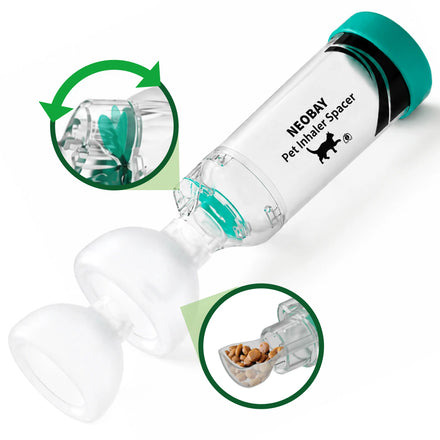
Neobay Cat Aerosol Chamber with Comfort Feeder — Green
- See each breath with the Breath Indicator
- Built-in treat holder makes mask practice easier
- Anti-static chamber helps keep medication airborne
Does Pet Insurance Cover Flovent? Prescription Drug Rules Explained
Flovent (fluticasone propionate) is the gold-standard inhaled medication for feline asthma. It's also where the money goes. Here's how insurance typically handles it.
Most comprehensive accident-and-illness policies cover prescription medications as part of their illness benefit, as long as the underlying condition is covered (i.e., not pre-existing). Flovent prescribed for a covered asthma diagnosis is generally reimbursable, just like antibiotics for a covered infection. One Reddit owner reported that ASPCA's plan covered 90% of their cat's asthma-related expenses — diagnostics, vet visits, and Flovent included.
But there are caveats that catch people off guard:
- Reimbursement is claim-based, not point-of-sale. You pay the pharmacy first, then file a claim with the receipt and the vet's prescription. The insurer reimburses you at your elected rate (70%, 80%, or 90%) after your deductible.
- Annual limits matter. If your policy has a $5,000 annual limit and Flovent costs $311–$400/month, you can burn through the limit in a single year. Plans with unlimited annual benefits or $15,000+ limits are safer for chronic asthma.
- Formulary vs. brand. Some policies prefer the generic (fluticasone) over brand-name Flovent, especially now that Flovent's U.S. availability has been disrupted. Generic substitution clauses may apply.
- Add-on riders vs. built-in coverage. A handful of policies treat prescription drugs as an optional add-on rather than a core benefit. Read the sample policy before enrolling — not just the marketing summary.
The bottom line: Flovent is covered when the underlying asthma is covered. The lever isn't whether the policy "covers Flovent" — it's whether your cat's asthma is classified as a covered illness or a pre-existing exclusion.
How Much Is Flovent for Cats? (And Why It Breaks Owner Budgets)
This is the section that should have been in every pet insurance article — and almost none of them include it. Real-world Flovent prices from U.S. pharmacies, membership warehouses, and discount programs in 2025–2026:
| Source | Reported Price (110 mcg) | Notes |
|---|---|---|
| U.S. retail pharmacy (CVS, Walgreens) | $311–$400 per inhaler | Out-of-pocket with no discount |
| Costco pharmacy (member price) | ~10–20% below retail | Owners report meaningful savings; no insurance required |
| GoodRx / discount cards | Variable, often $150–$250 | Works because fluticasone is a human drug too |
| Verified Canadian pharmacies | ~$50–$60 per inhaler (often $160 for 3) | Requires valid U.S. prescription; popular owner workaround |
| Generic fluticasone (where available) | $150–$250 | Post-Flovent-discontinuation option |
At $311 per month, Flovent alone runs $3,700+ per year. That's before vet visits, X-rays, or the AeroKat chamber. If your policy has a $5,000 annual limit, you can see why chronic asthma owners burn through benefits fast — and why many ultimately switch to Canadian pharmacies regardless of insurance.
If you want a deeper breakdown of Flovent pricing and the discontinuation situation, we wrote a full guide on Flovent alternatives for cats and another on generic fluticasone vs. Flovent.
Is the AeroKat Chamber Covered by Pet Insurance?
The AeroCat chamber (the spacer device that connects the inhaler to the cat's muzzle) is the awkward middle child of asthma coverage. It's not a medication, it's not a piece of durable medical equipment in the human-insurance sense, and most policies don't have a specific line item for it.
In practice:
- Most policies don't itemize it separately. If you submit a receipt for an AeroKat, the claim is usually processed under the general illness benefit and reimbursed at your elected rate.
- Some policies exclude devices or treat them as a one-time equipment cost rather than a medical expense. Read the sample contract for "equipment," "devices," or "supplies" language.
- The chamber costs $80–$100 one-time. Over a 3-year treatment span, that's roughly $30/year. Even if your policy denies it, the dollar amount is small enough that it's rarely worth fighting.
If you're choosing an AeroKat alternative, we have a side-by-side comparison of AeroKat vs. Neobay that walks through what matters in a chamber. A chamber is a long-term tool, so picking the right one is a higher-stakes decision than whether insurance reimburses the initial purchase.
5 Insurers Compared: Asthma Coverage Side by Side
This is a general snapshot of how the five most-discussed insurers handle asthma coverage, based on publicly available sample policies and owner reports. Policy terms change frequently — always verify against the insurer's current sample contract before enrolling.
| Insurer | Illness Waiting Period | Prescription Drug Coverage | Notes for Asthma Owners |
|---|---|---|---|
| Healthy Paws | 15 days | Included in illness benefit | Unlimited annual limits; no annual cap risk for chronic care |
| Trupanion | 30 days | Included; can pay vet directly | Per-condition deductible; one deductible for life of asthma |
| ASPCA Pet Health | 14 days | Included in complete coverage | Owners report 90% reimbursement on asthma care |
| Embrace | 14 days | Included; diminishing deductible | Curable pre-existing reset after 12 months symptom-free |
| Pets Best | 14 days | Included in illness plans | Optional routine care add-on (not asthma-relevant) |
The pattern across all five: if asthma is covered, prescriptions are covered. The real differentiator is the annual limit structure, the per-condition deductible model, and reimbursement rate — not whether the policy says "yes" to Flovent.
Can You Still Get Insurance After an Asthma Diagnosis?
Yes — and you should, even if asthma itself is excluded. Here's why.
Asthma will be a pre-existing exclusion on any new policy at this point. But cats with asthma still get sick with everything else. A cat with asthma can still develop dental disease, break a leg, swallow a string, get an ear infection, or need emergency surgery for a urinary blockage. None of those are asthma, and a new policy will cover them.
When you enroll, expect a medical record review for any cat with a documented history. The insurer may add a bilateral exclusion or a specific asthma clause to your policy before activation. Some owners are tempted to skip the new vet's mention of asthma to avoid the exclusion — don't. Insurers find it during claims review anyway, and nondisclosure can void the entire policy.
The honest framing: insurance after diagnosis isn't about asthma coverage. It's about protecting everything else.

Real Owner Strategies: Cutting Flovent Costs Without Insurance
If your cat's asthma is pre-existing, or you can't afford comprehensive premiums, here are the tactics owners actually use to bring Flovent within reach. None of these are hacks — they're legal, vet-supervised pathways.
- Ask your vet for a written prescription and take it to a human pharmacy. Fluticasone is a human drug, so Costco, Walmart, and local pharmacies can fill it.
- Use GoodRx or ScriptSave at U.S. pharmacies. Owners report meaningful reductions, especially on generic fluticasone.
- Consider verified Canadian pharmacies like Canada Drugs Direct, Marks Marine Pharmacy, or Global Care RX. These require a valid U.S. prescription and typically ship the same fluticasone at $50–$60 per inhaler. Read owner reviews before choosing one.
- Ask your vet about generic fluticasone, especially now that Flovent HFA has been discontinued in the U.S. and replaced by generic equivalents. We cover this in detail in our generic vs. Flovent guide.
- Don't substitute prednisolone long-term without vet approval. Oral steroids are cheaper, but they carry systemic side effects that inhaled steroids avoid. They are a bridge, not a replacement. We discuss this trade-off in our guide on steroid side effects and alternatives.
For a broader playbook on affording asthma care, our guide to affording cat asthma treatment walks through nonprofits, manufacturer assistance, and pharmacy comparison in more depth.
Frequently Asked Questions
Does pet insurance cover cat asthma?
Yes, if the cat was enrolled before any symptoms appeared and the waiting period passed. Asthma is treated as an illness under comprehensive accident-and-illness policies, so diagnostics, vet visits, and prescriptions like Flovent are reimbursable. If the cat was symptomatic or diagnosed before enrollment, asthma is excluded as pre-existing.
Is cat asthma considered a pre-existing condition?
Yes, if any symptoms (coughing, wheezing, fast breathing) appeared before the policy's effective date. Insurers look at clinical signs in the vet record, not just the official diagnosis date. A note saying "owner reports coughing for a month" is enough to flag asthma as pre-existing.
Does pet insurance cover Flovent prescriptions?
Yes, when the underlying asthma is covered. Most comprehensive policies include prescription medications as part of the illness benefit. You pay the pharmacy first and submit a claim for reimbursement at your elected rate, minus your deductible. Annual limits apply.
How much does Flovent cost for a cat?
About $311–$400 per inhaler at U.S. retail pharmacies, which usually lasts one month. Costco and GoodRx can lower that to $150–$250. Verified Canadian pharmacies ship the same medication for roughly $50–$60 per inhaler with a valid U.S. prescription.
Is the AeroKat chamber covered by pet insurance?
Usually yes, but as a general expense under the illness benefit rather than a separately itemized device. Some policies exclude equipment. Because the chamber costs $80–$100 one-time, the dollar amount is small enough that most owners don't fight denied claims.
Can I get pet insurance after my cat is diagnosed with asthma?
Yes, but asthma will be excluded as pre-existing. The value of post-diagnosis insurance is covering everything else — accidents, dental disease, infections, emergencies. Be transparent on enrollment; insurers will catch prior history during claims review anyway.
What is the waiting period for asthma coverage on pet insurance?
Most policies enforce a 14- to 15-day illness waiting period before any illness coverage kicks in. Trupanion uses 30 days. If your cat shows symptoms during the waiting period, the condition becomes pre-existing and is excluded.
Are Canadian pharmacies safe for buying cat Flovent?
Verified Canadian pharmacies like Canada Drugs Direct and Marks Marine are widely used by U.S. cat owners and ship the same fluticasone with a valid prescription. Read current owner reviews, require a prescription from your vet, and confirm the pharmacy verifies prescriptions before checkout.
Will pet insurance cover prednisone instead of Flovent?
Yes — oral prednisolone is covered when asthma is a covered condition. But prednisolone is usually a short-term bridge, not a long-term replacement for inhaled fluticasone, because systemic steroids carry more side effects. Your vet decides whether it's appropriate for your cat.
Can I use GoodRx for my cat's fluticasone prescription?
Yes. Fluticasone is a human medication, so any pharmacy that accepts GoodRx can fill your cat's prescription. Present the GoodRx coupon at checkout. Discounts vary by pharmacy and location, but owners often see meaningful reductions off the retail price.
What to Do Next
- If your cat isn't symptomatic yet — enroll in a comprehensive policy today, before any breathing symptom lands in a vet record. This is the single highest-leverage move you can make.
- If your cat was just diagnosed — ask your vet for a written prescription, compare Costco, GoodRx, and verified Canadian pharmacy prices, and read our full cat asthma inhaler cost guide.
- Get the right chamber and start training early — accept that Flovent only works if the cat actually inhales it. See our cat inhaler mask training guide, or look at the Neobay Aerosol Chamber if you want a chamber designed to make mask acceptance easier from day one.
Asthma is a long game. The owners who manage it best aren't the ones who lucked into the perfect insurance policy — they're the ones who understood the rules early, locked in coverage before symptoms, and built a cost stack (insurance + pharmacy strategy + the right equipment) that holds up over years. Have more questions? Visit our FAQ page or contact us directly.
Sources:
- Trzil JE. "Feline asthma: diagnostic and treatment update." Veterinary Clinics of North America: Small Animal Practice, 2020; 50(2): 375-391.
- Cornell Feline Health Center. "Feline Asthma: What You Need to Know." Cornell University College of Veterinary Medicine. https://www.vet.cornell.edu/departments-centers-and-institutes/cornell-feline-health-center/health-information/feline-health-topics/feline-asthma-what-you-need-know
- MetLife Pet Insurance, "Cat Asthma: Symptoms, Treatment, and Cost," 2025.
- Plumb's Veterinary Drugs, "Fluticasone Propionate," current edition.
Related Reading
This article is part of our Cat Asthma Treatment Cost: Real 2026 Numbers — covering medication prices, insurance options, and practical affordability strategies.


