

Key Takeaways
- Vaping around cats is not safe. E-cigarette aerosol contains nicotine, propylene glycol, formaldehyde, and heavy metals — all of which are toxic to cats through inhalation, ingestion, and skin contact.
- Propylene glycol is uniquely dangerous for cats. Unlike dogs or humans, cats lack the liver enzymes to metabolize it efficiently. It can cause Heinz body anemia even at low chronic exposure levels.
- Thirdhand residue is the hidden risk. Vape aerosol settles on fur. Cats groom it off and ingest concentrated toxins — this is the exposure pathway most owners don't think about.
- A 2025 scoping review confirmed a critical research gap: zero published studies specifically on e-cigarette aerosol in pets, despite documented cases of severe poisoning from e-liquid ingestion.
- Nicotine poisoning can kill a cat within hours. A lethal dose is as low as 4 mg per pound of body weight. One discarded vape cartridge licked off the floor can be fatal.
You wouldn't blow cigarette smoke in your cat's face. But if you vape indoors — even in another room — your cat is still getting exposed. The evidence has been building for years, and in 2025 the picture is clear enough that veterinarians are issuing public warnings.
Here's what the research actually says, what makes cats uniquely vulnerable, and what to do if you've been vaping around your cat.
What's Actually in Vape Aerosol? (It's Not Just Water Vapor)
The most persistent myth about vaping is that exhaled aerosol is "just water vapor." It's not. When e-liquid heats up, it produces an aerosol — a suspension of fine particles and chemical compounds — that includes:
- Nicotine: Present in most e-liquids. A single cartridge can contain the nicotine equivalent of 2-3 packs of cigarettes. Nicotine is a neurotoxin that absorbs through mucous membranes and skin.
- Propylene glycol (PG): The base carrier liquid in most vape juices. Chemically similar to ethylene glycol — the active ingredient in antifreeze, which is famously toxic to cats. PG doesn't cause the same acute kidney failure as ethylene glycol, but cats cannot metabolize it efficiently, and chronic exposure can damage red blood cells.
- Formaldehyde and acetaldehyde: Formed when PG and vegetable glycerin are heated to vaping temperatures. Both are classified as carcinogens by the IARC.
- Heavy metals: Nickel, chromium, and lead can leach from the heating coil into the aerosol.
- Flavoring compounds: Many are GRAS (generally recognized as safe) for ingestion by humans — but not tested for inhalation, and certainly not tested on feline respiratory tissue.
These particles are small enough to hang in the air for minutes and settle onto every surface — including your cat's fur.
Why Cats Are at Higher Risk Than Dogs (or Humans)
Cats have three biological vulnerabilities that make vape exposure more dangerous for them than for other pets.
1. Propylene glycol sensitivity. Cats lack sufficient levels of the enzyme alcohol dehydrogenase, which is needed to break down PG. In dogs and humans, PG is metabolized and excreted relatively quickly. In cats, it accumulates. Chronic PG exposure has been linked to Heinz body anemia — a condition where red blood cells are destroyed faster than the body can replace them.
2. Grooming behavior. When vape aerosol settles on a cat's fur, the cat licks it off during grooming. This converts an inhalation exposure into an ingestion exposure — and the concentration of residue on fur can be higher than what was airborne. This thirdhand pathway is documented in tobacco smoke research: cats in smoking households have cotinine (a nicotine metabolite) levels 2-4 times higher than dogs in the same homes, precisely because of grooming.

3. Respiratory anatomy. Cats have proportionally smaller airways than dogs, making them more susceptible to airway irritation and bronchoconstriction. A cat with undiagnosed feline asthma — a condition that affects 1-5% of cats — can have an acute episode triggered by aerosol exposure before the owner even knows the cat has the condition.
The 2025 Evidence: What Research Exists
A 2025 scoping review by Cerquetella et al. (University of Camerino / Sapienza University, published in Tobacco Prevention & Cessation) examined all available studies on secondhand smoke and e-cigarette aerosol exposure in dogs and cats. The findings were striking:
- Over 50% of studies investigating cancer, respiratory, and cardiovascular outcomes in pets reported statistically significant associations with secondhand tobacco smoke exposure.
- Zero eligible studies specifically addressed e-cigarette aerosol exposure in pets.
- The authors flagged this as a critical research gap — but warned that given what we know about the constituents, there is no reason to believe e-cigarette aerosol is safe for animals.
Separately, a 2024 review in the Journal of Small Animal Practice analyzed over 300 cases of dogs exposed to e-liquids and vape devices between 2011 and 2024. Most cases were mild, but several involved severe poisoning — and at least one fatality was documented. Cats, being smaller and more sensitive to PG, are presumed to be at equal or greater risk.
In 2025, Medivet UK and RUDN University both issued public veterinary advisories stating that "nicotine and vaping can be deadly for pets" and that "the respiratory system of pets is much more sensitive to toxic fumes than the human one."
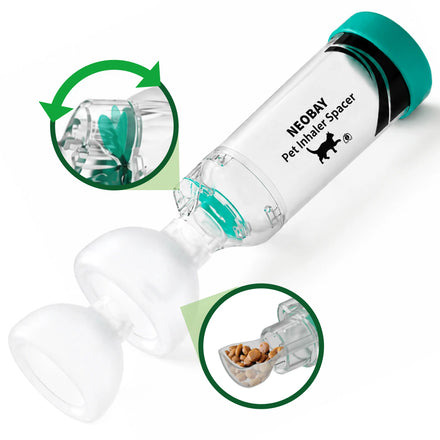
Neobay Cat Aerosol Chamber with Comfort Feeder — Green
- See each breath with the Flow Indicator
- Built-in treat holder makes mask practice easier
- Anti-static chamber helps keep medication airborne
Symptoms to Watch For: Acute vs. Chronic Exposure
Acute nicotine poisoning happens when a cat ingests e-liquid directly — licking a spilled cartridge, chewing a discarded pod, or grooming residue off their fur. Symptoms appear within 15-30 minutes:
- Drooling and vomiting
- Tremors, muscle twitching, or seizures
- Dilated pupils and disorientation
- Rapid heart rate followed by collapse
- Loss of consciousness
This is a veterinary emergency. Call a vet or the Pet Poison Helpline (1-800-213-6680) immediately. Do not wait to see if it passes.
Chronic low-level exposure is harder to spot but more common. Signs to watch for if you've been vaping indoors:
- Unexplained coughing or wheezing that comes and goes
- Increased grooming (trying to remove irritants from fur)
- Lethargy that doesn't have an obvious cause
- Loss of appetite or weight loss over weeks
- Recurring red or watery eyes
If your cat shows these signs and you vape indoors, tell your vet explicitly. Many owners don't mention it — and vets don't always ask.
Frequently Asked Questions
Is vaping worse than smoking around cats?
Both are harmful, through different mechanisms. Tobacco smoke contains more carcinogens and has stronger evidence linking it to feline lymphoma and oral cancer. But vape aerosol contains propylene glycol — which cats specifically cannot metabolize — and the lack of an immediate smoke smell leads many owners to vape indoors more frequently and in closer proximity to their cats than they would smoke. If you must choose between the two, neither is safe for your cat.
Can I vape in another room with the door closed?
Aerosol particles travel under doors and through ventilation systems. They also settle on your clothing and skin — your cat will encounter them when you interact. Vaping in a separate room reduces exposure but doesn't eliminate it. Vaping outdoors, well away from the house, is the only approach that completely protects your cat.
Is zero-nicotine vape juice safe around cats?
Zero-nicotine juice eliminates the nicotine poisoning risk but does not eliminate the propylene glycol or flavoring compound risks. PG is still PG regardless of nicotine content. Vegetable glycerin (VG) based juices may be less risky than PG-based, but the flavoring chemicals remain untested for feline inhalation safety. There is no such thing as a "cat-safe" vape juice.
What should I do if my cat licked spilled e-liquid?
Call the Pet Poison Helpline (1-800-213-6680) or your nearest emergency vet immediately. Do not induce vomiting — the risk of aspiration is high. If possible, bring the e-liquid bottle with you so the vet knows the nicotine concentration. Time matters: the faster treatment starts, the better the outcome.
How do I know if my cat already has damage from vaping exposure?
Your vet can run blood work, including a complete blood count to check for Heinz body anemia and a biochemistry panel to assess organ function. There is no specific "vape exposure test," but high cotinine levels can be detected if exposure is recent. Tell your vet honestly that you've been vaping indoors — this information directly affects what they look for.
What to Do Next
- Stop vaping indoors today. Take it outside, away from doors and windows. This single change eliminates the bulk of your cat's exposure.
- Wash your hands and face after vaping before touching your cat. Change your shirt if you vaped heavily.
- Store all vape products — devices, cartridges, e-liquids, disposables — in a locked cabinet your cat cannot access. Dispose of used cartridges in an outdoor bin with a lid.
- Clean surfaces your cat frequents: wipe down windowsills, cat trees, and bedding. Vape residue accumulates where you'd never think to check.
- Schedule a vet check if you've been vaping indoors for months or years. Blood work can catch early-stage anemia before it becomes clinical. Mention the vaping explicitly.
If your cat has an existing respiratory condition like feline asthma, eliminating aerosol exposure is just as important as medication. Learn more about common triggers that make your cat's asthma worse. Have questions? Visit our FAQ page or contact us.
Sources
- Cerquetella, M. et al. "Secondhand smoke and e-cigarette aerosol exposure in dogs and cats: A scoping review." Tobacco Prevention & Cessation, 2025.
- Tahiri, Z. et al. "Environmental tobacco smoke exposure in pets: A narrative review." Tobacco and Health Research Center, 2024.
- "Review of 300+ cases of e-liquid and vape device exposure in dogs." Journal of Small Animal Practice, 2024.
- Bertone, E.R. et al. "Environmental tobacco smoke and risk of malignant lymphoma in pet cats." American Journal of Epidemiology, 2002.
- Cornell Feline Health Center. "Feline Asthma: Environmental Triggers." Cornell University College of Veterinary Medicine.
- Pet Poison Helpline. "Nicotine Poisoning in Cats and Dogs." 2025.
Related Reading
This article is part of our Feline Asthma: The Complete Owner's Guide — covering everything from causes and symptoms to treatment and daily management.


