

Key Takeaways
- Feline asthma affects 1-5% of cats — and with consistent treatment, most live normal lifespans. A diagnosis is not a death sentence.
- Tonight's priority is environment, not perfection. Remove scented products and switch to dust-free litter before anything else.
- Count resting breaths before your cat needs medication. Normal is 20-30 breaths per minute at rest. Above 40 at rest means call the vet.
- Inhaled medication (fluticasone + spacer) is the gold standard for long-term control with fewer side effects than oral steroids.
- You didn't cause this. Feline asthma is immune-mediated. The most common triggers — pollen, dust, household products — are things no owner can fully eliminate.
You just got home from the vet. Your cat — the one curled up on the couch like nothing happened — has been diagnosed with feline asthma. Maybe you're relieved to finally have an answer. Maybe you're scared. Probably both.
The vet handed you discharge papers, mentioned an inhaler and a "spacer," and told you to watch for open-mouth breathing. Now you're sitting there wondering: What do I actually do right now?
This checklist walks you through the first 24 hours. Not the long-term plan — you'll figure that out over the next few weeks. Just what matters tonight and tomorrow morning.
The First Hour: What to Do Right After Leaving the Vet
Your cat is stressed from the car ride and the exam. Let them decompress. Don't try anything right now — no poking, no medicating, no new routines.
Read the discharge papers. Actually read them. Look for: which medications were prescribed (daily preventer vs. rescue), your follow-up appointment date, and the emergency symptoms list. Circle the emergency list and stick it on the fridge.
Write down three questions for your vet. Most owners think of questions at 2 a.m. and forget by morning. Start with: "Do I start medication tonight or tomorrow?", "What's an emergency visit versus a next-day call?", and "Can my cat still play / go outside / go up stairs?"
If the vet gave you an inhaler and spacer today, don't try to use it yet. Let your cat decompress first. You'll practice tomorrow.
Setting Up Your Home: Changes to Make Tonight
You don't need a sterile cleanroom by morning. But five things before bed make a real difference.
1. Throw out scented products in the room your cat sleeps in. Plug-in air fresheners, scented candles, essential oil diffusers — gone. These are the most common household triggers, and removing them costs you nothing.
2. No smoking or vaping indoors, ever again. Not in another room, not with the window open. Smoke and vapor particles settle on fur. Your cat grooms them off and inhales the residue.
3. Switch to dust-free litter tonight. Clay and clumping litters produce fine silica dust. Grab unscented paper pellets, wood pellets, or crystal litter. You don't need a fancy brand — just the lowest-dust option on the shelf.

4. Skip aerosol sprays. No Febreze, dry shampoo, or spray deodorant near the cat. Clean with a damp cloth.
5. Open a window for 20 minutes (if pollen isn't high). Indoor air accumulates VOCs from furniture and cleaning products. A quick exchange helps.
That's it for night one. Research HEPA air purifiers tomorrow.
Understanding Your Cat's Medication Plan
Most newly diagnosed cats leave the vet with one of two setups.
Option A: Inhaled medication with a spacer. The long-term gold standard. A daily inhaled corticosteroid (usually fluticasone) delivered through a feline aerosol chamber — a tube with a mask and inhaler port. You'll also likely have a rescue inhaler (albuterol) for emergencies.
Option B: Oral steroids (prednisolone). Common for fast initial control or while you get an inhaler setup. Effective short-term, but vets prefer transitioning to inhaled within weeks to avoid long-term side effects.
If you're on Option A: Tomorrow, just practice. Let your cat sniff the spacer. Put a treat on the mask. Zero pressure — just association.
If you're on Option B: Give the pill tomorrow morning exactly as prescribed. Hide it in a pill pocket or a small piece of tuna. Don't crush or split it unless the vet told you to.
Either way: don't skip doses because your cat "seems fine." Asthma medications control inflammation you can't see. A symptom-free cat still has airway disease.
Your First Night: What to Watch For
You're probably going to stare at your cat while they sleep. That's normal. Here's what's worth watching.
Count resting respiratory rate. Wait until your cat is fully asleep — not dreaming, not purring. Count breaths for 15 seconds, multiply by 4. Write that number down.
- 20-30 breaths/min: Normal at rest. This is your baseline.
- 30-40 breaths/min: Higher than normal. Watch for other signs. Call the vet in the morning if it stays high.
- Above 40 breaths/min at rest: Emergency. Call your vet immediately.

What's NOT an emergency tonight: A single cough. One wheezy exhale. Your cat sleeping more than usual (they had a stressful day). What IS an emergency: Open-mouth breathing. Blue, grey, or pale gums. Sides heaving with visible abdominal effort. If you see any of these, go to the emergency vet — don't post on Reddit first, don't wait to see if it passes.
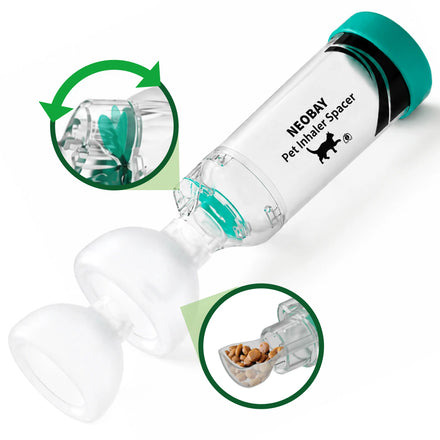
Neobay Cat Aerosol Chamber with Comfort Feeder — Green
- See each breath with the Flow Indicator
- Built-in treat holder makes mask practice easier
- Anti-static chamber helps keep medication airborne
The Next Morning: Starting Your New Routine
Morning is when ongoing management begins. Here's your Day 1 checklist:
Give morning medication. Oral steroids: first dose with breakfast. Inhaler: do a 30-second "mask near face" session with treats. Full inhaler training takes days to weeks — that's fine.
Count resting breaths again. Compare to last night's number. This starts your breathing log — the most useful thing you can bring to the follow-up appointment.
Call your vet with your three questions. Get clarity on rescue inhaler use versus ER visit. The ambiguity is what causes panic at 11 p.m.
Take a photo of your cat looking normal. During a future coughing episode, having a reference photo helps you assess how bad things really are — and helps your vet too.
Spend 15 minutes on one more trigger. Remove one more scented product. Make a list for the week. Don't overhaul everything today — the stress of it isn't good for you or your cat.
Frequently Asked Questions
Is my cat going to die from asthma?
With consistent treatment, most asthmatic cats live normal lifespans. Feline asthma is a manageable chronic condition, similar to human asthma. The key is daily prevention — cats on daily inhaled corticosteroids typically have excellent long-term outcomes.
Did I cause my cat's asthma?
No. Feline asthma is an immune-mediated condition. It's not caused by anything you did or didn't do. The same triggers that affect one cat have zero effect on another in the same home. Genetics play a role — Siamese and Oriental breeds have higher rates.
How am I going to afford this long-term?
Generic fluticasone costs significantly less than brand-name Flovent, and a single 110mcg inhaler typically lasts 2-3 months at standard dosing. The spacer is a one-time purchase. If cost is a concern, ask your vet about GoodRx discounts or Canadian pharmacy options.
How long until my cat's symptoms improve?
Oral steroids usually reduce symptoms within 24-48 hours. Inhaled corticosteroids can take 7-10 days to reach full effect — which is why some vets prescribe both initially. If you don't see improvement after two weeks on inhaled medication, call your vet for a dose adjustment.
What if my cat won't accept the inhaler mask?
Almost every cat can be trained — it takes patience, not luck. Start with the mask alone, put a small amount of wet food inside, and let your cat lick it off. Do this twice a day for a few days before attaching the chamber. Only introduce the puff sound after your cat is fully comfortable with the mask. Rushing is the #1 reason cats reject it. Give it two weeks of daily short sessions before you worry.
Can my cat still go outside?
It depends on their specific triggers. If pollen is a problem, limit outdoor access during high-pollen seasons. If your cat is stable on medication and triggers are controlled, supervised outdoor time is usually fine. Discuss this at the follow-up.
What to Do Next
- Tonight: Remove scented products, switch litter, count resting breaths, read your discharge papers.
- Tomorrow: Start medication, call the vet with your questions, take a "normal" photo of your cat.
- This week: Research HEPA air purifiers and dust-free cleaning routines. Schedule the follow-up if you don't have one.
- This month: Work on inhaler training. Build the breathing log habit.
If you're setting up an inhaler routine, your cat will need a feline-specific aerosol chamber. The Neobay Cat Aerosol Chamber includes a Visual Flow Indicator so you can see each breath your cat takes, plus a Comfort Feeder front piece that holds a squeeze treat at the mask rim, so your cat voluntarily presses their face in during training.
Need more guidance? Read our inhaler training guide or our breakdown of how vets diagnose feline asthma. Have questions? Visit our FAQ page or contact us directly.
Sources
- Reinero, C. et al. "Feline asthma: What's new in diagnosis and therapy?" Journal of Feline Medicine and Surgery, 2023.
- Cornell Feline Health Center. "Feline Asthma: What You Need to Know." Cornell University College of Veterinary Medicine.
- Trzil, J.E. "Feline Bronchial Disease: Treatment and Long-Term Management." Veterinary Clinics of North America: Small Animal Practice, 2020.
- International Society of Feline Medicine (ISFM). "Feline Asthma Management Guidelines." 2025.
Related Reading
This article is part of our How Vets Diagnose Feline Asthma — covering tests, X-rays, at-home monitoring, and what to expect at every step of the diagnostic process.
A new diagnosis brings more than medical questions — it brings a real emotional weight. Read our guide on emotional support for cat asthma owners for practical, research-backed ways to manage it.


