

Key Takeaways
- Oral corticosteroids (prednisolone) are effective for feline asthma, but long-term use carries serious risks — weight gain, diabetes, immune suppression, and liver damage.
- Inhaled medication delivered through a spacer chamber targets the lungs directly, giving cats the same anti-inflammatory benefit with far fewer side effects.
- Transitioning from pills to an inhaler takes patience, but most cats can be trained to accept the mask — especially with a Comfort Feeder design that reduces face aversion.
- A Visual Flow Indicator removes the uncertainty from treatment — you can see every breath your cat takes through the spacer.
When our cat Milo was first diagnosed with feline asthma, the vet handed us a bottle of prednisolone tablets and sent us home. "One pill a day," she said. "He should be fine."
He wasn't fine.
Within three months, Milo had gained nearly two pounds. He was drinking water constantly, his coat looked dull, and he'd developed a ravenous appetite that had him begging for food at all hours. The coughing had stopped, sure — but at what cost?
This is the story of how we got Milo off daily pills and onto inhaled medication — and how it completely changed his quality of life. If you're facing the same decision for your cat, I hope our experience helps.
The Diagnosis: Feline Asthma at Age 4
Milo is a 4-year-old domestic shorthair. He's always been active — chasing toys, climbing his cat tree, finding the highest shelf in every room. But one evening, I noticed him crouched low to the ground, neck extended, making a sound I'd never heard before. It was somewhere between a cough and a wheeze, and it lasted about 40 seconds.
It happened again two days later. Then again. I took a video and showed our vet.
After chest X-rays showed the classic "donut" pattern of thickened bronchial walls, and blood work revealed elevated eosinophils, the diagnosis was clear: feline asthma. Our vet explained that Milo's airways were chronically inflamed, and without treatment, the inflammation would continue to worsen.
We were given two options: oral corticosteroids (prednisolone) or inhaled medication through a spacer chamber. The pills were cheaper and easier — no training required. The inhaler route meant investing in equipment and teaching Milo to accept a mask over his face.
We chose the pills. It felt like the simpler path. I now know it was the wrong call.
The Problem With Daily Pills
Prednisolone works. Within days, Milo's coughing stopped completely. For the first two weeks, we thought we'd solved the problem.
Then the side effects started stacking up:
- Excessive thirst and urination — Milo was draining his water bowl twice a day and the litter box was constantly wet.
- Weight gain — He went from 11.2 lbs to 13.0 lbs in three months, driven by an insatiable appetite.
- Lethargy and muscle loss — Despite the weight gain, Milo was less active. He stopped climbing and spent most of the day sleeping.
- Dull coat — His once-glossy fur became dry and flaky.
At our three-month follow-up, the vet was honest: "Long-term steroid use in cats comes with significant risks — diabetes, liver problems, and immune suppression are all documented." She recommended we transition Milo to inhaled medication as soon as possible.
This is the reality many cat owners don't hear at first: oral steroids are a short-term solution for a long-term condition. They manage symptoms, but they don't come without a price.
Why Inhaled Medication Is Different
Inhaled corticosteroids (like fluticasone) work fundamentally differently from oral pills. Instead of entering the bloodstream and circulating throughout the body, the medication goes directly to the lungs — exactly where it's needed.
This means:
- Same anti-inflammatory effect in the airways
- Minimal systemic absorption
- Dramatically fewer side effects
- No strain on the liver or kidneys
But there's a catch: cats can't use an inhaler the way humans do. They need a spacer chamber — a device that holds the medication after the puffer is actuated, with a mask that fits over the cat's face. The cat breathes in naturally, and the medication goes straight to the lungs.
Our vet recommended we get a spacer and start the transition immediately. That's when we discovered that not all spacers are the same — and the right design makes an enormous difference.
The Training Journey: From Fear to Routine
I won't sugarcoat it: the first week was hard.
Milo was terrified of the spacer. The moment he saw it in my hand, he'd bolt under the bed. My first instinct was to hold him in place and force the mask on — and that was a disaster. He struggled, I got frustrated, and the whole experience was traumatic for both of us.
Our vet told us to slow down and follow a step-by-step desensitization process. Here's what worked:
Week 1: Just the Spacer
We left the spacer on the living room floor with treats placed around and on top of it. Milo was suspicious at first, but curiosity (and chicken) won out. Within three days, he'd approach the spacer on his own.
Week 2: Brief Mask Contact
We started touching the mask to his face for 2-3 seconds, followed immediately by a high-value treat. The key was never pushing past his comfort zone. If he pulled away, we let him. Short sessions, positive endings.
Week 3: Adding the Sound
We actuated the puffer away from Milo first, so he could hear the "pssh" sound without it being near his face. Treat. Repeat. Once he stopped flinching, we combined the sound with brief mask contact.
Week 4: First Full Treatment
By day 25, Milo let us hold the mask over his face for a full 7-10 breaths while we actuated the inhaler into the chamber. The Visual Flow Indicator on our spacer was a game-changer here — I could see the valve moving with each of Milo's breaths, so I knew the medication was actually going in. That visual confirmation turned our anxiety into confidence.
What made the difference:
- Comfort Feeder design — Our spacer's mask was shaped to feel less intrusive on Milo's face. I can't compare it to other spacers firsthand, but I can tell you Milo went from running away to staying still within two weeks. The mask wasn't as threatening as I'd feared it would be.
- Visual Flow Indicator — I cannot overstate how much this mattered. On day one of actual treatment, I could literally see Milo's breath moving the indicator. I knew he was inhaling the medication. Without that, I would have spent every session wondering, Is this even working?
- Consistency and patience — Every day, same time, same spot, same treat. The predictability made Milo feel safe.

The Results: Six Months Later
It's been six months since Milo's last prednisolone tablet. Here's what changed:
- Weight back to normal — Milo dropped the extra 1.8 lbs and is back at a healthy 11 lbs.
- Energy returned — He's climbing, chasing toys, and doing his 3 a.m. zoomies again. (Yes, even the annoying parts came back.)
- Coat restored — His fur is glossy and soft again. No more dry, flaky patches.
- Normal drinking — His water intake is back to pre-steroid levels. The litter box situation is... manageable again.
- No coughing — His asthma is well-controlled. He hasn't had a single episode in months.
The treatment itself now takes less than two minutes each morning. Milo comes to his spot on the couch when he sees me pick up the spacer — he knows a treat is coming. What was once a battle is now just part of the routine.
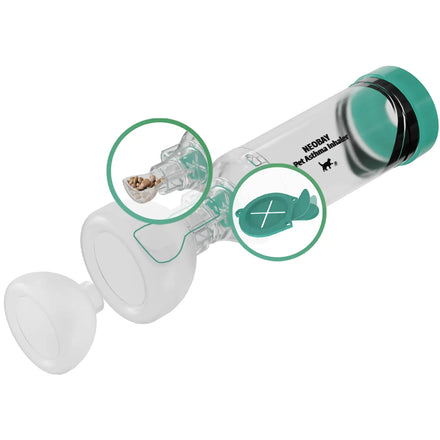
Neobay Cat Aerosol Chamber
✔ Visual Flow Indicator ✔ Comfort Feeder Design ✔ One-Way Valve
What I Wish I'd Known From the Start
Looking back, there are three things I wish someone had told me when Milo was first diagnosed:
1. Start Inhaled Medication Early
If your vet gives you the option of pills or an inhaler, take the inhaler route from day one — even if it seems harder up front. The training process is temporary. The side effects of long-term steroids are cumulative and can be permanent. Starting inhaled medication early avoids the health risks and means your cat never has to experience the steroid side effects at all.
2. The Right Spacer Makes Training Easier
I assumed all spacers were basically the same. They're not. The Comfort Feeder design on our spacer genuinely made a difference in how quickly Milo accepted the mask. And the Visual Flow Indicator gave us the confidence to know treatment was working — which, in turn, made us calmer during sessions. Cats pick up on your anxiety; when you're confident, they're calmer.
3. Training Isn't Linear — and That's OK
There were days Milo regressed. Days he ran away. Days I wanted to give up. That's normal. The key is to never end a session on a bad note. If your cat is fighting, stop. Try again tomorrow. One forced session can undo a week of trust-building.

Frequently Asked Questions
Can inhaled medication really replace daily pills for feline asthma?
Yes. Inhaled corticosteroids (fluticasone) delivered through a spacer chamber provide the same anti-inflammatory effect as oral prednisolone, but with minimal systemic absorption. This means your cat gets the asthma control without the side effects associated with long-term oral steroid use. Many veterinary specialists now recommend inhaled medication as the first-line long-term treatment.
How hard is it to train a cat to use an inhaler spacer?
It takes patience, but most cats can be trained within 2-4 weeks with consistent, short daily sessions. The key is using positive reinforcement (high-value treats) and never forcing the mask. A spacer with a Comfort Feeder design can significantly reduce your cat's initial resistance because the mask feels less intrusive.
How do I know my cat is actually breathing in the medication?
Use a spacer with a Visual Flow Indicator — a valve or flap that moves with each breath. This gives you real-time confirmation that your cat is inhaling the medication properly. Without it, you're essentially guessing whether the treatment is working.
What are the long-term side effects of oral steroids in cats?
Long-term prednisolone use in cats is associated with weight gain, increased thirst and urination, diabetes mellitus, immune suppression (making cats more vulnerable to infections), muscle wasting, thinning skin, and liver enzyme elevation. These risks increase with duration of use, which is why inhaled medication is preferred for chronic conditions like feline asthma.
How many breaths should my cat take through the spacer?
Most veterinarians recommend 7-10 breaths per dose. A Visual Flow Indicator helps you count these accurately, so you're not guessing whether enough medication has been delivered.
Is it worth the effort to switch from pills to inhaled medication?
Ask yourself: would you rather your cat take a pill every day that slowly damages their body, or spend two minutes each morning with a spacer that delivers the same benefit without the harm? The training period is temporary — usually 2-4 weeks. The health benefits are lifelong.
What to Do Next
If your cat is on daily prednisolone for feline asthma, talk to your vet about transitioning to inhaled medication. Here's what to do:
- Schedule a vet conversation — Ask specifically about the long-term risks of oral steroids and whether inhaled fluticasone is appropriate for your cat.
- Get the right spacer — Choose one with a Visual Flow Indicator so you can confirm medication delivery, and a Comfort Feeder design to make training easier. These two features make a real difference in real homes.
- Start the training process today — Even 2 minutes of introducing the spacer to your cat starts building positive associations.
- Be patient with yourself and your cat — The transition isn't always smooth, but it's worth it. Milo's story isn't unusual — thousands of cats have made this switch successfully.
The Neobay Cat Aerosol Chamber is designed with both a Visual Flow Indicator and Comfort Feeder built in — the two features that made the difference in Milo's transition from daily pills to inhaled medication.
Have questions about making the switch? Visit our FAQ page or contact us — we're happy to share what we've learned.
Sources:
- Reinero CR, et al. "Advances in the Understanding of Feline Asthma." Journal of Veterinary Internal Medicine, 2011.
- Padrid P. "Use of Inhaled Medications in Cats with Asthma." Veterinary Clinics of North America: Small Animal Practice, 2008.
- Lenox CE, Luescher AU. "Managing Feline Inhalant Therapy: A Practical Guide." Compendium on Continuing Education for the Practicing Veterinarian, 2015.
- Cornell Feline Health Center, Cornell University College of Veterinary Medicine. "Feline Asthma: What You Need to Know." Accessed 2026.
