

Key Takeaways
- Litter dust — especially from clumping clay — contains fine particles (PM2.5 and smaller) that can reach the lower airways, where asthma inflammation lives. Your cat's nose is inches from the litter while digging.
- Paper-based and walnut shell litters consistently produce the least airborne dust and are the safest choices for asthmatic cats. Avoid clay-based and scented litters entirely.
- A study found cats with respiratory disease had up to six times more silica particles in their lungs compared to healthy cats — a strong signal that clay dust belongs in the "avoid" column.
- Switching to a low-dust litter can reduce the frequency and severity of asthma attacks, but it's not a replacement for vet-prescribed medication. Environmental management and treatment work together.
- A gradual 10-day transition (mixing old and new litter in increasing ratios) prevents litter-box strikes. Rush the switch and you risk accidents outside the box.
You've tried three different litters. You switched from clay to crystals, then from crystals to pine. But every time your cat uses the box, there's that sound again — a dry, hacking cough that makes your stomach drop.
If your cat has been diagnosed with feline asthma, or even if you're still in the "is something wrong?" phase, the litter box deserves a hard look. It's the one thing your cat interacts with face-first every single day. And most cat owners never think about what's floating up from it.
This article breaks down what the research says about cat litter dust and feline asthma, which litter types are worst (and best) for asthmatic cats, and how to make the switch without sending your cat into a litter-box strike.

Why Cat Litter Dust Is a Hidden Asthma Trigger
Feline asthma is a chronic inflammatory disease of the lower airways that causes recurring episodes of coughing, wheezing, and labored breathing. When a cat with asthma inhales an irritant, the immune system overreacts — the airways constrict, mucus production increases, and breathing becomes difficult.
Litter dust fits into this picture because of particle size. Most clay-based litters produce fine particulate matter (PM2.5 and smaller) when poured, scooped, or disturbed by a digging cat. These particles are small enough to bypass the upper respiratory defenses and deposit directly in the bronchi and bronchioles — exactly where asthma inflammation lives.
Here's why cats get hit harder than you'd expect:
- Proximity. Your cat's nose is 2 to 6 inches from the litter surface while digging. You pour the litter from standing height and walk away. Your cat stays.
- Digging behavior. Cats spend 15 to 30 seconds burying waste, actively kicking up dust with each swipe. A single trip to the box can produce a concentrated dust cloud.
- Airway size. A cat's bronchioles are roughly 1 to 2 millimeters in diameter. A particle that would barely irritate a human airway can partially block a cat's.
- Grooming. Dust that settles on your cat's fur gets ingested during grooming, and particles trapped in nasal passages can be pushed deeper when the cat licks its face.
A study published in the Journal of Feline Medicine and Surgery identified environmental dust and aerosolized irritants as significant contributors to airway inflammation in cats with lower respiratory disease (Reinero et al., 2019). Litter dust is not a theoretical risk — it's a documented one.
There's also a more specific concern with clay-based litters. A study by animal behaviorist Peter Borchelt, PhD, found that cats with respiratory disease had up to six times more silica particles in their lungs compared to healthy cats — suggesting that the crystalline silica in clay litter may accumulate over time and contribute to chronic inflammation (Animal Wellness Magazine). While this doesn't prove causation, it's a strong signal that clay dust belongs in the "avoid" column for cats with breathing problems.
If you're working through the list of common triggers that make your cat's asthma worse, litter should be near the top, alongside smoke, perfumed cleaners, and seasonal pollen.
Which Cat Litters Are Worst for Asthmatic Cats
Not all litters are equal when it comes to dust. The type of material, how it's processed, and how fine the granules are all affect how much respirable dust ends up in the air.

Clumping Clay Litter: The Biggest Dust Problem
Sodium bentonite clay is the most common litter material in the United States, and it's also the dustiest. The clay is mined, dried, and crushed into fine granules that clump when wet. That same fine particle size is what makes it problematic for cats with asthma.
When you pour clumping clay litter from the bag, you can see the dust cloud. That's not just nuisance dust — it contains particles small enough to reach the deep lung. Scooping produces a second round of dust. And every time your cat digs, a third.
Some brands market themselves as "99% dust-free," but that claim is largely unregulated and based on manufacturer testing, not independent analysis. A 2018 evaluation by the Journal of Veterinary Diagnostic Investigation found significant variability in dust output even among litters labeled as low-dust.
Bottom line for cats with asthma: Clumping clay is the last litter you want. Even the "low-dust" versions produce more airborne particles than non-clay alternatives.
Silica Gel Crystals: Low Dust, Other Concerns
Silica gel crystal litter is made from sodium silicate, processed into porous beads. It's genuinely low-dust — the beads are too large and too heavy to become airborne easily. For cats with asthma, that's a clear advantage over clay.
But silica crystals have trade-offs. The beads are hard and can be uncomfortable on sensitive paws. Some cats refuse to use them. And while the dust concern is minimal, the chemical processing of silica has raised questions about trace residue, though no peer-reviewed studies have linked silica gel litter to respiratory harm in cats.
Bottom line: A reasonable choice if your cat will use it. The dust advantage is real, but comfort matters — a cat that won't use the box has a different set of health problems.
Pine and Wood Pellets: Natural Does Not Mean Allergy-Free
Pine pellet litter is made from compressed sawdust. It's marketed as natural and chemical-free, which sounds appealing for a cat with asthma. But "natural" and "hypoallergenic" are not the same thing.
Pine contains natural volatile oils (alpha-pinene and others) that can irritate sensitive airways. Kiln-dried pellets have most of these oils removed, but not all. When pine pellets break down — either from moisture or from your cat scratching them apart — they produce a fine wood dust that is respirable.
Some cats with asthma do fine on pine pellets. Others develop increased coughing. It depends on the individual cat's specific triggers.
Bottom line: Better than clay from a dust standpoint, but monitor your cat closely after switching. If coughing increases, pine oils may be the culprit.
Walnut Shell, Corn, and Paper-Based Litters
These newer alternatives have been gaining market share, and for good reason when it comes to dust:
- Paper-based litter (made from recycled paper pellets or crumbles) produces very little dust. It's one of the safest options for asthmatic cats. The downside is odor control — paper doesn't absorb ammonia as well as clay.
- Walnut shell litter is naturally low-dust and clumps reasonably well. Some brands (like Naturally Fresh) have been independently tested and rated as 99% dust-free with more rigorous standards than clay litter claims.
- Corn-based litter (like World's Best Cat Litter) is a middle-ground option. It clumps well and has moderate dust output — better than clay, but not as good as paper or walnut. Some cats are also sensitive to corn protein, which can act as an allergen.
Comparison: Litter Types and Asthma Risk
| Litter Type | Dust Level | Clumping | Odor Control | Asthma Risk | Best For |
|---|---|---|---|---|---|
| Clumping clay | High | Excellent | Excellent | High | Not recommended for asthmatic cats |
| Silica gel crystals | Low | None | Good | Low | Cats that tolerate hard surfaces |
| Pine pellets | Low-Medium | None | Fair | Low-Medium | Cats not sensitive to pine oils |
| Paper-based | Very Low | None | Fair | Very Low | Most asthmatic cats (if odor control is manageable) |
| Walnut shell | Low | Good | Good | Low | Cats needing clumping + low dust |
| Corn-based | Medium | Good | Good | Medium | Cats not sensitive to corn protein |
The Best Cat Litter for Cats with Asthma
Based on the evidence — and on what veterinarians who specialize in feline respiratory disease tend to recommend — here's what to look for:
1. Pick a litter with low respirable dust, not just "low dust" marketing. Paper-based litters (like Yesterday's News), walnut shell litters (like Naturally Fresh), and certain wood-fiber litters (like Ökocat) consistently produce the least airborne particles. If you need a clumping litter, walnut shell is the best low-dust option that still clumps. Dr. Elsey's Precious Cat Respiratory Relief is a specially formulated low-dust clay option designed for cats with respiratory issues — it's not 100% dust-free, but it's significantly less dusty than standard clay litters.
2. Avoid added fragrances. Scented litters use chemical perfumes that are themselves respiratory irritants. "Unscented" is not the same as "fragrance-free" — some unscented litters still contain masking agents. Read the label.
3. Consider your cat's preferences. The best litter for asthma is one your cat will actually use. A low-dust litter does no good if your cat starts eliminating outside the box. If your cat has been on clay for years, plan a gradual transition (see the next section).
4. Think about the whole box setup. A covered litter box traps dust inside, concentrating exposure. If you're using a covered box with a dusty litter, switching to an uncovered box can reduce your cat's dust exposure even before you change the litter.
Veterinarians at the Cornell Feline Health Center have noted that environmental management — including litter choice — is an underutilized part of feline asthma care. Most treatment plans focus on medication, which is essential, but reducing trigger exposure can lower the medication dose needed and improve quality of life.
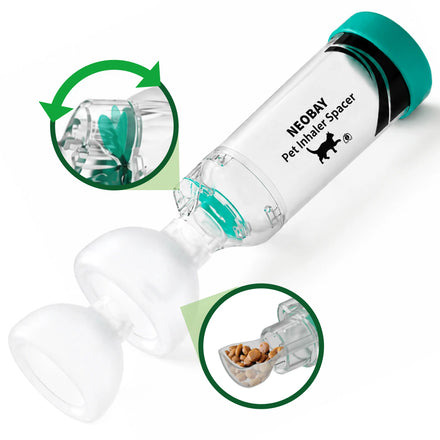
Neobay Cat Aerosol Chamber with Comfort Feeder — Green
- See each breath with the Flow Indicator
- Built-in treat holder makes mask practice easier
- Anti-static chamber helps keep medication airborne
If your cat has been diagnosed with asthma and is on inhaled medication, you already know the routine: puff the metered-dose inhaler into the spacer chamber, hold the mask over your cat's face, and wait for them to take several breaths. The spacer is what makes inhaled treatment possible for cats — it holds the medication in a chamber so your cat can breathe it in at their own pace, rather than trying to coordinate a single puff with a breath. A flow indicator on the chamber gives you visual confirmation that your cat is actually inhaling the medication, which takes the guesswork out of each session.
But here's something worth knowing: even with the right medication, if your cat is still being exposed to litter dust multiple times a day, the inflammation never fully calms down. Think of it like trying to put out a fire while someone keeps throwing kindling on it. The medication works better when the triggers are controlled.
How to Switch Your Cat's Litter Without the Stress
Cats are notoriously territorial about their litter. A sudden switch can lead to a litter-box boycott — and that's a problem you don't want on top of asthma. Here's a transition plan that works for most cats:
Days 1-3: Mix 25% new litter with 75% old litter. Your cat will notice the difference but the familiar scent and texture should keep them using the box.
Days 4-6: Move to 50/50. If your cat is still using the box normally, you're on track.
Days 7-9: 75% new, 25% old.
Day 10: Full switch.
If your cat refuses the box at any point, go back to the previous ratio and hold there for two more days before advancing again. Some cats — especially older cats that have used clay for years — need three to four weeks for a full transition. That's fine. Slow is better than accidents on the rug.

A few tips that make transitions easier:
- Keep the box extra clean during the switch. Scoop twice a day instead of once. A clean box with a new litter is more appealing than a dirty box with a familiar one.
- Don't change the box location at the same time. One change at a time. If you're moving the box, do that a week before or a week after the litter switch.
- Try a second box. Put a box with the new litter next to the old one and let your cat choose. Many cats will naturally try the new option within a few days.
Beyond Litter: Other Environmental Triggers in Your Home
Switching litter is one of the most impactful changes you can make for an asthmatic cat. But it's rarely the only environmental trigger in a typical home. Here are other dust and irritant sources to address:
Litter box placement matters. Don't put the box near heating vents, air conditioning returns, or open windows. A vent above the box will circulate litter dust throughout the room. An enclosed space with poor airflow (like a closet or small bathroom) concentrates dust and ammonia. The ideal spot is a well-ventilated area away from drafts and air returns.
Scooping technique. Scoop slowly. Fast, aggressive scooping throws more dust into the air. If you're using a clumping litter, wait 10 to 15 minutes after your cat uses the box before scooping — this lets the clump harden fully, which reduces breakage and dust.
Cleaning products. Avoid ammonia-based cleaners near the litter box area. Ammonia is a respiratory irritant, and the combination of ammonia fumes and litter dust is particularly bad for asthmatic cats. Use an enzymatic cleaner instead.
Air quality. An air purifier with a HEPA filter can capture fine litter dust that's already airborne. The evidence on air purifiers for cats with asthma is still limited, but the mechanism is sound — HEPA filters remove particles down to 0.3 microns, which covers the respirable dust range. We cover this in more depth in our article on whether air purifiers help cats with asthma.
Carpets and upholstery. Litter dust doesn't stay in the box area. It tracks on paws and settles into carpet fibers, where it gets re-suspended every time someone walks by. If your cat's asthma is hard to control, vacuuming daily (with a HEPA-filter vacuum) in the area between the box and your cat's favorite spots can help.
Frequently Asked Questions
Can cat litter cause asthma in cats?
Cat litter itself doesn't cause asthma — asthma is an immune-mediated disease with genetic and environmental components. But litter dust can trigger asthma attacks in cats that already have the condition, and chronic exposure to fine dust may contribute to airway inflammation that worsens the disease over time. If your cat has asthma, reducing litter dust exposure is a standard part of environmental management recommended by veterinary specialists.
What is the best dust-free cat litter for asthma?
Paper-based litters (like Yesterday's News) and walnut shell litters (like Naturally Fresh) consistently produce the least airborne dust. If you need a clumping litter, walnut shell is the best low-dust clumping option. Crystal litters are also low-dust but some cats refuse to use them due to the hard texture. The "best" litter is the one your cat will actually use — a low-dust litter does no good if your cat stops using the box.
How do I know if my cat's litter is triggering asthma?
Watch for a pattern. If your cat coughs or wheezes within a few minutes of using the litter box, or if coughing episodes happen more often on days when you've just refilled the box, litter dust is likely a trigger. You can test this by switching to a very low-dust litter (like paper-based) for two weeks and seeing if symptoms improve. If they do, litter was part of the problem.
Is clumping clay litter bad for cats with asthma?
Yes. Clumping clay litter (sodium bentonite) produces more respirable dust than any other common litter type. The fine clay particles are small enough to reach the lower airways, where they trigger inflammation in cats with asthma. Even brands marketed as "99% dust-free" produce more dust than paper, walnut, or crystal alternatives. Veterinary specialists consistently recommend switching away from clay for asthmatic cats.
Can switching litter stop my cat's asthma attacks?
Switching to a low-dust litter can reduce the frequency and severity of asthma attacks, but it rarely eliminates them entirely. Feline asthma is a chronic condition that usually requires medication (inhaled corticosteroids via a spacer chamber) in addition to environmental management. Think of litter as removing one match from a pile — it helps, but you still need to manage the fire.
How long after changing litter will I see improvement?
Most cats show noticeable improvement within 1 to 2 weeks of switching to a low-dust litter, assuming litter dust was a significant trigger. If you don't see any change after two weeks, the litter may not be the primary trigger, or your cat's medication may need adjusting. Talk to your vet — they can help determine whether the treatment plan needs to change, and if you haven't yet gotten a formal diagnosis, our guide on how vets diagnose feline asthma walks you through what to expect.
What to Do Next
- Check your current litter. Read the bag. Is it clay? Does it produce visible dust when you pour it? If yes, it's time to switch.
- Pick a low-dust alternative. Paper-based or walnut shell litters are the safest bets for cats with asthma. Buy a small bag first and start the gradual transition.
- Talk to your vet about the full picture. If your cat is coughing regularly, litter management alone isn't enough. Ask about inhaled medication and whether a spacer chamber is right for your cat. Inhaled corticosteroids delivered through a spacer are the gold-standard treatment for feline asthma — they control inflammation at the source with far fewer side effects than oral steroids. And if your cat resists the mask, a soft, contoured mask design can make treatment sessions far less of a struggle.
If your cat has been diagnosed with asthma, managing the environment is half the battle. The other half is consistent, medication-based treatment. A good spacer chamber makes that treatment possible — and a lot less stressful for both of you.
Have questions? Visit our FAQ page or contact us directly.
Sources: - Reinero CR, et al. "Feline asthma: diagnosis and treatment." Journal of Feline Medicine and Surgery, 2019. - Trzil JE, Reinero CR. "Update on feline asthma." Veterinary Clinics of North America: Small Animal Practice, 2020. - Cornell Feline Health Center, Cornell University College of Veterinary Medicine. "Feline Asthma." Accessed 2026. - Lee-Fowler TM, Reinero CR. "Feline lower respiratory disease: diagnosis and treatment." Journal of Veterinary Internal Medicine, 2018.
Related Reading
This article is part of our Feline Asthma: The Complete Owner's Guide — covering everything from causes and symptoms to treatment and daily management.


