Key Takeaways
- Cats don't cough like dogs or humans — a coughing cat always needs investigation. An occasional single cough from dust is one thing; any repeated or patterned cough warrants a vet check.
- The #1 mistake owners make: mistaking a true cough for a hairball. If your cat does the "hairball" motion frequently but nothing ever comes out, that's probably feline asthma — not a hairball.
- Sound is a diagnostic clue. A dry, hacking cough points to asthma or allergies. A wet, gurgling cough suggests infection or fluid. A honking "goose" sound may signal a tracheal issue.
- Body language tells you more than sound alone. Neck stretched forward + crouched low = airway cough. Rhythmic stomach contractions + ending with fur = hairball.
- Record a 20-second video before your vet visit. A video with sound is the single most useful diagnostic tool you can bring — coughing episodes rarely happen in the exam room.
You're sitting on the couch and hear it again — your cat, low to the ground, neck stretched out, hacking. You wait for the hairball. Nothing comes out. Again.
A cat doing the "hairball dance" with no hairball to show for it is the single most common presentation of feline asthma in veterinary clinics. The sound your cat makes — dry vs. wet, hacking vs. honking — is a diagnostic clue that can point your vet toward the right answer before a single test is run.
Is It a Cough or a Hairball? The Test Most Owners Get Wrong
This confusion is so common that veterinarians have a shorthand for it: "hairball history." A client says their cat has frequent hairballs. The vet asks, "Do you actually find hairballs?" The answer is often no.
True hairball retching comes from the stomach. It's a deep, rhythmic, full-body gag — the cat's abdomen contracts in waves, the back hunches, and the motion ends with a tubular wad of fur on your floor. The cat walks away and acts normal.
A true cough comes from the airways. The cat crouches low with its neck stretched forward, mouth slightly open, and produces a short, jerky burst of air — a dry "hack-HACK." The chest and belly move dramatically. Nothing comes up. The episode might repeat several times and leave the cat looking tired afterward.
There's also reverse sneezing, which sounds alarming but is harmless. The cat stands still, neck extended, making rapid snorting sounds like it's inhaling sneezes. It lasts 10–30 seconds and stops on its own — no chest involvement, no treatment needed.
Quick gut check: If it ends with something on the floor, it was a hairball. If it ends with hard swallowing and nothing produced — and episodes happen weekly — that's a cough pattern. See a vet.
Cat Cough Sound Types: What Each One Means
Veterinarians classify coughs by sound and moisture. But owners describe what they hear in everyday language. Here's how those real-world sounds map to actual conditions.
| What You Hear | Likely Cause | Action |
|---|---|---|
| Dry, hacking "hack-HACK" — like clearing a throat. Nothing comes up. Happens in short bursts. | Feline asthma or allergic bronchitis. Classic presentation — especially at night, after play, or near dusty litter. | Vet visit within 1–2 weeks. Record a video. Note triggers. Asthma is manageable with inhaled medication and a spacer chamber. |
| Wet, gurgling, bubbly — phlegm rattling deep in the chest. Cat swallows after coughing. | Respiratory infection, pneumonia, or fluid around the lungs. Often with sneezing or lethargy. | Vet visit within 48 hours. Fluid where it shouldn't be won't resolve on its own. |
| Honking "goose" sound — a loud, distinctive single honk. May happen after drinking or excitement. | Tracheal irritation or partial collapse. Rare in cats but possible in older or overweight cats. | Vet visit. Vet can palpate trachea to check. Often manageable with weight loss and no collar pressure. |
| Gagging/choking — like something stuck. Cat may paw at mouth or drool. | Foreign object lodged in throat, or severe throat inflammation. | If breathing: emergency vet now. Blue gums or collapse: life-threatening airway obstruction. |
| Wheezy, high-pitched whistle — during or between coughs, especially breathing out. | Narrowed airways from asthma, allergies, or chronic bronchitis. | Vet visit. If wheezing comes with open-mouth breathing or belly effort, go to emergency. |

Body Language: What to Watch for Beyond the Sound
The sound is half the story. Your cat's posture during and after the episode tells the other half.
During the episode: A coughing cat crouches low, almost flat to the floor, with the neck stretched forward and downward — like it's trying to straighten out its airway. The chest heaves in short, jerky movements. This is very different from the smooth, undulating stomach contractions of hairball retching.
After the episode: A cat who just had a true cough often swallows hard, licks its lips, and may seem slightly tired or subdued for a few minutes. A cat who just passed a hairball walks away immediately and resumes normal activity.
Frequency matters more than intensity: A single dramatic coughing fit once a month might be a one-off irritant. The same mild cough happening twice a week for a month is a chronic condition that needs diagnosis — even if the cough itself isn't loud or dramatic. Pattern tells the real story.
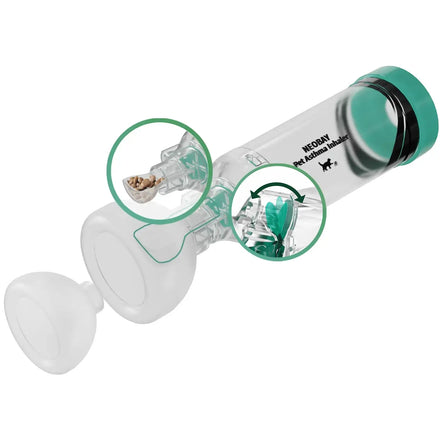
Neobay Cat Aerosol Chamber with Comfort Feeder — Green
- Visual Flow Indicator
- Comfort Feeder Design
- One-Way Valve
When to Worry: Emergency vs. Vet Visit vs. Monitor
Not every cough is an emergency. Here's how to triage.
Emergency vet — go now:
- Open-mouth breathing, panting, or visible abdominal effort to breathe at rest
- Gums that look blue, gray, or very pale (press gently with your finger — healthy gums pink up within 2 seconds)
- Coughing up blood or pink, frothy fluid
- Collapse, inability to stand, or extreme weakness after coughing
Schedule a vet visit this week:
- Coughing episodes happen more than once a week
- Dry cough with no hairball ever produced — the classic asthma pattern
- Coughing accompanied by weight loss, decreased appetite, or hiding behavior
- Cough worse at night or after exercise
Monitor at home:
- A single cough once every few months — likely a minor irritant (dust, quick inhale of water)
- Cat eating, playing, and breathing normally between episodes
If you're unsure which category your cat falls into, err on the side of a vet visit. Cats are masters at hiding respiratory distress — by the time they show obvious signs, the condition may be advanced.
What to Do Before the Vet Visit
Three things that will make your vet visit dramatically more productive.
1. Record a video with sound. Cats rarely cough on cue in the exam room. A 20-second phone video with audio and visible posture is often the single most valuable diagnostic tool you can provide.
2. Track the pattern. For a few days, note: when does it happen? How long does each episode last? What was the cat doing right before? Any obvious triggers?
3. Reduce environmental triggers now. Stop scented candles, essential oil diffusers, aerosol sprays, and heavily fragranced cleaners. Switch to low-dust, unscented litter. Run an air purifier in your cat's main room. These changes won't cure anything but will reduce airway irritation while you wait for the vet — and give cleaner data on whether the cough responds to environmental changes.

Frequently Asked Questions
Why does my cat keep coughing but no hairball comes out?
A true cough comes from the lungs — dry, nothing produced. A hairball comes from the stomach — wet, rhythmic, ends with fur on the floor. If your cat frequently does the motion but you never find hairballs, it's almost certainly a respiratory cough. Book a vet visit and bring a video.
What does a cat asthma cough sound like?
Most owners describe it as a dry, hacking "hack-HACK" — like the cat is trying to clear its throat. Some compare it to a goose honk. The cat crouches low with neck extended, coughs in short bursts, nothing comes up. Episodes often happen at night or after playing.
When should I worry about my cat's cough?
Go to emergency if your cat shows open-mouth breathing, blue gums, coughing up blood, or collapse. Schedule a vet visit this week if coughing happens more than once a week, produces no hairball, or comes with weight loss. An occasional one-off cough every few months with normal behavior in between is probably harmless.
How do I know if it's a hairball or asthma?
Watch the body motion. Hairball retching involves smooth, rhythmic stomach contractions — the abdomen undulates, and it ends with fur on the floor. A true cough is short, jerky, chest-driven, and produces nothing. If in doubt, record a video and ask your vet.
Can cats have a dry cough vs. wet cough like humans?
Yes, and the difference matters. A dry, hacking cough suggests airway irritation — asthma, allergies, or bronchitis. A wet, bubbly cough suggests fluid — infection, pneumonia, or heart-related buildup. Wet coughs are generally more urgent and warrant a vet visit within 48 hours.
What to Do Next
- Record a video the next time your cat coughs — with clear audio and body posture visible.
- Track the pattern for a few days: timing, triggers, and what happens after each episode.
- Reduce airway irritants at home — ditch the candles, plug-in air fresheners, and scented litter.
- Book a vet visit if the cough is repetitive or patterned. Bring the video.
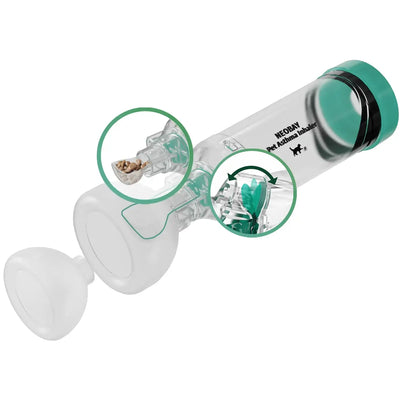
If the diagnosis turns out to be feline asthma, don't panic. It's the most common cause of chronic coughing in cats — and highly manageable. Standard treatment is an inhaled corticosteroid (like fluticasone) delivered through a cat inhaler spacer chamber like the Neobay Cat Aerosol Chamber. Medication goes directly to the lungs — no pills, no systemic side effects.
Want to learn more? Read our guide to telling the difference between feline asthma and hairballs, or check out common triggers that make your cat's asthma worse. Have questions? Visit our FAQ page or contact us.
Sources
- Kleszynski, B., DVM. "Cat Coughing: Why It Happens and When to Call Your Vet." PetMD, 2024.
- Cornell Feline Health Center. "Feline Asthma: What You Need to Know." Cornell University College of Veterinary Medicine.
- Rozanski, E. "The Coughing Cat." Problem-Based Feline Medicine, Elsevier, 2006.
- American Animal Hospital Association. "Cat Coughing: Causes and When to Seek Help." AAHA, 2024.
Related Reading
This article is part of our How Vets Diagnose Feline Asthma — covering tests, X-rays, at-home monitoring, and what to expect at every step of the diagnostic process.