Key Takeaways
- Feline rhinitis is inflammation of the nasal passages — acute cases resolve within weeks, while chronic rhinitis requires lifelong management but cats can still live comfortably with proper care.
- The most common root cause is prior viral infection (feline herpesvirus or calicivirus) that permanently damages the delicate nasal tissue, making it vulnerable to recurring inflammation and secondary bacterial infections.
- Seven red-flag symptoms warrant a vet visit: persistent sneezing, nasal discharge (clear to blood-tinged), pawing at the face, appetite loss, mouth breathing, eye discharge, and lethargy.
- In Canada, a basic diagnostic workup — exam, X-rays, and blood work — commonly runs CA$350–750 at Canadian clinics, with advanced imaging such as CT typically starting near CA$1,400 before extras (published Canadian pricing, accessed September 2026).
- At-home care makes the difference between constant flare-ups and long stretches of normal breathing — humidifiers, steam therapy, warm food, and nasal cleaning are proven, low-cost strategies that start working immediately.
- For cats with chronic rhinitis or overlapping asthma, inhaled medication delivered through a high-quality spacer chamber targets inflammation directly at the source while avoiding the systemic side effects of long-term oral steroids.
Feline rhinitis — inflammation of the lining of the nasal passages — is one of the most common upper respiratory conditions Canadian veterinarians see, and in most chronic cases the root cause is earlier damage from feline herpesvirus or calicivirus that leaves the nose vulnerable to repeat flare-ups. The condition is manageable but rarely curable: with environmental care at home, timely veterinary treatment (a basic Canadian workup commonly runs CA$350–750), and — when your vet prescribes it — inhaled medication delivered through a spacer chamber such as the Neobay chamber, most cats get back to long stretches of comfortable, quiet, normal breathing.
Your cat was fine yesterday. Today, they're sneezing every few minutes — loud, wet sneezes that spray the coffee table. Their nose is crusted with discharge. They walk up to the food bowl, sniff, and walk away. By evening, they're breathing through their mouth and hiding under the bed.
You're not overreacting if this scenario sets off alarm bells. Respiratory distress in cats escalates quickly because cats are obligate nasal breathers — they strongly prefer breathing through their nose. When the nasal passages swell shut, everything from eating to sleeping becomes a struggle.
Feline rhinitis — inflammation of the mucous membranes lining the nose — is one of the most common upper respiratory conditions veterinarians see in cats. The term "rhinitis" sounds clinical, but the reality is straightforward: the tissues inside your cat's nose are swollen, irritated, and producing excess mucus. The underlying cause determines whether it's a short-term problem or a chronic condition that needs ongoing management.
This guide covers what feline rhinitis actually is, how to recognize it early, what happens during a veterinary diagnosis in Canada and what it costs in CAD, and the treatment options — from antibiotics to inhaled therapy — that can give your cat their quality of life back.
What Is Feline Rhinitis?
Feline rhinitis means inflammation ("-itis") of the nasal cavity ("rhino-"). When the mucous membranes lining the nasal passages become inflamed, they swell and produce excessive mucus. The result is the same cluster of symptoms you'd experience with a severe head cold: congestion, pressure, difficulty breathing, and a runny nose.
Veterinarians classify rhinitis into two categories, and the distinction matters for treatment:
- Acute rhinitis appears suddenly, usually triggered by a viral or bacterial infection. With proper treatment, most cats recover within 2–4 weeks and return to normal breathing.
- Chronic rhinitis is nasal inflammation that persists beyond 4 weeks or keeps coming back. In most cases, the initial trigger was a viral infection — typically feline herpesvirus (FHV-1) or feline calicivirus (FCV) — that caused permanent damage to the nasal turbinates (the scroll-like structures inside the nose). Once those tissues are scarred, they become permanently vulnerable to inflammation. Bacteria can colonize the damaged tissue, and every stress event or environmental irritant can trigger a new flare-up.
Chronic rhinosinusitis is a related term you may hear — it means the inflammation extends into the sinuses as well as the nasal passages, which is common in long-standing cases.
The critical thing to understand is that chronic rhinitis is manageable but rarely curable. The goal of treatment isn't to make the condition disappear forever — it's to minimize flare-ups, keep the nasal passages as clear as possible, and prevent secondary infections from taking hold.
7 Warning Signs Your Cat May Have Feline Rhinitis
Cats hide illness instinctively. In the wild, a visibly sick cat becomes a target. This means by the time you notice symptoms, the condition may already be advanced. Knowing the full range of signs helps you catch rhinitis early.
1. Persistent Sneezing
An occasional sneeze is normal. Sneezing fits that happen multiple times per day, or sneezing that produces visible spray or discharge, are not. Pay attention to frequency — one or two sneezes after sniffing a dusty corner is different from 10–15 sneezes in a row with no obvious trigger.
2. Nasal Discharge
The appearance of the discharge tells you something about what's happening inside:
| Discharge Type | What It May Indicate |
|---|---|
| Clear and watery | Early viral infection, allergies, or mild irritation |
| Thick, yellow, or green | Secondary bacterial infection — the immune system is fighting back |
| Blood-tinged or brown | Severe inflammation with tiny blood vessel rupture; also seen with fungal infections or nasal tumours |
Discharge from one nostril only suggests a localized problem — a foreign body (like an inhaled grass blade), a polyp, or a tooth root abscess extending into the nasal cavity. Discharge from both nostrils typically points to a systemic issue like a viral infection.
3. Pawing at the Face
You'll see your cat rubbing their nose with a paw or dragging their face along the carpet. They're trying to clear the blockage — the same instinct that makes you reach for a tissue. Excessive face-rubbing can also indicate dental pain, so note whether it's accompanied by other respiratory signs.
4. Loss of Appetite
Cats rely heavily on their sense of smell to decide whether food is worth eating. A cat with a completely blocked nose may stop eating entirely — not because they're not hungry, but because the food "doesn't exist" to them. This can become dangerous quickly. Cats who don't eat for more than 48 hours risk hepatic lipidosis (fatty liver disease), a potentially fatal condition.
5. Mouth Breathing or Noisy Breathing
A healthy cat at rest breathes through their nose, silently, with their mouth closed. Mouth breathing, panting at rest, or audible congestion (wheezing, snorting, or a "stuffy" sound with each breath) means the nasal passages are significantly obstructed. This is a sign to call your vet the same day.
6. Eye Discharge or Squinting
The nasal passages and eyes are connected through the nasolacrimal ducts. Inflammation often spreads, causing conjunctivitis (red, swollen eyes) and watery or thick eye discharge. In herpesvirus cases, you may also see corneal ulcers — painful sores on the surface of the eye that cause squinting and sensitivity to light.
7. Lethargy and Hiding
When breathing requires effort, everything else suffers. Cats with significant nasal congestion sleep poorly, move less, and often retreat to hiding spots. A cat who normally greets you at the door and suddenly won't leave the closet is telling you something is wrong.
When to seek emergency care: If your cat is open-mouth breathing, struggling for air (abdominal heaving with each breath), has blue-tinged gums, or has not eaten for 48+ hours, go to an emergency vet immediately.
What Causes Feline Rhinitis?
Rhinitis is not a single disease — it's a reaction pattern with multiple possible triggers. Identifying the root cause is essential because treatment for a viral infection looks very different from treatment for a fungal infection or a nasal polyp.
| Cause Category | Specific Triggers | Typical Pattern |
|---|---|---|
| Viral infections | Feline herpesvirus (FHV-1), feline calicivirus (FCV) | The most common trigger. Initial infection may be mild, but the virus permanently embeds in nerve tissue and can reactivate during stress. Accountable for >90% of acute URI cases in cats. |
| Secondary bacterial infections | Mycoplasma felis, Chlamydophila felis, Bordetella bronchiseptica, Pasteurella species | Bacteria rarely start the problem — they move in after viral or structural damage weakens the nasal defenses. Thick yellow/green discharge is the hallmark. |
| Fungal infections | Cryptococcus neoformans, Aspergillus species | More common in outdoor cats and certain regions. Cryptococcus often causes a distinctive swelling over the bridge of the nose. Requires months of antifungal medication. |
| Nasal polyps or tumours | Inflammatory polyps, lymphoma, adenocarcinoma | Polyps are benign but physically block airflow. Tumours may cause facial deformity, bloody discharge, and progressive worsening that doesn't respond to antibiotics. |
| Dental disease | Tooth root abscess, severe periodontal disease | The roots of the upper teeth sit directly below the nasal cavity. An infected upper canine or premolar can erode into the nasal passage, causing one-sided discharge and sneezing. |
| Foreign bodies | Grass awns, small seeds, debris | Unilateral (one-sided) discharge + sudden-onset violent sneezing. More common in outdoor cats. Requires sedation and rhinoscopy to remove. |
| Allergies and irritants | Dust, pollen, scented litter, smoke, cleaning products, air fresheners | True allergic rhinitis is less common in cats than in humans, but airborne irritants reliably worsen existing rhinitis. Cats with chronic rhinitis benefit from a low-irritant environment. |
Why chronic rhinitis persists: The key mechanism is the "vicious cycle." A virus damages the nasal turbinates → scar tissue forms → mucus clearance becomes impaired → bacteria colonize the damaged tissue → inflammation worsens → more scarring. Breaking this cycle requires treating both the infection and the inflammation simultaneously.
How Vets Diagnose Feline Rhinitis (and What It Costs in Canada)
If your cat's sneezing and congestion persist for more than a few days, or if symptoms are severe enough to affect eating and breathing, a veterinary diagnosis is essential. Here's what to expect — with typical Canadian costs based on published clinic and industry pricing (accessed September 2026):
Physical examination: The vet will check nasal airflow (holding a microscope slide or wisp of cotton near each nostril to compare airflow), examine the eyes and mouth, palpate the face for asymmetry or painful areas, and listen to the lungs to rule out lower respiratory involvement. In Canada, an exam or consultation fee commonly runs CA$80–120 (mypetvet.ca reports a range of about CA$56–130 across Canadian clinics, accessed 2026-09-14).
Blood work: A complete blood count (CBC) and serum biochemistry panel help assess overall health and identify signs of infection or inflammation. Canadian blood panels typically add about CA$100–250 depending on scope (mypetvet.ca, accessed 2026-09-14). Your vet may also test for feline leukemia virus (FeLV) and feline immunodeficiency virus (FIV), as immunosuppressed cats are more vulnerable to severe and chronic rhinitis.
PCR testing: A swab from the conjunctiva (eye) or oropharynx (back of the throat) is sent to a lab for PCR analysis. This can identify the specific virus (FHV-1, FCV) or bacteria (Mycoplasma, Chlamydophila) responsible, which determines whether antiviral or antibiotic therapy is appropriate.
Imaging: Dental X-rays can reveal tooth root problems extending into the nasal cavity. Skull radiographs show fluid opacity in the nasal passages or sinuses — in Canada, X-rays commonly run about CA$150–350 for two views, with additional views around CA$125–139 each (mypetvet.ca; Vetster Canada, accessed 2026-09-14). For complex or non-responsive cases, a CT scan provides the most detailed view of the nasal structures and is the gold standard for identifying tumours, deep fungal plaques, or extensive turbinate destruction. Canadian CT estimates typically start around CA$1,400 before anesthesia and extras (Vetster Canada, accessed 2026-09-14), with referral institutions such as the Ontario Veterinary College Health Sciences Centre in Guelph providing advanced imaging of this kind.
Rhinoscopy: Under general anesthesia, a small endoscope is passed into the nasal passages. This lets the vet directly visualize the nasal lining, identify polyps or foreign bodies, and collect biopsy samples. Performed at Canadian referral and specialty clinics, rhinoscopy with anesthesia and biopsy analysis commonly falls in the CA$1,500–3,000 range (published clinic pricing, accessed September 2026). Rhinoscopy is often combined with a nasal flush — sterile saline is flushed through the nasal passages to clear out accumulated mucus and debris. Many cats breathe dramatically better immediately after a flush, even before medications take effect.
The diagnostic process can feel expensive and invasive, but skipping to guesswork treatment — throwing antibiotics at every sneezing cat — is how acute problems become chronic. A proper diagnosis gets your cat on the right treatment faster.

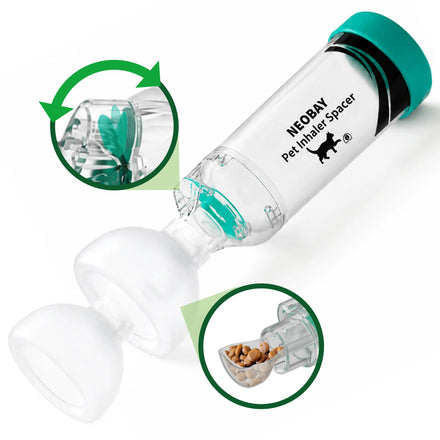
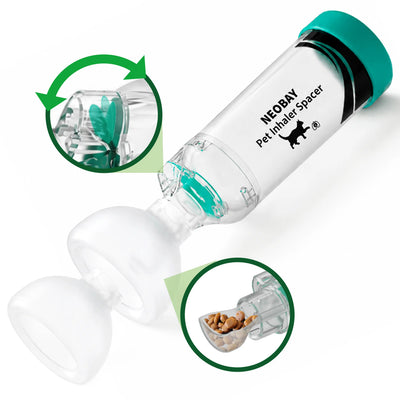
Cat Inhaler Spacer in Canada | Neobay Aerosol Chamber
- See each breath with the Breath Indicator
- Built-in treat holder makes mask practice easier
- Anti-static chamber helps keep medication airborne
Treatment: Medical Options and At-Home Care
Treatment for feline rhinitis works on two fronts simultaneously: addressing the underlying cause (if one is identified) and managing symptoms to keep your cat comfortable while healing happens.
Medical Treatments (Prescribed by Your Vet)
Antibiotics: Used for confirmed or strongly suspected secondary bacterial infections. Common choices include doxycycline (also effective against Mycoplasma) and amoxicillin-clavulanate. A critical note: antibiotics treat bacteria, not viruses and not inflammation itself. Using antibiotics for purely viral rhinitis contributes to resistance without helping your cat.
Antivirals: Famciclovir is the most commonly prescribed antiviral for FHV-1 infections. It reduces viral replication and can significantly decrease the severity and frequency of flare-ups in cats with herpesvirus-driven chronic rhinitis.
Corticosteroids: For chronic inflammatory rhinitis — particularly when turbinate damage drives the cycle — short courses of oral prednisolone can reduce swelling and restore airflow. The trade-off: long-term oral steroid use carries risks including diabetes, weight gain, and immune suppression. This is where inhaled steroids (see next section) become a valuable alternative.
Antifungals: If fungal rhinitis is confirmed (typically cryptococcosis or aspergillosis), treatment involves months of itraconazole or fluconazole, sometimes combined with surgical debridement of fungal plaques.
Nasal flush: Performed under sedation or anesthesia, a nasal flush uses sterile saline to physically clear mucus, debris, and crusted material from the nasal passages. For cats with chronic rhinitis, periodic flushes (every few months to once yearly, depending on severity) can dramatically improve quality of life.
At-Home Care (What You Can Do Starting Today)
These strategies require no prescription and can meaningfully improve your cat's comfort during a flare-up:
Run a humidifier near their favourite resting spot. Dry air thickens mucus and makes it harder to clear. Adding moisture to the air — especially during Canadian winter months when indoor heating dries everything out — keeps nasal secretions thin enough to drain.
Steam therapy. Bring your cat into the bathroom (in a carrier or on your lap) while you run a hot shower. Close the door and let them breathe the steam for 10–15 minutes. Do this 2–3 times per day during active flare-ups. The warm, moist air loosens congestion the same way it does for a child with a cold.
Warm their food. Cold food has almost no scent. Warming wet food for 10–15 seconds in the microwave (stir and test the temperature with your finger first — it should be lukewarm, not hot) amplifies the aroma significantly. You can also mix in a tablespoon of warm, low-sodium chicken broth. A cat who can smell their food is far more likely to eat it.
Gentle face cleaning. Use a soft, warm, damp washcloth to wipe away crusted discharge from the nose and eyes 2–3 times daily. Crusted material blocks airflow and irritates the skin underneath. A small dab of plain petroleum jelly applied around the nostrils can protect the skin from becoming raw.
Reduce airborne irritants. Switch to a dust-free, unscented cat litter. Stop using plug-in air fresheners, scented candles, and harsh cleaning sprays. If anyone in the household smokes, do it entirely outdoors — secondhand smoke is a powerful respiratory irritant for cats. Consider running a HEPA air purifier in the rooms where your cat spends the most time.

Inhaled Therapy: A Long-Term Solution for Chronic Cases
For cats with chronic rhinitis that requires ongoing anti-inflammatory treatment, or cats with concurrent feline asthma, the delivery method of the medication matters as much as the medication itself.
The problem with oral steroids: Oral prednisolone is effective at reducing nasal inflammation, but it circulates through the entire body. With long-term use, this systemic exposure increases the risk of diabetes mellitus, weight gain, urinary tract infections, and adrenal suppression. Many vets are reluctant to keep cats on oral steroids indefinitely for this reason.
Why inhaled therapy is different: Inhaled corticosteroids (like fluticasone — sold in Canada under the Flovent brand and increasingly as generic fluticasone) and bronchodilators are delivered as an aerosol and act directly on the respiratory tissue — the nasal passages, airways, and lungs. The medication stays localized. Very little enters the bloodstream, which means the systemic side effects associated with oral steroids are largely avoided.
What you need for inhaled therapy:
- A metered-dose inhaler (MDI) prescribed by your veterinarian — typically fluticasone (Flovent or generic fluticasone in Canada) for inflammation control, with or without salbutamol (commonly the Ventolin puffer in Canada) for acute bronchodilation
- A feline aerosol chamber (spacer) — the device that holds the medication in a chamber and delivers it through a face mask your cat breathes into. If you're new to the concept, start with our primer on what a cat inhaler spacer is and how it works.
Three features that determine whether a spacer actually works:
- Mask seal and comfort: A medical-grade silicone mask that conforms to your cat's face without gaps. If medication leaks out around the edges, your cat isn't getting the prescribed dose. A soft, well-designed mask also makes the difference between a cat that tolerates treatment and one that fights it every time — and slow, positive training matters as much as the hardware. Our 5-day cat inhaler training timeline shows how to build acceptance step by step.
- A visual flow indicator: A small valve or flap that moves with each breath. This lets you count exactly how many breaths your cat has taken and confirms the medication is actually being inhaled — eliminating the guesswork that makes inhaled therapy stressful for owners.
- Anti-static chamber materials: Cheap plastic chambers hold static electricity, which attracts aerosol particles to the walls of the device instead of keeping them suspended for your cat to inhale. Anti-static or coated chambers keep medication available in the aerosol for longer — and regular cleaning keeps them that way (see our guide to cleaning and maintaining a cat inhaler spacer).
For cat owners dealing with chronic rhinitis that requires ongoing medication, a high-quality spacer turns inhaled therapy from a frustrating experiment into a reliable daily routine. The upfront investment in a well-designed device pays for itself in fewer flare-ups and fewer emergency vet visits.
Preventing Future Flare-Ups
For cats with chronic rhinitis, prevention is an ongoing strategy, not a one-time fix. Every flare-up you prevent means less scar tissue accumulation and better long-term breathing.
- Minimize stress. Stress is the number one trigger for herpesvirus reactivation. Maintain consistent feeding times, provide hiding spots and vertical spaces (cat trees, shelves), and consider pheromone diffusers in your cat's main living areas. Changes to the household — new pets, new people, moving — should be introduced as gradually as possible. And if travel is on the horizon and your cat uses inhaled medication, plan ahead with our guide to travelling with a cat inhaler.
- Stay current on the FVRCP vaccine. The vaccine doesn't prevent herpesvirus infection, but it significantly reduces the severity of symptoms during a flare-up. Cats with chronic rhinitis should not skip booster shots.
- Control the environment year-round. Run a humidifier during dry winter months — a long Canadian heating season makes this especially important. Use a HEPA air purifier during pollen season and if you have multiple pets. Vacuum with a HEPA-filtered vacuum. Switch to dust-free, unscented litter permanently.
- Schedule proactive vet checks. For cats with known chronic rhinitis, schedule check-ups every 6 months rather than waiting for symptoms to become severe. A vet can catch early signs of a flare-up and intervene with targeted treatment before it spirals.

Frequently Asked Questions
Can feline rhinitis be cured?
Acute rhinitis caused by a viral or bacterial infection typically resolves completely within a few weeks. Chronic rhinitis — where the initial infection has caused permanent damage to the nasal turbinates — cannot be cured in the sense of being eliminated permanently. However, it can be managed effectively. Many cats with chronic rhinitis live comfortable, normal lives with a combination of environmental management, periodic treatment, and — when appropriate — inhaled medication.
Is feline rhinitis contagious to other cats?
It depends on the cause. Viral rhinitis caused by feline herpesvirus (FHV-1) or calicivirus (FCV) is highly contagious between cats through respiratory droplets, shared food bowls, and grooming. If you have a multi-cat household and one cat is diagnosed with a viral URI, isolate the affected cat in a separate room with their own food, water, and litter box until symptoms resolve. Chronic inflammatory rhinitis (where the virus is long gone but the tissue damage remains) is not contagious. Feline respiratory viruses are not transmissible to humans or dogs.
My cat is sneezing but otherwise seems fine. Do I need a vet?
Occasional sneezing — a few times a day, no discharge, normal eating and energy — can be monitored at home. Give it 48 hours. If the sneezing increases in frequency, if any nasal or eye discharge appears, or if your cat's appetite or energy level changes, schedule a vet appointment. Sneezing that lasts more than 5–7 days without improvement warrants a vet visit even if no other symptoms are present.
How is feline rhinitis different from feline asthma?
Rhinitis affects the upper airways — the nasal passages and sinuses. The primary symptoms are sneezing, nasal discharge, and congestion. Asthma affects the lower airways — the bronchi and lungs. The primary symptom is coughing (which owners often mistake for hairball attempts) and, in severe cases, wheezing or laboured breathing. A cat can have both conditions simultaneously. In fact, the same chronic inflammation that damages nasal tissue can also affect the lower airways, which is why inhaled therapy that treats both regions is valuable. If you're working through the lower-airway side, our guide to how vets diagnose feline asthma walks through those tests, and our asthma attack recovery timeline covers the first 24 hours after an episode.
Can I use a human nebulizer or inhaler for my cat?
You should not use a human inhaler on your cat without a spacer chamber designed for feline anatomy. Human masks do not fit a cat's face, and without a proper seal, the medication escapes. Human nebulizers can be used for saline-only steam therapy — placing the mouthpiece near (not on) your cat's face in a carrier — but medicated nebulizer solutions must be prescribed by your veterinarian. Never share your own inhaler medication with your cat. The dosing, active ingredients, and propellants are designed for human lungs, not feline ones.
How much does feline rhinitis treatment cost in Canada?
Costs vary significantly depending on the underlying cause and whether the condition is acute or chronic. Based on published Canadian pricing (accessed 2026-09-14), a basic vet visit with a course of antibiotics commonly runs CA$200–400. A basic diagnostic workup — exam, X-rays, and blood work — commonly lands around CA$350–750 all-in; adding PCR panels typically brings the total to CA$500–1,000. Advanced diagnostics run higher: CT imaging typically starts near CA$1,400 before anesthesia and extras (Vetster Canada), and rhinoscopy with anesthesia and biopsy commonly falls in the CA$1,500–3,000 range at referral clinics (published clinic pricing). Long-term management for chronic rhinitis — periodic medications, follow-up visits, and supplies like humidifier filters and air purifier replacements — should be budgeted at roughly CA$400–800 per year, though severe cases requiring regular nasal flushes will run higher. Costs also run higher at emergency and specialty clinics and in major cities, so ask your clinic for a written estimate and whether tests can be staggered.
What to Do Next
- Observe and document. Note when the sneezing started, what the discharge looks like (clear, coloured, blood-tinged), whether it comes from one nostril or both, and any changes in eating or energy level. This information helps your vet zero in on the cause faster.
- Start at-home comfort measures today. Run a humidifier, warm up your cat's food, and gently clean their face. These small actions make a measurable difference in your cat's comfort while you wait for a vet appointment.
- Schedule a vet visit if symptoms persist beyond 48 hours. The sooner a proper diagnosis is made, the less permanent damage accumulates in the nasal passages.
- If your vet recommends inhaled therapy, evaluate your spacer options carefully. A high-quality aerosol chamber with a proper mask seal and visual flow indicator transforms treatment compliance. Browse the Neobay cat inhaler spacer for Canada — designed specifically for feline facial anatomy with a medical-grade silicone mask, anti-static chamber, and built-in flow indicator so you know exactly when your cat has received their dose, plus a food-guided Comfort Feeder that helps cats accept the mask voluntarily. Then compare chambers, CAD pricing, and what to look for in our Canadian cat inhaler spacer buyer's guide.
Have questions about managing your cat's respiratory condition? Visit our FAQ page or contact us.
Sources:
- Cohn, L.A. "Feline Rhinitis and Upper Respiratory Disease." Textbook of Veterinary Internal Medicine, 8th ed. Elsevier, 2017.
- Reed N. "Chronic Rhinitis in the Cat: An Update." Veterinary Clinics of North America: Small Animal Practice, 2020; 50(2): 311-329.
- Scherk M. "Snots and Snuffles: Rational Approach to Chronic Feline Upper Respiratory Syndromes." Journal of Feline Medicine and Surgery, 2010; 12(7): 548-557.
- Cornell Feline Health Center. "Respiratory Infections in Cats." Cornell University College of Veterinary Medicine.
- International Cat Care. Chronic upper respiratory tract disease.
- Vetster Canada. "How much do pet X-rays cost?" — Canadian X-ray and CT pricing. Accessed 2026-09-14. https://vetster.com/en-ca/budgeting/how-much-do-pet-x-rays-cost
- mypetvet.ca. "How Much Does a Vet Visit Cost in Canada?" — exam, X-ray, and blood work pricing (exam fees about CA$56–130 across Canadian clinics). Accessed 2026-09-14. https://mypetvet.ca/blog/vet-visit-cost-canada/
- Published Canadian referral clinic estimates for rhinoscopy with anesthesia and biopsy (CA$1,500–3,000). Accessed September 2026.
Related Reading
This article is part of our Feline Asthma: The Complete Owner's Guide — covering everything from causes and symptoms to treatment and daily management. For Canada-specific chamber comparisons and CAD pricing, see our Canadian cat inhaler spacer buyer's guide.