Key Takeaways
- A 2025 owner-led study reported that 18 of 20 cats reached its defined face-mask/spacer acceptance standard; the median was 6 days, with a 2–19-day range.
- A five-day cat inhaler training plan is five small practice milestones, not a five-day promise or a reason to push past a cat’s “no.”
- Change one variable at a time: the mask, then brief contact, then the assembled chamber, then the sound or prescribed routine.
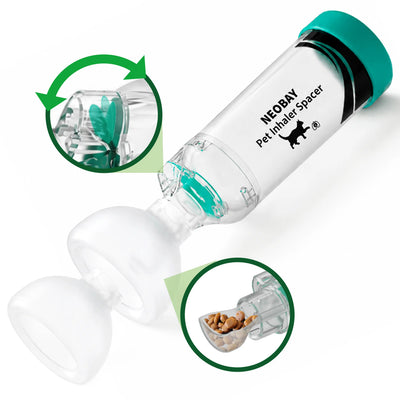
- Neobay’s Comfort Feeder can hold a familiar treat during medication-free practice so the cat can choose to approach; it is not medication or a fit guarantee.
- Canada shoppers should use the local product page for current CAD purchasing details, while training and medication questions stay with the veterinarian who prescribed the MDI.
Cat inhaler training works best as a calm, repeatable sequence, not a deadline on the calendar. A 2025 study found a median of 6 days for cats that reached its defined mask/spacer acceptance standard, but the range was 2–19 days; Neobay’s Canada chamber can support medication-free familiarization, while the prescribed MDI routine must still come from your veterinarian.
This Canada plan gives each day one small job. If your cat steps away, stops taking the reward or becomes watchful, repeat the easier day. That is not falling behind. It is the plan working as intended.
Why five days is a framework, not a deadline
Cat inhaler training — gradual, reward-based familiarization with a pet-only chamber and mask used alongside a veterinarian-prescribed MDI — should give the cat choice at every stage. The goal is not to get a mask onto a face as quickly as possible. The goal is for the cat to move forward willingly.
The research result is useful because it gives owners a realistic middle point: some cats were ready in 2 days, while others needed 19. It does not tell you what your individual cat should tolerate on Day 5. A cat who is calm around the mask today may still need another quiet session before accepting a longer interaction tomorrow.
International Cat Care’s training guidance separates the experience into parts: a new object at home, the mask near the muzzle, remaining still briefly, the full chamber and the sound associated with the prescribed inhaler. That separation is the practical difference between a short practice plan and a stressful test.
The Canada 5-day practice plan
Day 1: Make the accessory ordinary
Choose a calm, familiar spot—not the food bowl and not a place where your cat already feels trapped. Leave the separate mask or chamber part nearby while you do something ordinary. If your cat glances at it, walks past it or chooses to sniff, mark that calm choice with a familiar reward offered from your hand or another comfortable spot.
There is no face contact today. You are teaching one simple association: this object can appear without anything unpleasant following it.

Day 2: Let the mask appear without chasing the cat
Hold the mask still at a distance where your cat stays relaxed. Do not follow the cat’s face with it. Reward the smallest voluntary movement toward it: a look, a step forward or a brief sniff. Keep the session short enough that the cat leaves without feeling pressured.
What if my cat will only put their face near the mask for half a second?
Count that half-second as the current win. Reward it, end the session, and repeat it later. Trying to turn one brief approach into a long hold is a common way owners lose the progress they just made.
Day 3: Build voluntary muzzle contact
When your cat is comfortable seeing the mask, offer a small familiar treat at the opening during medication-free practice. Neobay’s Comfort Feeder is a removable treat holder designed for this voluntary introduction. Keep the mask still so the cat chooses to move their own face forward; do not press it onto the muzzle.
The target is a repeatable, relaxed approach—not a sealed mask and not a medication session. If the treat does not suit your cat’s diet or your veterinarian’s guidance, use another reward your cat values.
Day 4: Add a little duration, then the assembled chamber
Once the cat can place their face at the mask opening willingly, wait a moment before the reward. Add only a little time at once. Then let the cat see the assembled chamber from the same calm position. If the larger shape changes the reaction, go back to the mask-only step rather than trying to persuade the cat through it.
For a wider technique overview once this step feels ordinary, see how to keep an inhaled-medication routine low pressure.
Day 5: Rehearse the full setup only if your cat is ready
Offer the complete chamber and mask in the same low-pressure way. If your cat is calmly choosing the position, follow the veterinarian’s instructions for the prescribed MDI. If your cat is still avoiding the setup, make Day 5 another practice day. Do not change medication, timing or dose to make the calendar fit.
The sound of a prescribed inhaler can be a separate hurdle. Let your veterinarian guide any sound familiarization, especially if the cat has started to react to the sound or the routine itself. A five-day outline should never override a cat-specific veterinary plan.
When to pause instead of moving forward
Pause when the cat backs away, freezes, swats, stops engaging with a reward or starts avoiding the practice area. Go back to the last step that stayed easy. Several short repeats of an easy step are more useful than one long session that ends in a struggle.
My cat was doing well and suddenly regressed. Did I ruin the training?
Not necessarily. A new sound, a longer hold, the assembled chamber or a rushed moment can change how a cat reads the situation. Remove the newest variable, return to the previous successful step, and let the cat regain choice before you try again.
If the veterinarian-prescribed routine cannot be completed, practice is consistently becoming more stressful or you think the medication plan needs to change, contact the prescribing veterinarian. This article does not diagnose breathing concerns or give medication directions.

Canada purchasing and practice: keep the jobs separate
Canadian owners often have two decisions happening at once: choosing a local chamber purchase option and helping a cat accept the new routine. Keep them separate. Use the Canada cat inhaler spacer product page for the current CAD offer, included parts and delivery information; use the practice plan to decide whether today is a mask-only day or a repeat of yesterday’s easier step.
If your cat is resisting before you have even begun the timeline, read the Canada guide for cats that resist the mask. It covers the purchase-and-readiness question; this page owns the day-by-day practice sequence.
Frequently Asked Questions
Can a cat really learn inhaler-mask practice in 5 days?
Some cats can reach a comfortable practice stage quickly, but five days is not a guarantee. A 2025 study reported a median of 6 days and a 2–19-day range among cats that reached its defined face-mask/spacer acceptance standard. Use the timeline as a sequence of small steps and repeat a step whenever your cat needs more time.
What if my cat only stays at the mask for a second?
Reward that brief voluntary contact and stop while it is still easy. Repeat the same short step in later sessions before adding duration. Do not hold the mask in place or turn the reward into a way to keep your cat from leaving.
Should I force the mask on to stay on schedule?
No. Forcing the mask can create a negative association and make the next session harder. Return to an easier, medication-free practice step, and contact the prescribing veterinarian if the prescribed routine cannot be completed.
Can I use treats during cat inhaler training?
A small familiar reward can support early voluntary practice when it suits your cat and your veterinarian’s guidance. Neobay’s Comfort Feeder is a treat holder for that medication-free introduction. It does not deliver medicine or promise that every cat will accept the mask.
What if my cat is not ready for the full setup on Day 5?
Repeat the last calm step instead of moving forward. A five-day plan is a framework, not a reason to alter medication, timing or the veterinarian’s instructions. Ask the prescribing veterinarian for guidance if the routine remains difficult or the stress is increasing.
Where can Canadian owners check the local Neobay chamber details?
Use Neobay’s Canada product page for current CAD purchasing details, included parts and delivery information. For the wider local buying checklist, return to the Canada cat inhaler spacer buyer’s guide.
What to Do Next
- Pick the easiest day your cat can complete calmly, even if that means starting with Day 1 again.
- For Canada-specific product details, view Neobay’s Canada cat inhaler spacer.
- Return to the Canada cat inhaler spacer buyer’s guide for the complete local purchase checklist.
For questions about an order, visit our contact page. For questions about a prescribed inhaler, medication or breathing concern, speak with your veterinarian. Want the full desensitization background behind each training step? See our step-by-step guide to training a cat to accept an inhaler mask.
Sources
- Rozanski EA et al. Time to face mask/spacer acceptance in dogs and cats. Canadian Veterinary Journal, 2025.
- Ellis S. Training a cat to accept an inhaler. International Cat Care, 2019.
- Koven P. Teaching Your Cat To Use an Inhaler. Veterinary Partner, 2025.