Key Takeaways
- A trip within Canada with an inhaler-using cat is a preparation job built on five items: the prescribed MDI, a pet-only spacer chamber, an airline-compliant carrier, a documents card, and a quiet destination routine.
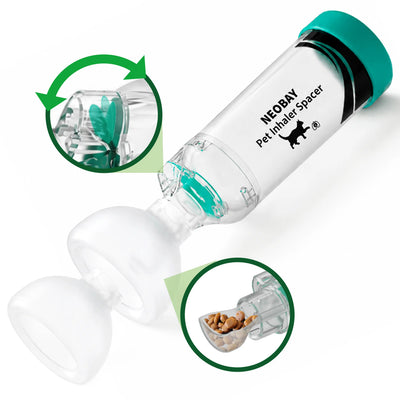
- A cat inhaler spacer is a chamber-and-mask accessory that holds no medication — the medication comes from the MDI (metered-dose inhaler) your veterinarian prescribed, and the clinic owns every decision about that routine.
- CATSA allows inhalers under 100 ml in carry-on bags, in the same 1-litre clear bag as other liquids; larger ones are screened as prescription medication.
- Since June 1, 2025, Air Canada accepts only soft-sided cabin carriers — 20 cm tall at most on many aircraft; WestJet allows up to 41 × 21.5 × 25.4 cm. Confirm the booked airline's current requirements.
- If your cat needs prompt clinical help while travelling, contact a veterinarian or local emergency service — don't wait for the trip's end.
Travelling in Canada with a cat who uses a veterinarian-prescribed inhaler is mostly a packing and routine job, and the Neobay pet-only chamber is one of five kit items that make it work: the prescribed MDI, the chamber, an airline-compliant carrier, a documents card and a quiet destination routine. The specifics are manageable: CATSA allows inhalers under 100 ml in carry-on bags, and the real constraint is carrier size — Air Canada caps cabin carriers at 20 cm on many aircraft. So before you book, make two calls: the prescribing veterinarian, and the booked airline's current pet policy.
This article covers equipment and routine on Canadian routes — it doesn't decide fitness to fly or replace the prescribing clinic's instructions.
What the veterinarian decides vs. what you pack
An MDI (metered-dose inhaler) — the pressurised medication canister a veterinarian prescribes, slotted into the rear of a spacer chamber — is the part of the kit you carry but never redesign. The clinic decides the routine, what counts as a missed session, and who to call at the destination.
Your half is logistics. Feline asthma affects an estimated 1–5% of cats (Cornell Feline Health Center), and the Canadian Veterinary Medical Association (CVMA) prefers a sitter or boarding over flying stress for many pets. For animals with breathing conditions, it calls the cabin rather than cargo "extremely advisable" if flying is necessary at all. Whether your cat should fly is a veterinary conversation — have it before booking.
Can I give my cat something to calm them for the flight?
That's a prescribing question, and Canadian sources line up on it: Air Canada and WestJet both state that tranquillizers aren't recommended without veterinary consultation, and the CVMA adds that sedatives aren't routine for air travel — any anti-anxiety option should get a home test run first. So ask the prescribing veterinarian, not a forum thread or an over-the-counter human product.
Build the five-part travel kit
1. The prescribed MDI, labelled and carry-on ready
Keep the inhaler, its label and the clinic's instructions in one place. CATSA allows puffers under 100 ml in your carry-on, in the same 1-litre clear bag as other liquids; larger ones are screened as prescription medication, where labelled packaging speeds things up. Ask the pharmacist about storage if the route involves a parked car in July heat or January cold. At the checkpoint, you carry your cat through the metal detector while the empty carrier goes through the X-ray — never place the cat on the belt or hand it to an officer (travel.gc.ca).
2. A clean, dry pet-only chamber
The chamber is a plastic accessory, not medication, so it packs like any fragile item: in a protective pouch or rigid container, in your carry-on where luggage can't crush it. If you wash it before departure, let every part air-dry fully before reassembling — the AeroKat manufacturer's instructions describe the same step, and the instructions with whichever chamber you use take priority.
Do one calm readiness check at home: chamber assembled, mask present, and the prescribed MDI seating at the rear port the way the veterinarian showed you — an equipment check, not a dose rehearsal. If your cat hasn't had calm practice around the mask, start early: the Neobay Comfort Feeder, a treat holder that supports voluntary familiarisation, is built for that.
3. An airline-compliant carrier — the real constraint
This is where Canadian trips get decided. As of 18 August 2026 (airline numbers change — verify on the carrier's own pet page before buying anything):
- Air Canada requires soft-sided carriers in the cabin (hard-sided ones stopped being accepted June 1, 2025), with size limits by aircraft — 40 × 43 × 20 cm on most narrow-body jets; that 20 cm height rules out most carriers on the Canadian market. Fees run about CA$50–60 one-way within Canada and to the US, and pets must be registered with Reservations soon after ticketing.
- WestJet accepts soft-sided, leak-proof carriers up to 41 × 21.5 × 25.4 cm, counted as your personal item, one pet per carrier. Request pet space right after ticketing — requests within 48 hours of departure may not be accommodated.
- Both airlines restrict pets on codeshare flights — book with the airline actually operating the aircraft.
Owners on Canadian forums call the 20 cm limit barely room for a cat to stand — a fair complaint, but not one you can argue at the gate. Buy the carrier early and keep the chamber reachable.
4. A documents-and-contacts card, Canadian edition
Store the clinic's phone number, your cat's medication details and an emergency contact with the kit, then add the route layer:
- Flying within Canada: domestic routes involve no border import rules — CFIA's requirements apply when animals enter Canada, not on a Toronto–Vancouver flight. The booked airline's pet policy is what matters.
- Canada–US trips: per USDA APHIS, cats entering Canada from the US don't need a health certificate, but they do need a rabies vaccination certificate from a licensed veterinarian showing the vaccination date and vaccine type. For the return leg and any other country, use CFIA's pet import tool and the booked provider's current requirements.
5. A quiet destination routine
Pick one quiet spot at the destination for the carrier, chamber and bag, and let the cat settle indoors before attempting the usual routine. Driving? Travel.gc.ca is blunt: cats belong in a carrier, and a parked car is dangerous in both extreme heat and extreme cold. If a sitter or second household is involved, show them where the equipment lives; their job is to follow the veterinarian's instructions, not improvise new ones.
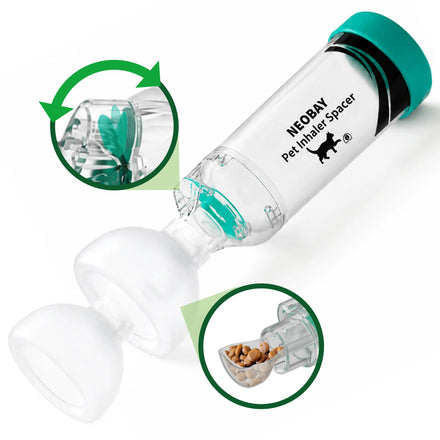
Cat Inhaler Spacer in Canada | Neobay Aerosol Chamber
- See each breath with the Flow Indicator
- Built-in treat holder makes mask practice easier
- Anti-static chamber helps keep medication airborne
What not to leave to travel day
- Don't sedate first and ask later. Air Canada, WestJet and the CVMA agree: no tranquillizers without veterinary guidance, ideally tested at home first.
- Don't change medication, dose or timing to make travel easier. Those are prescribing decisions.
- Don't leave the chamber or MDI in a parked car or under heavy luggage. Canadian summer and winter both hit extremes.
- Don't assume one airline's rules apply to the next. Air Canada and WestJet differ on carrier size, fees and deadlines — check the airline you booked, close to departure.
- Don't wait for a parcel if the need is urgent. Contact a veterinarian or local emergency clinic instead.
Frequently Asked Questions
Do cats need health certificates to fly within Canada?
No import documents apply on domestic Canadian flights — CFIA's rules govern animals entering Canada, not a Toronto–Vancouver cat. You need the airline's pet registration and a compliant carrier; confirm the booked provider's current requirements.
Can I bring my cat's inhaler on a plane in Canada?
Yes. CATSA allows inhalers under 100 ml in carry-on bags, in your 1-litre clear bag; larger ones are screened as prescription medication, where labelled packaging helps. The chamber is a plastic accessory and travels in your bag; the medication routine stays with the prescribing veterinarian.
Does Neobay include the inhaler or medication?
No. Neobay is a non-medicated, pet-only chamber accessory. A compatible MDI and its medication must be prescribed separately by a veterinarian.
Who do I contact if my cat needs help while we're away?
A veterinarian or the appropriate local emergency service — this article can't assess urgency or replace the clinic caring for your cat. And if cost or timing was the worry, that's still not a reason to wait.
What to Do Next
- Ask the prescribing veterinarian for travel guidance before booking, including whether your cat should fly at all.
- Register pet space with the airline right after ticketing, and re-check its pet page close to departure.
- If mask practice is still a work in progress, start with our guide to training your cat to accept an inhaler mask, or what a cat inhaler spacer actually is. Assembling the kit in Canada? Our cat inhaler spacer buyer's guide for Canada walks through the options, and the Neobay chamber for Canada ships domestically.
For product or order questions, visit our FAQ page or contact us. For questions about your cat's health or prescribed inhaler routine, speak with your veterinarian.
Sources
- Air Canada. Travelling with your Pet. Accessed 18 August 2026.
- WestJet. Pets. Accessed 18 August 2026.
- Canadian Veterinary Medical Association. Safe Air Travel for Pets. Accessed 18 August 2026.
- CATSA. Inhalers. Accessed 18 August 2026.
- Government of Canada. Travelling with animals. Accessed 18 August 2026.
- Canadian Food Inspection Agency. Bringing animals to Canada. Accessed 18 August 2026.
- USDA APHIS. Pet Travel from the United States to Canada. Accessed 18 August 2026.
- Cornell Feline Health Center. Asthma and Respiratory Infections in Cats. Accessed 18 August 2026.