Key Takeaways
- A cough is a sudden outward burst of air; a wheeze is a breathing sound. Both can occur in the same episode.
- Cat coughing types are descriptions, not diagnoses. Dry, wet or honking sounds cannot identify one disease.
- A coughing cat can retch or vomit afterwards. Finding no hairball does not prove asthma.
- Breathing effort matters more than cough volume. Open-mouth breathing or struggling for air requires urgent veterinary care.
- A cat spacer is a non-medicated accessory for a prescribed metered-dose inhaler, not a way to investigate an unexplained cough.
Describe the sound, then check the breathing: recurring cat coughing needs veterinary assessment; difficulty breathing needs emergency care. Neobay's guide helps you record useful details without diagnosing from a noise. Cornell estimates asthma affects 1–5% of cats, but that population figure cannot tell you what is causing your cat's cough.
Your cat makes a dry hacking noise in the hallway, then walks to the food bowl. It's tempting to dismiss it because breakfast still looks appealing. But normal appetite between episodes doesn't explain a recurring cough, and a phone recording is more useful than deciding it sounds like an online asthma clip.
Is it coughing, retching or noisy breathing?
Coughing is an abrupt expulsion of air from the lungs. Retching is the heaving motion associated with trying to vomit. A cat may crouch with their neck forward during a cough, but posture and belly movement can overlap with other episodes.
VCA Canada's coughing guide explains that severe coughing can end in retching or bringing up stomach contents. So “something came up” is not a reliable test for a hairball, and “nothing came up” is not a reliable test for asthma. Tell your veterinarian what happened first and what happened afterwards.
Snorting while drawing breath in is different from an outward cough. Owners sometimes call this reverse sneezing, but don't assume every snort is harmless or identify it from a recording alone. New or repeated noisy breathing, nasal discharge or difficulty breathing deserves veterinary advice.
What if the episode stops before I pick up my phone?
Write down what you saw instead. “Four sharp coughs after using the litter tray, then swallowing” is useful; “definitely asthma” closes off possibilities before an examination.
Cat cough sounds: useful descriptions, limited answers
This table helps you describe an episode to the clinic. It cannot rank diseases by sound or tell you how long it is safe to wait.
| What you hear | What to record | What it cannot prove |
|---|---|---|
| Dry, harsh hacking | Short bursts, neck position, timing and recovery. | A dry cough can occur with airway inflammation, including asthma or bronchitis; it does not confirm either. |
| Wet, rattly or gurgling | Whether the noise occurs during coughing or ordinary breathing, and any visible discharge. | You cannot reliably locate mucus or fluid by listening at home, or diagnose pneumonia from a “wet” sound. |
| Honking or raspy | Whether it is a single cough, a changed voice or noise on each breath. | A goose-like sound does not prove a collapsed windpipe in a cat. |
| Wheezing or whistling | Whether it continues between coughs and whether breathing looks harder. | Wheezing can accompany asthma but is not a unique asthma test. |
| Gagging or choking-like noise | Sudden onset, drooling, pawing at the mouth or a possible swallowed object. | It cannot distinguish a cough ending in a gag from an obstruction; breathing difficulty needs emergency care. |
Phone microphones and room acoustics can change a sound. Don't replay online examples until you find a match. Share your own recording and describe the pattern in plain words.

When a cough needs urgent help
Seek emergency veterinary assessment now if your cat is open-mouth breathing at rest, visibly struggling for air, unable to settle because of breathing difficulty, collapsing or extremely weak. Blue-grey or unusually pale gums are concerning if you happen to see them; don't force the mouth open or delay transport to check.
VCA Canada's emergency guidance says difficulty breathing, particularly open-mouth breathing or panting, requires immediate veterinary attention. Call the receiving hospital while arranging transport if possible.
When discussing a recurring cough with your Canadian veterinarian, include outdoor access, travel and parasite-prevention history. VCA Canada's Testing for Cough explains how the history and physical examination guide investigations. Parasite exposure is one possibility, not a diagnosis based on your province or your cat's lifestyle.
Repeated or worsening coughing, a new wet-sounding episode, reduced appetite, weight loss or a cat that seems unwell warrants a prompt call to your veterinarian, even if breathing appears comfortable. Ask the clinic to decide the timing from the whole picture. There is no universal “wait 48 hours” or “book in two weeks” rule.
One isolated cough in an otherwise well cat may be something to observe. Note it and watch for recurrence. If you're unsure whether the breathing is normal, phone the clinic rather than waiting for a louder cough.
What to record before the appointment
Only film when your cat is comfortable and doing so won't delay care. Include the head, chest and abdomen with sound, without holding your cat down, touching the throat or encouraging another episode.
- Note the first episode, how often it happens and whether the pattern is changing.
- Record what happened beforehand: sleep, play, eating, grooming or a litter-tray visit.
- Describe recovery, appetite, energy and any nasal discharge, retching or vomit.
- List medications, recent travel, outdoor access and changes at home.
Reduce avoidable smoke, dust and strongly scented sprays around your cat. Low-dust, unscented litter may be worth discussing, but an improvement after changing litter does not diagnose allergy or rule out another illness. Do not try cough medicines, leftover antibiotics or someone else's inhaler.
Can I send the video before the visit?
Ask the clinic which channel they use and whether a nurse or veterinarian can review it. A video adds context; it cannot replace an examination or emergency triage.

What happens if your veterinarian suspects asthma?
Feline asthma involves inflammation and narrowing of the lower airways. Cornell explains that there is no single definitive test: history, examination and selected tests help distinguish it from other conditions. Depending on your cat's stability, investigations may include chest X-rays, parasite testing or airway samples. Breathing support may come before tests when a cat is in distress.
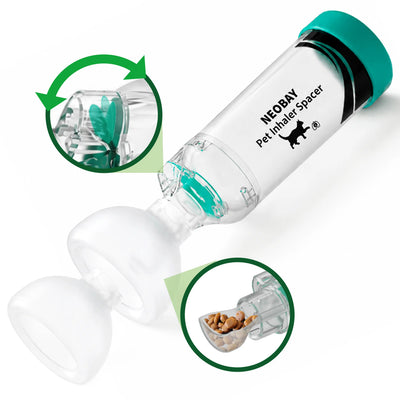
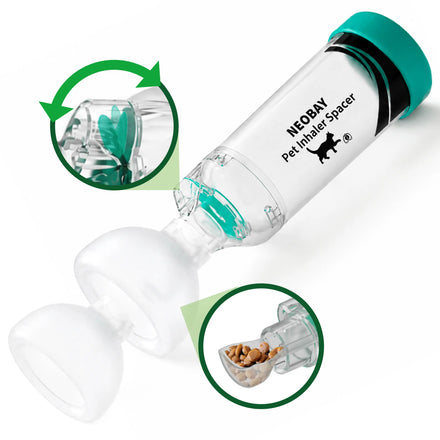
If your veterinarian prescribes a metered-dose inhaler, ask them to demonstrate the medication, dose and cat-specific chamber. A spacer chamber holds the aerosol so a cat can inhale through a face mask. The Neobay cat inhaler spacer is a non-medicated, pet-only accessory for that prescribed setup; medication is separate. It does not diagnose the cough or replace emergency treatment.
Cat Inhaler Spacer in Canada | Neobay Aerosol Chamber
- See each breath with the Breath Indicator
- Built-in treat holder makes mask practice easier
- Anti-static chamber helps keep medication airborne
Ask for written instructions covering daily medication, any rescue medication, rechecks and when to seek urgent help. Inhaled treatment can have side effects, and you should not change doses because a cough sounds better. Introduce the mask gradually when your cat is comfortable and follow the veterinary plan.
Frequently Asked Questions
Why is my cat coughing but no hairball comes out?
A cough can look like an attempt to bring up a hairball, but a missing hairball does not establish the cause. Airway inflammation, infection, parasites and other problems can cause coughing. Repeated episodes need veterinary assessment; difficulty breathing needs emergency care.
What does a cat asthma cough sound like?
Asthma can cause a harsh, dry cough and wheezing, sometimes with a low crouch and extended neck. Other conditions can look or sound similar, and asthma may cause breathing difficulty without an obvious cough. Diagnosis relies on veterinary assessment rather than a sound comparison.
Is a wet cat cough more dangerous than a dry one?
A wet-sounding cough is worth reporting promptly, but the label alone cannot tell you the cause or urgency. A quiet, dry episode can also accompany serious breathing trouble. Check breathing effort and the cat's overall condition, and ask the clinic to triage.
Can I wait for my regular Canadian clinic to open?
Don't wait if your cat has difficulty breathing, open-mouth breathing, unusual weakness or collapse. Contact an emergency veterinary hospital and arrange assessment immediately. For a cat breathing comfortably between coughs, call for triage advice rather than choosing a fixed waiting period yourself.
Could that snorting noise just be reverse sneezing?
Snorting on an inward breath is different from a cough, but it is difficult to identify reliably at home. Do not assume a new or recurring noise is harmless reverse sneezing. Ask your veterinary team to assess it, urgently if breathing is difficult.
Should I buy a spacer because my cat is coughing?
An unexplained cough needs a diagnosis before an inhaler routine. A cat spacer is an accessory for medication prescribed by a veterinarian, not a stand-alone remedy for cough sounds. If inhaled medication is prescribed, ask for a demonstration and a written plan.
What to Do Next
Call for triage if the cough repeats; seek emergency care for breathing difficulty. Bring your notes and any safely recorded video. For appointment preparation, use our cat breathing vet-visit checklist; our asthma and hairball guide covers the common confusion in more detail.
Related Reading
If your veterinarian has prescribed an inhaler, read the Canada cat inhaler spacer buyer's guide for equipment questions to discuss before choosing a setup.
For equipment questions, contact Neobay. Breathing symptoms and urgent care decisions belong with your veterinary team.
Sources
- VCA Canada. Emergencies in Cats.
- VCA Canada. Testing for Cough.
- VCA Canada. Coughing in Cats.
- VCA Canada. Asthma and Bronchitis in Cats.
- VCA Canada. Treatment Instructions for Asthma and Bronchitis in Cats.
- Cornell Feline Health Center. Feline Asthma: What You Need To Know.