Key Takeaways
- A cat cold or upper respiratory infection needs a veterinary assessment before you rely on home nursing.
- Home care supports food intake, hydration, hygiene and rest; it does not replace prescribed treatment.
- Typical recovery may take around 1–2 weeks, but worsening signs need a fresh assessment rather than a calendar deadline.
- Open-mouth breathing, obvious breathing difficulty or collapse needs emergency veterinary care immediately.
- A cat inhaler spacer is not a URI treatment. Its place is limited to a separate condition for which a vet has prescribed a compatible inhaler.
For cat cold and URI home treatment, contact your veterinarian and keep 2 records: the current care instructions and what your cat actually eats, drinks and does. Difficulty breathing needs immediate emergency veterinary care. Neobay is a non-medicated inhaler accessory for a separately prescribed asthma routine; it does not treat a URI or replace veterinary assessment.
The practical question is not how many remedies you can try tonight. It is whether your cat can rest comfortably, take food and water, and receive the care the clinic has recommended. Write down what has changed before you phone. That gives the team something more useful than “still a bit snuffly”.
Plan URI care around your Canadian veterinary clinic
A newly adopted cat that starts sneezing needs a call to the veterinary clinic, even if the shelter mentioned an earlier respiratory infection. VCA Canada describes several possible viral and bacterial causes. The Canadian Veterinary Medical Association explains that vaccination is useful protection, but it cannot guarantee that an exposed cat will not become ill. Your veterinarian still needs to assess this episode.
If your cat came from a shelter or foster home, collect the medical record and ask when the signs began, which medicines were given and whether there were eye problems. Share that information with your own veterinarian. A discharge summary is useful history, but it does not establish what a new episode needs.
In winter, choose a comfortable indoor resting place away from a hot-air vent, wood smoke or scented products. If travel to an emergency hospital is lengthy, identify the route before you need it. Call ahead about respiratory symptoms and transport advice; do not let distance turn obvious breathing difficulty into a watch-and-wait problem.
What a cat cold means
A feline upper respiratory infection (URI) is an infection affecting the upper airways, commonly including the nose and throat. Feline herpesvirus and calicivirus are important causes, but the label does not identify the organism in an individual cat. Eye or mouth problems can be part of the illness too.
VCA Canada Animal Hospitals describes contagious respiratory illness and the need for veterinary care. A vet may examine the eyes and mouth as well as listen to breathing. Persistent or recurrent symptoms can require further investigation, so do not assume each later episode is the same old cold.
Does yellow or green discharge mean antibiotics? Not by itself. Colour is useful information to report, but it cannot decide whether bacteria are involved or which treatment is appropriate. Do not use leftover medicine or another cat’s eye drops while waiting for advice.
Build a quiet, observable recovery space
Choose a familiar room with bedding, water, food and a litter tray within easy reach. Give your cat somewhere to hide where you can still check on them without repeated handling. Put bowls away from the litter tray. Keep visits brief if attention seems tiring.
Observation matters more than an elaborate setup. Agree who will record meals, medicines and changes so that each person does not assume someone else has checked. Note the actual amount eaten rather than whether a bowl was offered. The same applies to medication: record what happened, including a refused dose.

Support eating and drinking without force
Ask the clinic which familiar food to offer. Small, fresh portions may be easier to keep track of than a large bowl left all day. If the vet suggests warming wet food to improve its smell, mix it thoroughly and check that it is only lukewarm. Keep fresh water available and the bowls clean.
A poor appetite is a reason to contact the clinic, not a sign to dismiss as inevitable. Report whether your cat approaches food and walks away, tries to eat but seems uncomfortable, or shows no interest. Those observations help the team decide what needs checking. Do not syringe food or water into a congested or struggling cat unless a veterinary professional has specifically instructed you.
A fountain in the photograph is simply one way to offer water. It is not evidence that a sick cat is adequately hydrated. If intake falls, your cat seems weak, or you are unsure they can keep fluids down, ask for veterinary advice rather than relying on a home skin-pinch test.
Clean the face gently and avoid irritating remedies

With the clinic’s agreement, use a soft pad dampened with warm water to loosen discharge on the outside of the nose or around the eyes. Use a fresh area for each wipe and avoid rubbing. Do not put cleaning products, contact-lens fluids or unprescribed drops into an eye. A closed, cloudy or painful eye deserves prompt veterinary attention.
Some cats tolerate a little extra humidity, but a bathroom routine should never become restraint, hot steam or a delay to emergency care. Ask the vet whether it is suitable for your cat. Stop if your cat is distressed. Avoid menthol rubs, essential oils, smoke and fragranced sprays; do not give human cold or pain medicines.
Reduce spread and keep the treatment plan clear
Canadian Veterinary Medical Association discusses care for cats with respiratory illness. Ask your clinic how to separate the sick cat and clean the items it uses. Keep bowls, bedding and grooming tools separate, wash hands between cats, and follow a cat-safe disinfectant’s label. Do not improvise bleach mixtures or mix cleaning chemicals.
Ask how long isolation should continue rather than ending it after the last sneeze. Tell a boarding cattery or carer about recent illness before making a booking. When prescriptions are involved, keep the label and instructions together; contact the clinic about missed doses, vomiting or difficulty administering them.
Know when home care has reached its limit
What should you watch tonight? Breathing effort, food intake, alertness and eye comfort are more useful than a promise that a cold will clear by a certain day. Report less eating, increased lethargy, worsening discharge or new coughing promptly. Kittens and cats with other illnesses need particular care.
Open-mouth breathing at rest, marked chest or belly effort, blue or pale gums, collapse or an inability to settle because of breathing difficulty means emergency care immediately. Keep handling minimal and arrange transport. Do not wait to finish a steam session or test a remedy.
If your cat also has diagnosed asthma
A URI and feline asthma, an inflammatory lower-airway condition, are not interchangeable diagnoses. If your vet has already prescribed a compatible metered-dose inhaler for asthma, ask how an illness or missed session affects that existing plan. Do not start an inhaler for a cold.
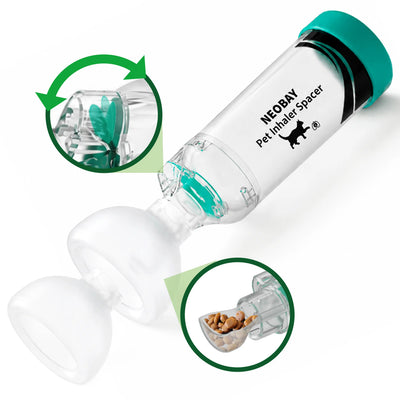
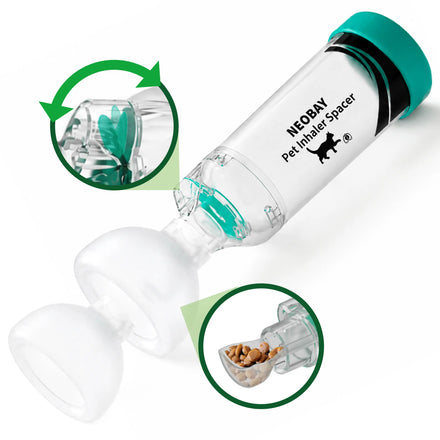
The Neobay cat inhaler spacer is a non-medicated accessory for that prescribed routine; it does not treat a URI. Its Comfort Feeder provides food guidance for voluntary mask acceptance. A moving Visual Flow Indicator is a breathing cue, not proof of a delivered lung dose.
Cat Inhaler Spacer in Canada | Neobay Aerosol Chamber
- See each breath with the Breath Indicator
- Built-in treat holder makes mask practice easier
- Anti-static chamber helps keep medication airborne
Frequently Asked Questions
Should I call the shelter or my veterinarian about a newly adopted cat’s URI?
Tell both, but use your veterinarian for the current medical assessment. The shelter can supply records and exposure history. Seek emergency care immediately if breathing is difficult rather than waiting for a record transfer.
Is a humidifier a substitute for a URI appointment?
No. Humidity may be one comfort measure if your veterinarian agrees, but it cannot diagnose or cure an infection. Do not force a distressed cat into a bathroom or place it near hot steam.
Can I use leftover antibiotics from another cat?
No. Different illnesses and different cats need individual prescribing decisions. Give only medicines prescribed for this cat and this episode, and ask the clinic about unclear instructions.
What if my cat has not eaten much today?
Call your veterinarian promptly and describe how much was actually eaten and when. Do not wait for a fixed hour count if the cat is young, frail, lethargic or deteriorating. Breathing difficulty is an emergency.
Does a Canadian salbutamol prescription help a cat cold?
Salbutamol may be prescribed for a separate airway condition, but it does not make a spacer a URI treatment. Use an existing prescription only as directed and contact the treating veterinarian if the illness affects administration.
How do I protect my other cats during recovery?
Use a separate care area and equipment when your veterinarian advises isolation. Wash hands between cats, clean contaminated items and ask when contact can resume. Vaccination does not replace this hygiene plan.
What to do next
Phone your veterinarian with the symptom and food record, follow the agreed home-care plan, and keep emergency contact details accessible. For recurring nasal signs, our rhinitis overview offers background to discuss with the clinic.
Arrange a veterinary assessment for recurring or new coughing; our asthma diagnosis guide can help you prepare questions for the appointment, not diagnose your cat at home.
For equipment questions after a separate inhaler prescription, read the Canada cat spacer guide. Choosing equipment never replaces a respiratory assessment.
Sources
- VCA Canada Animal Hospitals. Feline Upper Respiratory Infection. Accessed 20 October 2026.
- Canadian Veterinary Medical Association. Vaccination and Your Cat. Accessed 20 October 2026.