Key Takeaways
- VCA Canada describes 15–30 breaths per minute as a usual range for calm resting or sleeping cats; some healthy cats breathe more slowly.
- One breath is one complete rise and fall of the chest. Counting for 30 seconds and doubling gives breaths per minute.
- A count taken while purring, active or unsettled is not directly comparable with a quiet sleeping count.
- A persistently raised sleeping count, or a clear rise from your cat’s normal pattern, needs veterinary advice.
- Breathing effort, open-mouth breathing or collapse needs urgent assessment even when you have not counted a single breath.
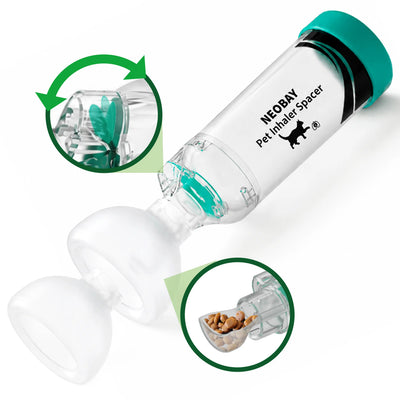
If your cat is breathing fast while sleeping, check whether the breathing looks comfortable before you reach for a timer. VCA Canada gives a usual calm resting or sleeping range of 15–30 breaths per minute; repeatedly higher counts need a vet’s advice. Neobay’s non-medicated spacer is an accessory for a prescribed routine, not a way to investigate unexplained fast breathing.
The useful question is not simply “How fast?” It is “How fast, in what circumstances, and with how much effort?” A short, accurate observation can help your vet; a long wait for a perfect reading can get in the way.
Count a sleeping breath without disturbing your cat
Sleeping respiratory rate means the number of complete breaths a cat takes in a minute while asleep. It is a home observation, not a diagnosis of asthma, heart disease or treatment success.

- Watch from a little distance when your cat is comfortably asleep. Avoid a count during purring, grooming, recent play or obvious twitching and dreaming.
- Look at the chest or flank. Count one rise followed by one fall as one breath.
- Use a timer for 30 seconds, then multiply the count by two. Alternatively, count for a full minute.
- Record the time, result and circumstances. If the view is unclear, write “unable to count” instead of guessing.
For example, 12 complete breaths in 30 seconds becomes 24 breaths per minute. That calculation is useful only if your cat was genuinely settled. Do not hold the chest, wake the cat or repeatedly reposition them to improve the view.
My cat starts purring when I walk over. Should I use that count?
Wait at a distance for a quiet sleeping period if your cat is comfortable. Label a purring reading separately rather than adding it to the sleeping trend. If breathing looks difficult, stop counting and seek urgent veterinary help.
Use the trend, and let effort override the number
A single reading cannot tell you what is wrong. Check whether the result differs from your cat’s usual sleeping pattern and whether it stays raised during calm sleep. Repeated readings above 30 merit prompt veterinary contact; a vet may give an individual cat a lower action threshold.

| What you see | Practical next step |
|---|---|
| Comfortable sleep and a familiar pattern | Record the observation and follow the monitoring plan agreed with your vet. |
| Repeatedly faster breathing in true sleep, or a clear upward change | Contact a vet promptly and describe the readings and circumstances. |
| Mouth breathing, marked chest or belly effort, collapse, or inability to settle | Seek emergency veterinary assessment. Do not wait to reach a numerical threshold. |
A reading below 30 does not rule out illness. Nor does a count in the usual range prove that an asthma medicine is working. Appetite, activity, cough, posture and the examination all matter; your cat is more than the number in the notebook.
Do not wait for a count of 40 or 60 before asking for help. Those numbers cannot create a safe waiting period for a cat already struggling to breathe.
Fast breathing does not identify the cause
Asthma is one possibility, but heart and lung problems can produce overlapping signs. Cornell describes breathing difficulty as a sign with many possible causes. Tell your vet about cough or wheeze, but do not use either sound to choose a diagnosis at home.
Other useful observations include whether your cat can lie comfortably, whether their posture has changed, and whether appetite or activity is different. Do not pry open a distressed cat’s mouth to inspect gum colour; extra handling can make the situation harder.
For a cat already diagnosed with asthma, a fresh change still deserves assessment. A prescribed inhaler does not explain every later symptom. Use medicines only as directed in your cat’s written plan, and ask the vet how to respond if the plan does not fit what you are seeing.
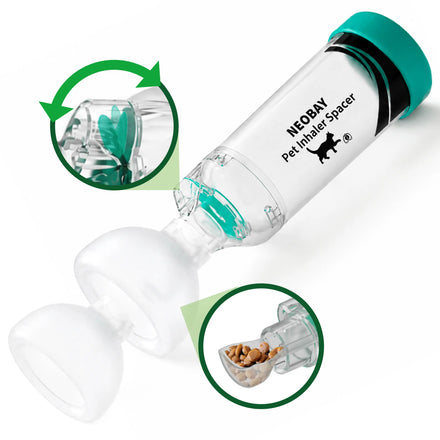
Cat Inhaler Spacer in Canada | Neobay Aerosol Chamber
- See each breath with the Breath Indicator
- Built-in treat holder makes mask practice easier
- Anti-static chamber helps keep medication airborne
Set up a plan your Canadian clinic can use
VCA Canada’s home breathing-rate guidance recommends asking your veterinarian for the threshold that applies to your particular pet. Put that number beside the clinic’s daytime and after-hours contact details. A general internet range should not replace a more cautious threshold your vet has already given you.
If several people share care, agree on the same counting method and where readings go. A phone note works well when everyone can see it. Write “asleep, not purring” rather than simply “resting”; it tells the clinic whether two readings are reasonably comparable.
During wildfire smoke, a heat event or a change in indoor heating, note the circumstances without treating them as a diagnosis. Ask your clinic what to do about exposure. Do not give an extra inhaler dose, an antihistamine or another household pet’s medicine to test your explanation.
When travelling within Canada, save an emergency hospital near your destination and bring the prescription list. A photograph of each label is useful when an unfamiliar veterinary team needs to understand the existing plan quickly.
Make a small diary the clinic can actually read
Use one line per observation: date and time; asleep or awake; breaths per minute; comfortable or increased effort; and anything unusual that day. Add the medicine name and administration time if your cat already has a prescription, without changing the dose yourself.
A brief side-on video can show movement that is difficult to describe over the phone. Take it only if it does not delay care or disturb your cat. Say when the clip was filmed; a calm clip from yesterday does not describe a crisis happening now.
What if the count settles before I speak to the clinic?
Keep the earlier reading and explain the circumstances rather than deleting it. Ask the team whether they want more observations or an examination. Improvement in one moment does not settle the cause of a recurring change.
Frequently Asked Questions
Is a sleeping cat supposed to breathe 20–30 times a minute?
Many do, but a wider usual calm resting or sleeping range of 15–30 is described by VCA Canada, and lower counts can occur in otherwise well cats. Your cat’s own pattern and your vet’s threshold are useful context. A normal-looking number cannot rule out disease.
Can dreaming make my cat breathe faster?
Brief changes can happen during sleep, so avoid counting while your cat is visibly twitching or unsettled. Repeat an observation in quiet sleep if breathing remains comfortable. Persistent fast breathing or any difficulty needs veterinary advice rather than an assumption about dreams.
Does fast breathing mean my cat has asthma?
No. Asthma is one possible cause, but several heart, lung and other conditions can change breathing. Your vet needs the history and examination, with tests selected for your cat, to work out the reason.
Is 30 breaths a minute the right limit for every Canadian cat?
It is a useful general point for contacting a vet when sleeping readings stay above it, but it is not a personal treatment target. Your veterinarian may set a lower threshold based on your cat’s usual readings and history. Breathing effort takes priority over the number.
Can a spacer or an extra inhaler puff help me check?
No. A spacer is a non-medicated accessory and cannot diagnose the problem; do not use a medicine trial to identify the cause yourself. Follow any written emergency prescription plan and contact your veterinary team when signs are new or worsening.
What to Do Next
If your cat is struggling, contact an emergency vet now. If your cat is comfortable but the sleeping pattern has changed, prepare the readings and phone your clinic. Ask for a clear personal action threshold and an after-hours plan that everyone caring for your cat can follow.
For practical follow-up, read a step-by-step breathing-rate diary and the breathing-emergency guide. Once your vet has a plan, use our Canadian cat inhaler spacer guide to prepare product questions.
The Neobay spacer for Canada is a non-medicated accessory; it cannot identify the cause of difficult breathing. For accessory questions, contact our team. For symptoms, contact your veterinary team.