Key Takeaways
- Gasping, open-mouth breathing and obvious breathing effort are urgent warning signs in a cat.
- Asthma is one possible cause of breathing difficulty; the sound of a cough cannot establish the diagnosis.
- Pink gums do not exclude a breathing emergency. Do not force your cat's mouth open to inspect them.
- A quiet sleeping-breathing record is useful for follow-up; it must never postpone emergency care.
- A spacer is an accessory for a veterinary-prescribed routine, not emergency oxygen or a diagnostic test.
If your cat is gasping for air, breathing through an open mouth or visibly struggling, contact an emergency vet immediately. Keep handling gentle and prepare to travel as the clinic directs. Do not wait for a particular breathing count, gum colour or response to medication before seeking help.
Which breathing signs need help now?
Respiratory distress means a cat is having difficulty breathing. You might see the belly working hard, the neck held out, or an inability to settle comfortably. The cat doesn't have to be making a loud noise for the situation to be serious.
Call urgently for gasping, mouth breathing at rest, pronounced effort, collapse or sudden weakness. Pale, blue or grey gums add to the concern, but checking them isn't a required step. Describe what you can see without wrestling with your cat.
A useful telephone description is: “My cat is breathing with their mouth open and their sides are working hard. We are at this address. Where should we go?” You don't need to know whether it is asthma to make that call.
What if my cat's gums still look pink?
Pink gums are not permission to wait when a cat is struggling. Gum colour is only one observation, and an owner cannot measure blood oxygen by looking. Focus on breathing effort and the clinic's advice.
What should you do before and during the journey?
- Phone the receiving clinic. Explain the breathing problem and follow its instructions. If someone is helping you, share tasks so the call and transport preparation happen together.
- Keep the room quiet. Move children and other pets away, and avoid chasing or repeatedly picking up your cat.
- Use a well-ventilated carrier. Let your cat keep a comfortable position rather than pressing them flat or wrapping the chest tightly.
- Keep the vehicle comfortable and drive safely. Leave ventilation openings clear and minimise unnecessary noise and handling.
- Bring medication details if they are readily available. Don't delay care to search cupboards, film an episode or print a full history.
Don't force food, water or tablets into a cat that is struggling to breathe. Don't reach into the mouth or attempt a home throat examination. Ask the clinic what to do if your cat deteriorates during transport.
Finding emergency veterinary care in Canada
Use your regular clinic's after-hours instructions to identify the receiving emergency hospital. Call ahead to confirm that the team can see your cat now. Tell them your location and whether your cat has open-mouth breathing, visible effort or collapse. Asking these questions is more useful than searching for a diagnosis on your phone.
If you live outside a city, ask which available hospital is appropriate for a breathing emergency. Don't assume every clinic offers overnight care. Confirm the route and entrance before driving. During cold weather, prepare the car for the journey without covering the carrier's ventilation or bundling your cat tightly.
Bring medication names, the clinic's discharge instructions if you have them, and a list of existing conditions. VCA Canada advises immediate veterinary attention for cats with difficulty breathing, particularly mouth breathing or panting.
Can you tell asthma from another problem at home?
No. Coughing and wheezing can occur with asthma, but other problems can affect breathing too. Heart disease, infection, injury and fluid in or around the lungs need different veterinary assessment. Even a cat with a previous asthma diagnosis can develop a new problem.
VCA Canada's asthma and bronchitis guidance explains that severe respiratory distress may need hospital stabilisation. Salbutamol and other inhaled medicines have specific roles chosen by your veterinarian. Improvement after a prescribed medicine doesn't let an owner rule out another cause of breathing difficulty.
Don't use a rescue inhaler as a diagnostic experiment. For a cat with an existing prescription, follow only the individual emergency plan your vet supplied while contacting the clinic. A temporary change in breathing is information to report, not proof that the emergency has passed.
If your cat has mild, recurring noise or coughing while otherwise breathing comfortably, contact your vet for assessment. If effort appears or your cat begins gasping, escalate immediately. A timer cannot make that decision safe.
What can you record once your cat is comfortable?

After assessment, ask your vet whether a sleeping-breathing diary would help. Observe from a distance when your cat is genuinely asleep and not purring. Count one chest rise and fall as one breath for a full minute, then note the date, the count and any visible effort.
Ask for your cat's own action threshold and instructions for a change from their baseline. A number without context can mislead: a calm-looking count doesn't override obvious effort, and a count taken during purring or handling may not represent sleep.
Keep the record simple: breathing count, coughing episodes, appetite, activity and medicines given according to the prescription. A short video can help at a planned review if recording is safe; in an emergency, your phone is more useful for contacting the clinic.
Our guide to breathing changes during sleep can help you prepare questions. For a separate diagnosis and recovery discussion, see pneumonia and fluid around the lungs. Neither replaces examination.
Where does a spacer fit after stabilisation?

If your vet prescribes inhaled medication, ask them to demonstrate the medicine, spacer and mask together. Check the written instructions and keep routine mask familiarisation separate from an episode of distress. Don't force a training session while your cat is unwell.
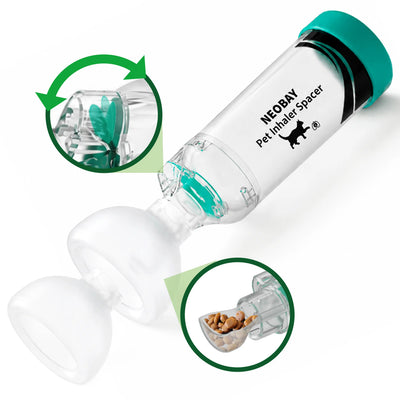
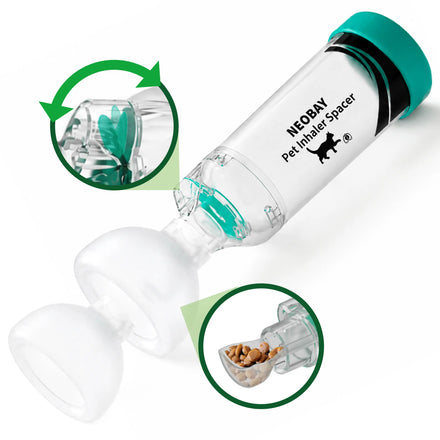
Neobay is a non-medicated pet accessory. Its Comfort Feeder supports food-guided voluntary mask familiarisation when appropriate; it doesn't treat the cause of gasping. A Visual Flow Indicator provides a visible breathing cue, not a measurement of oxygen or proof of medication delivery.
Cat Inhaler Spacer in Canada | Neobay Aerosol Chamber
- See each breath with the Breath Indicator
- Built-in treat holder makes mask practice easier
- Anti-static chamber helps keep medication airborne
Frequently Asked Questions
Is open-mouth breathing always asthma?
No. Open-mouth breathing can occur with several serious problems and cannot diagnose asthma. Contact a vet immediately if your cat is mouth breathing or struggling, including when your cat already has asthma.
Can stress explain why my cat is gasping?
Stress can be associated with abnormal breathing, but it isn't safe to label gasping as anxiety at home. Keep your cat calm and call a vet for immediate guidance. Tell the team what happened before the episode without assuming the cause.
What should I tell an emergency clinic before a long journey?
Say that your cat has breathing difficulty, describe any open-mouth breathing or collapse, and give your location. Ask whether the clinic can receive your cat and whether another hospital would be more appropriate. Bring medication details, but don't delay leaving to collect a complete medical file.
Should I count breaths before calling?
No. Call immediately when your cat has gasping, open-mouth breathing or obvious effort. A sleeping count is a follow-up tool for a comfortable cat, not a step you must complete before emergency care.
Can I use my own inhaler for my cat?
Don't give an unprescribed human medicine to your cat. If your cat already has prescribed inhaled medication, use only the vet's individual instructions while arranging urgent care. Don't change the dose or wait to see whether an improvised treatment works.
What if the episode stops before we leave?
Tell the veterinary team exactly what you saw and that it has stopped. Ask whether they still want your cat seen urgently; don't cancel the plan on your own. An episode resolving doesn't identify its cause.
What to Do Next
If breathing is difficult now, call your vet or the receiving emergency hospital. After assessment, write down the follow-up plan, the emergency destination and any specific instructions for your cat.
For stable, prescribed routines, our Canadian cat spacer buying guide explains equipment questions. You can review the Neobay spacer for your market with your vet when appropriate. Product support is available through our contact page; urgent veterinary questions belong with the clinical team.
Sources
- VCA Canada Animal Hospitals. Emergencies in Cats. Accessed 21 October 2026.
- VCA Canada Animal Hospitals. Asthma and Bronchitis in Cats. Accessed 21 October 2026.
- Cornell Feline Health Center. Dyspnea (Difficulty Breathing). Accessed 21 October 2026.
- VCA Canada Animal Hospitals. Home Breathing Rate Evaluation. Accessed 21 October 2026.