

Key Takeaways
- Cat wheezing is a high-pitched whistling sound caused by air moving through narrowed or inflamed lower airways — it is not the same as coughing, gagging, or retching.
- Feline asthma affects 1–5% of cats and is the most common cause of chronic wheezing. It produces airway inflammation, mucus buildup, and bronchospasm that progressively narrow the breathing passages.
- The single most important distinction is between a hairball (self-resolving, produces a mass of fur) and an asthma attack (no material produced, wheezing persists, may worsen without treatment).
- Emergency signs requiring immediate veterinary care: open-mouth breathing, blue-tinged gums (cyanosis), resting respiratory rate above 40 breaths per minute, and severe lethargy.
- Inhaled corticosteroids delivered through a feline spacer chamber are the gold standard for long-term asthma management — they control inflammation at the source while avoiding the systemic side effects of oral steroids.
You're sitting on the couch when you hear it — a high-pitched whistling sound every time your cat exhales. They're crouched low, neck extended, elbows sticking out sideways. It looks uncomfortable. It sounds alarming. And you're not sure whether it's just a hairball or something more serious.
Wheezing in cats is one of those symptoms that sits at a confusing intersection: it could be a routine hairball making its way up, or it could be feline asthma — a chronic inflammatory condition that, left untreated, can become life-threatening. The challenge for cat owners is knowing the difference and knowing when to act.
This guide covers what cat wheezing actually sounds like, the seven most common causes, how to distinguish an asthma attack from a hairball, the emergency signs that demand an immediate vet visit, and the treatment options — including inhaled therapy — that can help your cat breathe normally again.
What Does Cat Wheezing Actually Sound Like?
Feline wheezing is a high-pitched whistling, hissing, or huffing noise that occurs when air is forced through narrowed bronchial tubes. It's most audible during exhalation, though severe cases may produce sounds during inhalation as well.
The sound is often confused with other noises cats make:
| Sound | What It Is | How to Tell It Apart |
|---|---|---|
| Wheezing | Airway narrowing (bronchoconstriction or inflammation) | High-pitched whistle, primarily on exhale; cat crouched low with neck extended |
| Coughing | Irritation in the trachea or bronchi | Dry, hacking sound; cat's head drops toward floor with each cough |
| Gagging/retching | Hairball or foreign material in the esophagus | Wet, throat-based sounds; abdominal heaving; usually produces a hairball |
| Sneezing | Nasal irritation | Explosive burst from the nose; no breathing difficulty between sneezes |
A wheezing cat often adopts a distinctive posture — crouched low to the ground, neck stretched outward, elbows pulled away from the body. This is called the orthopneic posture, and it's an instinctive attempt to straighten the airway and maximize airflow. You may also see visible abdominal effort: the stomach muscles contract forcefully with each breath as the cat works harder to push air out of inflamed lungs.
If you see this posture combined with audible wheezing, your cat is in respiratory distress. Don't wait to see if it resolves on its own.
7 Common Causes of Cat Wheezing
1. Feline Asthma
Feline asthma is a chronic inflammatory disease of the lower airways. When an asthmatic cat inhales a trigger (dust, pollen, smoke, mold), their immune system overreacts: the airway lining swells, mucus production increases, and the smooth muscles around the bronchi contract (bronchospasm). This triple response dramatically narrows the airways, producing the characteristic wheeze.
Asthma affects an estimated 1–5% of all domestic cats, with Siamese cats appearing predisposed. It typically develops between ages 2 and 8, and symptoms tend to worsen over time without treatment. The condition is chronic and progressive — it cannot be cured, but it can be managed effectively with medication and environmental control.
Related: Why Does My Cat Cough After Running or Playing?
2. Hairballs
Hairballs are the most common source of confusion. When a cat grooms, their barbed tongue captures loose fur, which is swallowed and accumulates in the stomach. The retching and gagging sounds a cat makes while expelling a hairball can closely mimic the sounds of respiratory distress.
The key distinction: a hairball episode ends with the production of a cylindrical mass of fur and stomach fluid. Afterward, the cat returns to normal behavior. If the retching produces nothing and the wheezing continues, it's not a hairball.
Related: Feline Asthma vs. Hairball: How to Tell the Difference
3. Environmental Allergies and Irritants
Airborne allergens — pollen, dust mites, mold spores, and volatile organic compounds (VOCs) from cleaning products or paint — can trigger airway inflammation in sensitive cats. The response may be seasonal (pollen) or year-round (dust, mold). These irritants don't cause asthma on their own, but they are the primary triggers that set off asthma attacks in cats who already have the condition.
This is why environmental management is a core part of any feline asthma treatment plan. Removing triggers from the household reduces the frequency and severity of wheezing episodes.
4. Respiratory Infections
Viral infections (feline herpesvirus FHV-1, feline calicivirus FCV) and bacterial infections (*Bordetella*, *Mycoplasma*) can cause inflammation throughout the respiratory tract. In the lower airways, this inflammation produces excess mucus and cellular debris that partially block the bronchi, creating a wet, rattling wheeze.
Upper respiratory infections are more common in multi-cat households, shelters, and catteries. If untreated, they can progress to pneumonia — a much more serious condition that produces labored breathing, fever, and lethargy alongside wheezing.
Related: Is Your Cat Sneezing? The Ultimate Guide to Feline Rhinitis
5. Heartworm-Associated Respiratory Disease (HARD)
Heartworm disease in cats is different from heartworm in dogs. Cats are not the natural host, so the worms don't typically survive to adulthood — but even immature worms cause significant damage. The presence of larval heartworms in the pulmonary arteries triggers a severe inflammatory response called HARD, which produces symptoms nearly identical to feline asthma: wheezing, coughing, and respiratory distress.
There is no approved treatment for heartworm in cats (the melarsomine used in dogs is toxic to cats). Prevention is the only option — monthly heartworm preventative medication is recommended for all cats, including indoor-only cats, since mosquitoes can enter any home.
6. Foreign Body Aspiration
Cats who explore with their mouths — chewing on grass, plants, or small objects — can accidentally inhale a foreign body. A grass awn or seed lodged in the airway causes immediate, violent coughing and wheezing, typically affecting one side more than the other.
This is a medical emergency. A foreign body can shift position and completely block the airway. If your cat suddenly starts wheezing after being outdoors or after chewing on something, seek veterinary care immediately.
7. Stress and Anxiety
Stress doesn't directly cause wheezing in healthy cats. But in cats with underlying airway disease (even mild, undiagnosed asthma), a stressful event — a new pet, a move, loud construction, a veterinary visit — can trigger an acute bronchospasm. The mechanism is the same as exercise-induced asthma in humans: the autonomic nervous system responds to stress by releasing hormones that can constrict the airways.
For cats with known respiratory conditions, stress reduction is an essential part of the management plan.
Is It Asthma or a Hairball? The Quick Diagnostic Table
This is the question owners ask most often. Here's how to tell the difference:
| Feature | Asthma Attack | Hairball |
|---|---|---|
| Sound | High-pitched wheezing, dry hacking cough | Wet gagging, retching, throat-clearing |
| Posture | Crouched low, neck extended, elbows out | Retching posture, abdominal heaving |
| Outcome | No material produced; wheezing continues | Produces a cylindrical mass of fur |
| Frequency | Recurrent episodes, may worsen over time | Occasional, resolves immediately after expulsion |
| After episode | Cat remains lethargic, breathing stays elevated | Cat returns to normal behavior immediately |
| Gum color | May appear pale or bluish in severe attacks | Normal pink color |
If the episode produces nothing and the wheezing persists — it's not a hairball. Call your vet.

When Is Cat Wheezing a Medical Emergency?
Not every wheezing episode requires a midnight trip to the emergency clinic. But certain signs indicate a potentially life-threatening situation:
- Open-mouth breathing at rest. Cats are obligate nasal breathers. Breathing through the mouth means the nasal passages and upper airway cannot provide enough oxygen — the cat is in significant distress.
- Blue or pale gums (cyanosis). A bluish, grayish, or purplish tint to the gums, tongue, or inner lips indicates the bloodstream is not carrying enough oxygen. This is a sign of severe hypoxia and requires emergency care.
- Resting respiratory rate above 40 breaths per minute. Count your cat's breaths for 15 seconds while they're sleeping or resting calmly, then multiply by 4. A sustained rate above 40 is abnormal.
- Severe lethargy. If your cat is unresponsive, won't eat or drink, or cannot stand, the oxygen deprivation is affecting their entire body.
- Exaggerated abdominal effort. The stomach muscles heaving with every breath means the cat is working extremely hard to move air. This is not sustainable for long periods.
If you see any of these signs alongside wheezing, go to an emergency vet immediately. Do not wait.
Related: Cat Gasping for Air? Emergency Signs vs. Manageable Symptoms

How Vets Diagnose the Cause of Cat Wheezing
A proper diagnosis requires a veterinary workup — guessing based on internet research alone can delay necessary treatment. Here's what to expect:
Physical examination and auscultation. Your vet will listen to your cat's heart and lungs with a stethoscope. Wheezing heard through the stethoscope confirms lower airway involvement. Crackles or rhonchi suggest different conditions (fluid, infection, or mucus).
Chest X-rays (thoracic radiographs). The most important diagnostic tool. X-rays can reveal the characteristic pattern of feline asthma: bronchial thickening (donut-shaped airway cross-sections) and hyperinflated lungs. They can also rule out pneumonia, fluid in the chest (pleural effusion), and heart enlargement.
Blood work. A complete blood count may show elevated eosinophils (a type of white blood cell), which is common in allergic and asthmatic conditions. Heartworm antigen and antibody testing should also be performed, as HARD presents identically to asthma.
Bronchoalveolar lavage (BAL). In cases where X-rays are inconclusive, a BAL is performed under anesthesia. A small amount of sterile saline is flushed into the lungs and then aspirated back out, bringing cells and fluid for analysis. A high eosinophil count in the BAL fluid is strongly suggestive of feline asthma.
Additional tests. Fecal examination (for lungworm), echocardiogram (to rule out heart disease), and CT scans (for detailed airway imaging) may be recommended in complex cases.
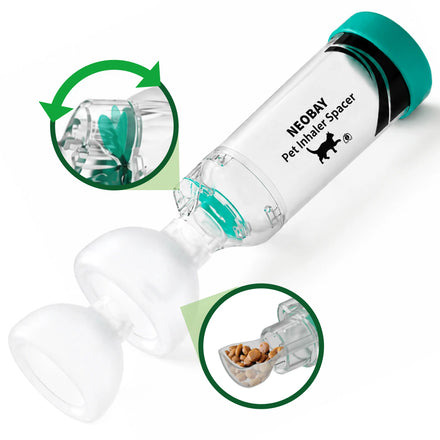
Neobay Cat Aerosol Chamber with Comfort Feeder — Green
- See each breath with the Breath Indicator
- Built-in treat holder makes mask practice easier
- Anti-static chamber helps keep medication airborne
Treatment: Managing Cat Wheezing and Feline Asthma
Treatment depends on the underlying cause. For the most common cause — feline asthma — the approach has two components: controlling inflammation and opening the airways.
Inhaled Corticosteroids (Long-Term Control)
Inhaled corticosteroids (typically fluticasone propionate, brand name Flovent) are the gold standard for managing feline asthma long-term. Delivered via a metered-dose inhaler (MDI) and a feline spacer chamber, the medication acts directly on the inflamed airways with minimal absorption into the bloodstream. This means the side effects associated with long-term oral steroid use — diabetes, weight gain, immune suppression, adrenal gland atrophy — are largely avoided.
A proper feline spacer has three critical features:
- Medical-grade silicone mask that creates an airtight seal around the cat's muzzle
- Visual flow indicator that moves with each breath so you can count breaths and confirm medication delivery
- Anti-static chamber that prevents medication from sticking to the walls of the device
Consistency is key. Inhaled steroids are not rescue medications — they work by reducing baseline inflammation over days to weeks. Missing doses allows inflammation to rebuild. Most asthmatic cats need twice-daily inhalation for life.
Bronchodilators (Rescue Medication)
For acute asthma attacks, a short-acting bronchodilator (typically albuterol/salbuterol) is administered via the same spacer chamber. It works within minutes to relax the spasming airway muscles and open the breathing passages. However, bronchodilators alone do not treat the underlying inflammation — they are a temporary fix that must be paired with daily inhaled steroids for long-term control.
Oral or Injectable Steroids (Short-Term Use)
For cats experiencing a severe flare-up or newly diagnosed with significant airway inflammation, a short course of oral prednisolone can rapidly bring symptoms under control. Once the cat stabilizes, the goal is to transition to inhaled steroids and taper off the oral medication. Long-term oral steroid use should be avoided whenever possible.
Environmental Management
Medical treatment alone is not enough. Reducing exposure to triggers is essential for preventing attacks:
- Eliminate smoke — secondhand smoke is one of the most potent asthma triggers
- Switch to dust-free, unscented cat litter — clay litter generates fine silica dust
- Remove essential oil diffusers — cats lack the liver enzyme to metabolize volatile phenols
- Run HEPA air purifiers in rooms where your cat spends the most time
- Use a humidifier during dry winter months to keep airways moist
- Minimize stress — maintain routines, provide hiding spaces, introduce changes gradually
Related: Common Triggers That Make Your Cat's Asthma Worse

Related: Read our complete symptoms of a feline upper respiratory infection for at-home care steps, recovery timelines, and when to see a vet.
Frequently Asked Questions
How do I know if my cat's wheezing is serious?
Wheezing that is persistent, worsening, or accompanied by coughing, rapid breathing, open-mouth breathing, or blue gums is serious and requires veterinary attention. A single brief wheezing episode that resolves on its own may be benign, but recurring episodes — even if mild — should be evaluated. Feline asthma is progressive: early diagnosis and treatment lead to better long-term outcomes.
Can feline asthma be cured?
No. Feline asthma is a chronic, lifelong condition. However, with consistent treatment (typically inhaled corticosteroids via a spacer chamber), environmental management, and regular veterinary monitoring, most asthmatic cats live comfortable, normal-length lives. The goal of treatment is to minimize symptoms and prevent severe attacks — not to eliminate the underlying disease.
My cat wheezes only while sleeping. Is that normal?
Wheezing during sleep can occur in asthmatic cats because the airways naturally narrow slightly during sleep, which amplifies any existing inflammation. It can also be caused by upper respiratory congestion (rhinitis) or, in brachycephalic breeds like Persians, by their natural airway anatomy. Any wheezing during sleep warrants a vet check to determine the cause and start appropriate treatment before it worsens.
Are essential oil diffusers safe around cats?
No. Essential oils contain volatile organic compounds that cats cannot metabolize — they lack the liver enzyme glucuronyl transferase. Diffusers release these compounds into the air where cats inhale them directly into their sensitive respiratory tracts. In cats with asthma or sensitive airways, this can trigger severe bronchospasms. Tea tree, eucalyptus, and peppermint oils are particularly dangerous. If you have a cat with any respiratory condition, remove all diffusers, incense, and aerosol air fresheners from your home.
How is cat wheezing different from cat coughing?
Wheezing is a high-pitched whistling sound produced during breathing, caused by airway narrowing. It's continuous and heard with each breath. Coughing is an explosive, voluntary reflex — a single forceful exhalation meant to clear irritants from the airway. A cat with asthma may both wheeze (from airway constriction) and cough (from mucus irritation), but the two sounds have different causes and different implications for treatment.
What does a feline spacer chamber do?
A spacer chamber (also called an aerosol chamber or holding chamber) is a device that connects a metered-dose inhaler (MDI) to a face mask designed for a cat's muzzle. When you actuate the inhaler into the chamber, the medication forms a fine mist that the cat breathes in through the mask over several breaths. Without a spacer, it's nearly impossible to coordinate the inhaler puff with a cat's breathing — the medication either hits the back of the throat or escapes into the air. A spacer with a visual flow indicator lets you confirm that your cat is actually inhaling the medication.
Not all wheezing is asthma — conditions that get misdiagnosed as feline asthma.
What to Do Next- Cat Snot Colors Explained: what each nasal discharge color means Count your cat's resting respiratory rate. While they're calm or sleeping, count breaths for 15 seconds and multiply by 4. Above 40 breaths per minute at rest is abnormal.
- Record a video of the wheezing episode. Vets find video extremely helpful for diagnosis — it captures the sound, the posture, and the breathing pattern in a way that a verbal description cannot.
- Schedule a veterinary appointment. Even if the wheezing seems mild, early diagnosis of feline asthma leads to significantly better outcomes. The condition is progressive, and delays in treatment allow more permanent airway damage to accumulate.
- If your vet prescribes inhaled therapy, invest in a quality spacer. The Neobay Cat Aerosol Chamber is designed for feline facial anatomy with a medical-grade silicone mask, anti-static chamber, and built-in flow indicator — so you always know your cat is getting their full dose.
Have questions about your cat's breathing? Visit our FAQ page or contact us.
Sources:
- Trzil JE. "Feline asthma: diagnostic and treatment update." *Veterinary Clinics of North America: Small Animal Practice*, 2020; 50(2): 375-391.
- Padrid, P. "Feline Asthma and Bronchitis." *Textbook of Veterinary Internal Medicine*, 8th ed. Elsevier, 2017.
- Hoyumpa Vogt A, Rodan I, Brown M, et al. "AAFP-AAHA: Feline Life Stage Guidelines." *Journal of Feline Medicine and Surgery*, 2010; 12(1): 43-54.
- Cornell Feline Health Center. "Feline Asthma: What You Need to Know." Cornell University College of Veterinary Medicine. https://www.vet.cornell.edu/departments-centers-and-institutes/cornell-feline-health-center/health-information/feline-health-topics/feline-asthma-what-you-need-know
- Merck Veterinary Manual. "Respiratory Diseases of Small Animals: Feline Respiratory Disease Complex." Merck & Co., 2024.
Related Reading
This article is part of our Feline Asthma: The Complete Owner's Guide — covering everything from causes and symptoms to treatment and daily management.


