

Key Takeaways
- A trip with an inhaler-using cat is a preparation job built on five items: the prescribed MDI, a pet-only spacer chamber, a secure carrier, a documents-and-contacts card, and a quiet destination routine.
- A cat inhaler spacer is a chamber-and-mask accessory that holds no medication — the medication comes from the MDI (metered-dose inhaler) your veterinarian prescribed, and the prescribing clinic owns every decision about that routine.
- Feline asthma, the condition most often managed with inhaled medication, affects an estimated 1–5% of cats (Cornell Feline Health Center), and consistent routine — not last-minute changes — is what travel planning should protect.
- Transport providers, airlines and pet-transport services set their own pet and medication rules; always confirm the booked provider's current requirements before departure rather than relying on any general checklist.
- If your cat needs prompt clinical help while travelling, contact a veterinarian or local emergency service — do not wait for a delivery or the end of the trip.
Travelling with a cat who uses a veterinarian-prescribed inhaler is mostly a packing and routine job, not a reason to change the treatment itself. A Neobay pet-only chamber belongs in a five-item travel kit — the prescribed MDI, the chamber, a secure carrier, a documents-and-contacts card and a quiet destination setup — so the usual routine survives the journey. The two calls that matter before you book are the prescribing veterinarian's advice and the booked transport provider's current pet requirements.
This article is about organising equipment and routine. It does not decide whether your cat is fit to travel, and it does not replace the instructions from the clinic that prescribed the inhaler.
Start with the split: what the veterinarian decides vs. what you pack
An MDI (metered-dose inhaler) — the pressurised medication canister a veterinarian prescribes, slotted into the rear of a spacer chamber — is the part of the kit you carry but never redesign. The treating clinic decides the prescribed routine, what counts as a missed session, and what to do if a concern appears away from home.
Your half of the job is logistics: keeping the inhaler, chamber and carrier clean, protected, reachable and familiar. Before booking, ask the clinic specifically about travel — a delayed leg, a disrupted routine, or who to call at the destination. Do not build a new medication plan from a generic online checklist.
Does my cat's inhaler routine need to change just because we're travelling?
That is a prescribing question, so ask the veterinarian who prescribed the MDI. What you control is everything around the routine: a dry chamber, a calm cat, a reachable bag and a quiet room at the other end. Many trips need no change at all — only better packing.
Build the five-part travel kit
1. The prescribed MDI, labelled and together
Keep the inhaler, its label and the clinic's instructions in one place. Ask the pharmacist or veterinarian about storage for that specific product, especially if the route involves a parked car, heat or an overnight stop. The original labelled packaging also makes it easier to explain what you're carrying if a transport provider, accommodation host or emergency clinic asks.
2. A clean, dry pet-only chamber
Pack the chamber in a protective pouch or rigid container where luggage cannot crush it. If you wash it before departure, let every part air-dry fully before reassembling — the AeroKat manufacturer's instructions describe the same air-dry-before-reassembly step, and the instructions supplied with whichever chamber you use take priority.
At home, do one calm readiness check: chamber assembled, mask present, and the prescribed MDI able to seat at the rear port as the veterinarian showed you. This is an equipment check, not a reason to rehearse or adjust a dose before leaving.
3. A secure carrier and a familiar travel setup
Animal-welfare guidance across countries agrees on the basics: cats travel in a secure, ventilated carrier, not loose in a vehicle. Set the carrier up days ahead with familiar bedding if that is safe for your cat, and keep the chamber in your carry-on or another reachable spot — never at the bottom of a packed boot.
The carrier, the chamber and the mask should not all become unfamiliar at once. If your cat has not had calm, voluntary practice around the mask, start that practice at home well before the trip. On Neobay chambers, the Comfort Feeder — a treat-guided holder that lets a cat approach the mask voluntarily for food — is designed exactly for this kind of low-pressure familiarisation, and short sessions beat forced ones in a strange room.
4. A documents-and-contacts card
Store the prescribing clinic's phone number, your cat's current medication details and an emergency contact together with the kit. If the trip crosses borders or uses an airline, ferry or pet-transport service, check that provider's current pet and medication requirements directly — rules differ by route, carrier and booking type, and they change. Where a country's import or return rules apply, use that government's current published guidance alongside the provider's instructions.
5. A quiet destination routine
Choose one quiet, easy-to-reach spot at the destination for the carrier, chamber and bag. Let the cat settle indoors before attempting the usual care routine. If a sitter, family member or second household is involved, show them where the equipment lives and hand over the clinic's contact details — their job is to follow the veterinarian's instructions, not improvise new ones.
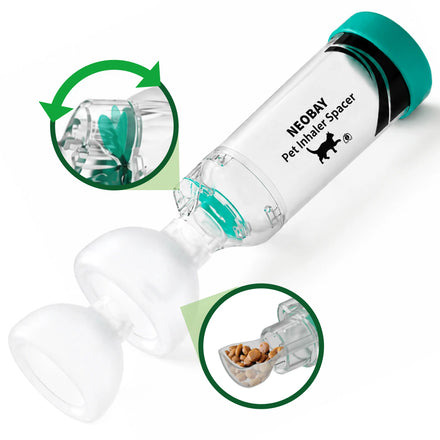
Neobay Cat Aerosol Chamber with Comfort Feeder — Green
- See each breath with the Breath Indicator
- Built-in treat holder makes mask practice easier
- Anti-static chamber helps keep medication airborne
What not to leave to travel day
- Do not wait for a parcel if the need is urgent. Contact a veterinarian or local emergency clinic instead.
- Do not change medication, dose or timing to make travel easier. Those are prescribing decisions.
- Do not leave the chamber in a hot car or under heavy luggage. Use a protected, reachable spot and follow the MDI storage guidance from the pharmacist or label.
- Do not make someone else's first task a forced mask session. Show them the normal setup; ask the veterinarian for routine-specific help if support is needed.
- Do not assume any transport rule is universal. Check the booked provider's current requirements before departure — pet policies differ between airlines, routes and booking types even within one country.
Frequently Asked Questions
Can I take my cat's inhaler spacer in the car with us?
Yes — a pet-only chamber packs like any fragile accessory: clean, dry, protected and reachable. Keep the prescribed MDI with it and follow the storage guidance for that specific product. The medication routine itself stays with the prescribing veterinarian.
Should I buy a second chamber for travel?
It can make sense for two locations, a deliberate backup or a multi-cat household, but it is not automatically necessary for one trip. It also never substitutes for calm familiarisation or veterinary guidance. Decide before the trip, not during it.
Why can't I just follow one airline's rules I found online?
Because pet and medication policies differ between providers, routes and booking types, and they change without notice. The only reliable source is the provider you actually booked, checked close to departure, plus the prescribing veterinarian for routine questions.
Does Neobay include the inhaler or medication?
No. Neobay is a non-medicated, pet-only chamber accessory. A compatible MDI and its medication must be prescribed separately by a veterinarian.
Who do I contact if my cat needs help while we're away?
A veterinarian or the appropriate local emergency service — this article cannot assess urgency, recommend a dose or replace the clinic caring for your cat. If cost or delivery timing was the worry, that is still not a reason to wait.
What to Do Next
- Ask the prescribing veterinarian for travel-specific guidance before booking.
- Pack the five-part kit and confirm the booked transport provider's current pet requirements.
- If mask practice is still a work in progress, start with our guide to training your cat to accept an inhaler mask, or read what a cat inhaler spacer actually is for the full picture.
For product or order questions, visit our FAQ page or contact us. For questions about your cat's health or prescribed inhaler routine, speak with your veterinarian.
Sources
- Cornell Feline Health Center. Feline Asthma: What You Need to Know. Accessed 18 August 2026.
- Trudell Animal Health. AeroKat and AeroDawg Instructions for Use. Accessed 18 August 2026.


