Key Takeaways
- Feline asthma is inflammation of the lower airways; coughing alone cannot establish the diagnosis.
- Oral prednisolone and an inhaled corticosteroid are prescription options. The right choice depends on your cat, not a universal rule that tablets are wrong.
- A preventer and a reliever have different jobs: reducing ongoing inflammation and opening narrowed airways.
- A puffer needs a suitable chamber and mask for a cat. Seeing an airflow indicator move does not measure the dose reaching the lungs.
- Open-mouth breathing or obvious difficulty breathing needs urgent veterinary attention, rather than another training attempt.
Moving a cat from daily tablets to a puffer is a veterinary decision involving two separate plans: medication coverage and mask training. Neobay accessories can be part of the equipment conversation, but they do not replace a prescription, a supervised transition or follow-up. Ask your vet whether inhaled treatment suits your cat before changing any current medicine.
If the tablet bottle is becoming a daily battle, the useful question is not whether every cat should switch. It is whether your cat can receive a prescribed plan consistently and comfortably. This guide explains that conversation for Australian cat owners; it is educational guidance, not a patient success story or an individual treatment plan.
Why might your vet discuss a puffer?
A corticosteroid is a medicine that reduces inflammation. Prednisolone is given by mouth, while fluticasone is one example used by inhalation. A bronchodilator opens narrowed airways; it has a different purpose and does not replace control of the underlying inflammation.
Paddington Cat Hospital explains that feline asthma usually requires ongoing management and that oral medicine may be used initially before a longer-term inhaled approach. Mira Mar Veterinary Hospital also describes prescribed puffers as an option intended to reduce potential side effects from long-term treatment.
That is a reason to discuss the route of administration, not permission to stop tablets. Some cats need oral medicine during a transition. Others may need it longer, or may not tolerate the proposed inhaled routine. An effective plan must fit the cat's condition and what the household can reliably do.
But inhaled medicine is still medicine. A change of route cannot guarantee freedom from side effects, eliminate every flare-up or prove that a cat no longer needs monitoring. Ask which changes in appetite, drinking, weight or behaviour should prompt a call, and what reassessment your vet recommends.
Put the transition plan in writing
Bring every medicine and the current instructions to the appointment. Include supplements and any medication from another clinic. If giving tablets is difficult, say what actually happens: hiding before a dose, spitting out tablets or missed doses. This is useful information for planning, not a reason to be embarrassed.
Ask your vet to write down:
- Which medicine is for regular control and which, if any, is for rescue use.
- Whether tablets continue while the inhaled medicine is introduced.
- Who decides when an oral dose changes, and how you will receive those instructions.
- What to do if the cat refuses the mask or a dose is missed.
- When to review progress and which signs require urgent care.
Do not stop or taper prednisolone yourself. If instructions are unclear, call the prescribing clinic before making a change. A training setback should trigger a conversation about maintaining the prescribed coverage, rather than an improvised gap in medication.
What if the puffer arrives before my cat accepts the mask?
Tell your vet before the first planned change in medication. Equipment arriving is not the same as the cat being ready to use it. The clinic can advise how the prescribed plan continues while you practise the handling steps.
Separate the prescription from the equipment
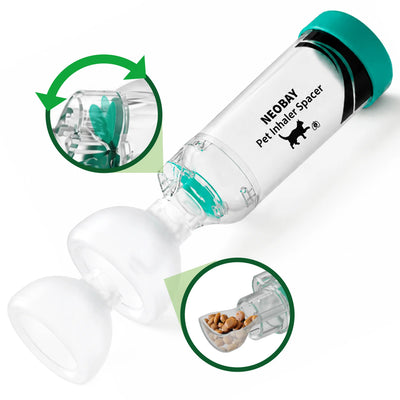
A metered-dose inhaler is the canister that releases a measured actuation of medicine. A spacer chamber is the accessory placed between the inhaler and the mask so a cat can breathe from the chamber. The accessory itself does not contain medicine.
Ask the clinic to check the prescribed canister, chamber assembly, mask placement and technique together. Human inhaler devices are not interchangeable simply because they contain the same named ingredient. Follow the instructions for the particular medicine and equipment your vet has checked.
The Visual Flow Indicator on a Neobay chamber offers a visible airflow cue. It does not measure drug deposition in the lungs, confirm a complete dose or show that asthma is controlled. If it is not moving as expected, ask for a technique check rather than adding extra puffs.
Comfort Feeder uses food to encourage a cat to approach and voluntarily place their face at the mask. It is a familiarisation aid, not a guarantee of acceptance, a special facial seal or evidence of a medical outcome. The aim is a calmer handling routine that the cat can tolerate.
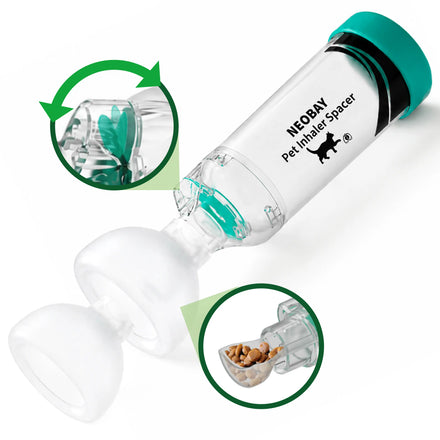
Neobay Cat Inhaler Spacer with Breath Indicator in Australia
- See each breath with the Breath Indicator
- Built-in treat holder makes mask practice easier
- Anti-static chamber helps keep medication airborne
Build a routine your cat can tolerate
Practise only when your cat is settled and breathing comfortably. Start with the equipment at a distance the cat accepts, and pair looking at or approaching it with something the cat enjoys. Keep an easy exit available. A cornered cat is not learning the same thing as a cat choosing to approach.
Introduce mask contact gradually, then work on the assembled equipment with your veterinary team's guidance. Ask the clinic how to introduce the sound without wasting prescribed medicine or releasing unnecessary medication into the room. Do not copy another household's actuation sequence or breath count.
Choose a place where the equipment can be ready without a chase around the house. One person can prepare supplies while the other keeps the routine quiet. If several people share care, use the same written instructions and record who gave each dose.
There is no deadline every cat must meet. If your cat retreats, pause and make the next practice step easier. If prescribed medication cannot be given, contact the vet for an alternative plan; waiting for training to work is not a substitute for treatment.
For more detail, read our mask familiarisation guide and guide to a calmer inhaler routine. Use them alongside the clinic's demonstration.

Track what matters between appointments
Keep a short record of medication given, coughing, breathing effort and any difficulty with the mask. Note changes in appetite, drinking or activity. A video of an episode may help your vet when it can be recorded without delaying care or disturbing your cat.
Review possible irritants at home, such as smoke, fragrances and dusty litter. Mira Mar recommends reducing obvious triggers alongside the prescribed plan. Changes to the room are supportive measures; a cleaner home is not evidence that inflammation has resolved or that medication can be withdrawn.
Seek urgent veterinary care for open-mouth breathing, marked breathing difficulty, collapse or blue or grey gums. Minimise handling, contact an emergency clinic and follow any rescue plan already prescribed. Do not delay travelling for another mask practice session.

Frequently Asked Questions
Can a puffer replace daily prednisolone for every cat?
No. Some cats are suitable for an inhaled plan, while others need oral medicine temporarily or longer term. Your vet should decide whether to switch and how to maintain coverage during the change.
Does choosing an inhaled steroid mean there are no side effects?
No. Inhalation may reduce exposure elsewhere in the body, but it does not make a medicine risk-free. Ask the prescribing vet what to watch for and when the next review should happen.
Can I use a human puffer I already have at home?
Do not substitute a person's medicine or device without veterinary instructions. The ingredient, strength, inhaler format and method of use all need to match your cat's prescription and equipment.
How quickly should my cat accept the mask?
There is no reliable deadline for every cat. Progress depends on the individual cat and the handling routine. If the mask prevents you giving prescribed medicine, call your vet rather than waiting for an arbitrary training period to end.
Should I buy the chamber before asking my Australian vet?
Ask first so the clinic can check what equipment fits the proposed prescription and demonstrate its use. You can compare available accessories afterwards, without confusing a chamber purchase with a decision to change medication.
What to Do Next
Book a medication review, bring your current instructions and ask for a written transition and emergency plan. Then practise the handling steps your clinic recommends and arrange a technique check if the routine is difficult.
For equipment questions, start with our Australian cat inhaler spacer buyer's guide. You can review the Neobay chamber available in Australia with your vet. Prescription medication is separate.
For accessory questions, contact Neobay. Medication decisions belong with your veterinary team.
Sources
- Paddington Cat Hospital. Common Conditions — Asthma.
- Mira Mar Veterinary Hospital. Understanding and managing feline asthma.
- VCA Canada Animal Hospitals. Prednisolone/Prednisone.