Key Takeaways
- Feline asthma affects between 1 and 5% of cats — usually diagnosed at 2 to 8 years, but it can appear well into a cat's senior years.
- In older cats, a cough or slower play gets blamed on hairballs, arthritis, or "just getting old," delaying treatment.
- Most cats with asthma, seniors included, live a normal lifespan on consistent inhaled medication (Cornell Feline Health Center).
- Inhaled corticosteroids through a spacer chamber cause fewer whole-body side effects than steroid tablets or injections — a real advantage for older cats.
- A 30-second video of your cat's coughing episode is one of the most useful things you can bring to a senior-cat vet visit.
Feline asthma affects between 1 and 5% of cats, and in a senior it may start late or finally surface after years of mild, unrecognised symptoms. With consistent inhaled medication — such as fluticasone (Flixotide in Australia) through a Neobay spacer chamber — most cats, seniors included, live a normal lifespan; the work is catching the signs early.
Can Cats Develop Asthma in Old Age?
Yes. The short answer surprises many owners, because most information focuses on younger cats.
Feline asthma is a chronic inflammatory airway disease in which a cat's airways narrow and produce excess mucus, causing coughing, wheezing, and laboured breathing. Cornell Feline Health Center puts the average age of diagnosis at 4 to 5 years.
But "average" hides the spread:
- Late-onset asthma. Some cats develop it for the first time at 10, 12, or 15. Less common, but vets see it.
- Late-recognition asthma. More often, mild asthma has gone unflagged for years, and as lung function declines the signs finally become obvious.
Flare-ups are usually driven by inhaled allergens — in Australia, pollen as well as bushfire smoke. RSPCA Australia notes cats with a respiratory condition are most at risk when the air is smoky.
So don't dismiss new wheezing or coughing in a senior as normal ageing. Asthma in older cats is real and treatable. For a full overview, read our complete guide to feline asthma.
Why Asthma in Senior Cats Gets Missed
Senior cats get diagnosed later than they should, for age-specific reasons:
- Everything gets blamed on age. A slower cat that coughs now and then reads as "he's just old," so nobody chases it.
- The hairball trap. Asthma coughs are dry and hacking — but so is a hairball cough, so years pass under "it's just a hairball."
- Other conditions steal the spotlight. A senior often has arthritis, kidney disease, or heart disease, and a wheeze gets blamed on one of those.
- Vet-visit stress. Asthma is easiest to hear during an episode, but cats won't perform at the clinic.
The result: a treatable condition goes untreated, sometimes for years.
Diagnosing Asthma in a Senior Cat
Your vet will typically start with a physical exam and a chest X-ray to look at the airways and rule out heart disease or fluid in the lungs — both more common in seniors. Bloodwork and a faecal check rule out other causes such as lungworm. There's no single definitive test; asthma is a diagnosis of exclusion. Our guide on how vets diagnose feline asthma walks through each step.
Can I just show my vet a video instead of stressing my cat with another visit?
Often, yes — the single highest-value move for a senior cat. A 30- to 60-second video lets your vet hear the cough pattern and see the body posture (many asthmatic cats crouch with the neck extended), and it routinely shortens the time to a working diagnosis.
If your vet suspects heart disease, they may run a cardiac workup before starting steroids.
How Long Can a Senior Cat Live With Asthma?
This is the question owners actually type, and the honest answer is reassuring.
Asthma is a chronic, manageable condition — not a terminal one. Cornell notes owners can help asthmatic cats live happily for years with monitoring and medication, and VCA reports most live a normal lifespan with consistent treatment.
What matters more than the age at diagnosis is management quality: cats on consistent daily treatment do well long-term, while cats treated only during flare-ups have more ups and downs. For a senior, that usually lines up with one goal — quality of life.

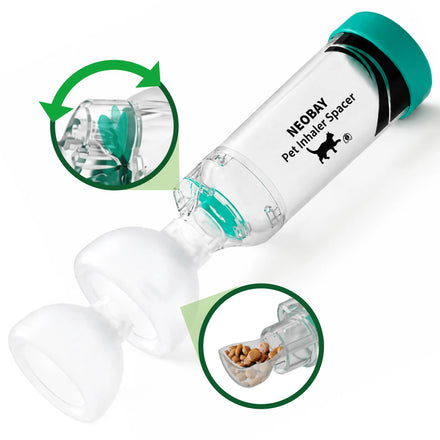
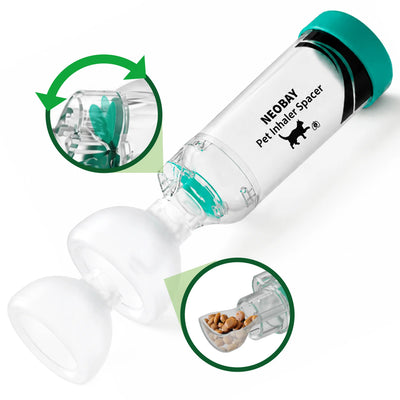
Neobay Cat Inhaler Spacer with Breath Indicator in Australia
- See each breath with the Breath Indicator
- Built-in treat holder makes mask practice easier
- Anti-static chamber helps keep medication airborne
Treatment: What Changes for an Older Cat
There are two main ways to control asthma inflammation: inhaled corticosteroids and systemic steroids. Inhaled corticosteroids — anti-inflammatory medication (fluticasone, sold in Australia as Flixotide) delivered straight to the lungs through a spacer chamber, so very little enters the bloodstream. Systemic steroids — tablets like prednisolone or injections like Depo-Medrol that circulate through the whole body. They age differently in an older body:
- Inhaled steroids stay mostly in the lungs, with a much lower risk of the whole-body effects of long-term tablets or injections.
- Systemic steroids affect everything. In a senior that's a bigger deal: prednisolone has been documented to induce diabetes in cats (Nerhagen et al., 2021), and long-term use can drive weight gain.
That's why many vets prefer inhaled treatment for older cats managing diabetes, kidney disease, or weight problems.
There's a trade-off, though. Some owners choose a Depo-Medrol injection every few months because it's one vet visit instead of daily mask sessions. It's legitimate, but it trades convenience for more whole-body exposure — and you can't "un-give" a shot.
Is a Depo-Medrol injection easier for an older cat than daily medication?
Sometimes, yes — it removes the daily struggle, but because the steroid circulates through the whole body it carries more metabolic side effects than inhaled medication. For a senior with diabetes or kidney disease, most vets lean toward inhaled treatment.
Helping a Senior Cat Accept a Spacer
The biggest worry with a senior is whether they'll tolerate the mask. The honest answer: most cats learn to accept it, especially with slow, food-based training.

A few things that help an older cat specifically:
- Shorter sessions. A senior's patience is limited — two to three minutes a day beats one long, stressful session.
- Food-led association. Let your cat lick a treat or Churu-style paste while the mask sits near the face, then briefly over the muzzle. Neobay chambers include a Comfort Feeder — a treat-guided attachment that uses food to encourage a reluctant cat to bring its own nose into the mask on its own terms.
- Patience over pushing. Forcing the mask on a senior cat backfires fast — slow and voluntary is faster in the long run.
If your cat is especially head-shy, ask your vet about a gradual desensitisation plan. Our full inhaler-training guide walks through the week-by-week approach.
Frequently Asked Questions
Can a 15-year-old cat suddenly develop asthma?
It's uncommon but real. Asthma is usually diagnosed in cats aged 2 to 8, but a cat can develop it later — and more often, mild asthma that went unnoticed becomes obvious as lung function declines. New coughing or wheezing in a senior deserves a vet check.
How long do senior cats live with asthma?
With consistent treatment, most cats with asthma — including seniors — live a normal lifespan. Asthma is a chronic condition to manage, not a terminal diagnosis.
Which is safer for an older cat: a puffer or steroid tablets?
For most older cats, inhaled medication is gentler because it targets the lungs with very little entering the bloodstream. Steroid tablets and injections affect the whole body and carry higher risks, like diabetes and weight gain.
Should I put my senior cat through inhaler training?
For most seniors, slow, food-led training works, and the payoff is years of lower-risk medication. If your cat is very old, frail, or head-shy, a periodic steroid injection under your vet's supervision is a reasonable trade-off.
Can I still let my senior cat outside?
It depends on your cat's triggers. If pollen sets them off, limit outdoor time during high-pollen periods. On smoky or high fire-danger days, RSPCA Australia advises bringing pets inside with doors and windows closed, since animals with a respiratory condition are most at risk. Otherwise, supervised outdoor time is usually fine — though in areas with cat curfews or wildlife restrictions, keep it to a secure catio or harness.
Can I use a human spacer or a human puffer for my cat?
No. Human spacers are built around a mouthpiece, not a face mask, so they can't work over a cat's muzzle. Use the feline aerosol chamber your vet supplied or prescribed.
What to Do Next
- If your senior cat is coughing, wheezing, or breathing harder than usual, film a 30-second video before the next vet visit.
- Ask your vet to rule out heart disease before starting steroids — the senior-specific step most people skip.
- If inhaled treatment is the plan, introduce the Neobay Cat Aerosol Chamber for Australia slowly with treats, and let your cat set the pace.
Asthma in a senior cat is very manageable. Start with a diagnosis you trust, then build a routine your cat can live with.
Have questions? Visit our FAQ page or contact us directly.
Sources:
- Cornell Feline Health Center. "Feline Asthma: What You Need to Know." Cornell University College of Veterinary Medicine. https://www.vet.cornell.edu/departments-centers-and-institutes/cornell-feline-health-center/health-information/feline-health-topics/feline-asthma-what-you-need-know
- VCA Animal Hospitals, "Asthma and Bronchitis in Cats." https://vcahospitals.com/know-your-pet/asthma-and-bronchitis-in-cats
- Nerhagen S, Moberg HL, Boge GS, Glanemann B. "Prednisolone-induced diabetes mellitus in the cat: a historical cohort." Journal of Feline Medicine and Surgery, 2021; 23(2): 175-180. PMID: 32716236
- RSPCA Australia. "How can I minimise the impact of bushfire smoke on my animals?" RSPCA Knowledgebase. https://kb.rspca.org.au/categories/wild-animals/how-can-i-minimise-the-impact-of-bushfire-smoke-on-my-animals
- Vet Voice (Australian Veterinary Association). "Smoke hazards and pet health." https://www.vetvoice.com.au/articles/smoke-hazards-and-pet-health/
Related Reading
This article is part of our Feline Asthma: The Complete Owner's Guide — covering causes, symptoms, diagnosis and long-term management. For the equipment side, see the Australian cat inhaler spacer buyer's guide.