Key Takeaways
- A sleeping cat should breathe fewer than 30 breaths per minute; a resting rate above 40 breaths per minute means call your vet.
- The attack ending doesn't end the danger — inflamed airways stay sensitive and can re-constrict for 24–48 hours or longer.
- Heavy sleeping and skipping a meal or two after an attack is normal exhaustion; collapse, blue gums, or open-mouth breathing is not.
- Keep giving the daily inhaled steroid on schedule, and never double a dose to "make up" for the attack.
- A second attack within 24 hours means the current plan isn't holding — that's a same-day vet conversation, not a wait-and-see one.
The most dangerous misunderstanding about a cat asthma attack is that it ends when the coughing stops. It doesn't. Airway hyperresponsiveness — the medical term for bronchial tubes that stay twitchy and easily re-constricted after inflammation — can persist for 24–48 hours after the episode, which is why vets treat the day after an attack as a real recovery window. Feline asthma affects an estimated 1–5% of cats (Cornell Feline Health Center), and most recover at home just fine when owners do four things: enforce rest, count breaths, keep medication on schedule, and know the red flags. Here's what those 24 hours look like, hour by hour.
One note first: this article covers the after. If your cat is having an attack right now, stop reading and go to our step-by-step emergency guide instead.
Why the First 24 Hours Matter
An asthma attack is a bout of bronchoconstriction — the small airways clamp down and the cat fights for air. When it passes, the cat looks normal. The lungs aren't.
Airway inflammation takes days to settle, not minutes. During that settling period the bronchi overreact to things that wouldn't normally bother them: dust from a litter tray, a whiff of cooking smoke, a burst of excited play. That's the mechanism behind the pattern vets see over and over — the cat that has a second, often worse attack the same night or the next morning.
So the goal of the first 24 hours isn't active treatment. It's removing load from airways that are already struggling to calm down — the way nobody signs a kid up for footy practice the day after a fever breaks.
Your Hour-by-Hour Recovery Timeline
The First Hour
Move your cat — or let your cat move — to the quietest room you have. Cool is better than warm; aim for roughly 20–22°C, because heat makes breathing work harder. Fresh water down, litter tray available, lights low. No other pets, no kids, no vacuum.
Don't fuss over her. A cat that just couldn't breathe is wired and exhausted at once, and attention reads as pressure. Sit nearby and let her choose the spot.
Hours 1–6
Rest is the treatment. Check on her quietly every hour or two — you're watching chest movement from across the room, not touching. If she's dozing, count her breaths once (method below) and write the number down with the time. Offer a small portion of something tempting around normal mealtime, but don't push food.
Overnight
Night is when second attacks cluster — cooler air, quieter household, natural dips in cortisol. If your cat sleeps in your bedroom anyway, keep it that way. If she sleeps elsewhere, do one late-night check: count breaths while she's asleep and note it. Our guide to cats breathing fast while sleeping covers nighttime norms in more depth.

The Next Morning
You're looking for three things: she's interested in food, she moves around normally (walking, not zooming), and her sleeping breathing rate is back under 30. If all three check out, call your vet's office anyway and schedule a follow-up within 24–48 hours — an attack that broke through the current plan usually means the plan needs adjusting. Frequent mild attacks are the signal vets look for when deciding whether a fluticasone dose needs to change.
How to Count Your Cat's Sleeping Respiratory Rate
Sleeping respiratory rate (SRR) — the number of breaths a cat takes per minute while fully asleep — is the single most useful number you can collect in the recovery window, because it filters out excitement and purring and shows what the airways are actually doing. The method takes thirty seconds:
- Wait until she's asleep, not just resting. Watch her ribcage or flank from a distance.
- One rise plus one fall of the chest counts as one breath. Count for 30 seconds, then double it.
- Write down the number and the time, every time.
Under 30 breaths per minute is the normal zone for a sleeping cat. A rate in the 30s that trends downward across the day is usually recovery in progress. A rate that stays above 40 while she's fully asleep, or climbs between checks, means the airways aren't settling — that's a vet call, and an emergency visit if it comes with effort, hunched posture, or open-mouth breathing.

What breathing rate is too high for a cat after an attack?
A sleeping rate above 40 breaths per minute is where most vets want to hear from you, and any rate that high combined with visible abdominal effort is an emergency. A single reading of 32 while she's dreaming isn't a crisis — the trend across checks is what matters, which is why you write each one down.
Medication During the Recovery Window
Three rules cover almost every medication question in the first 24 hours.
Keep the daily steroid on schedule. If your cat is on a fluticasone puffer (commonly Flixotide in Australia) twice daily, give the next dose at the normal time. An attack is not a reason to skip, and it is absolutely not a reason to double. Dose changes are your vet's call, made at the follow-up, not improvised at 11 p.m.
Re-dose the rescue puffer only as directed. If you used salbutamol (Ventolin) during the attack, don't keep puffing "to be safe" every time she breathes a little fast. Rescue bronchodilators have a dosing interval your vet specified — usually measured in hours, not minutes — and over-dosing causes racing heart and tremors on top of everything else. If she still needs rescue medication repeatedly hours after the attack, that's a phone call, not another puff.
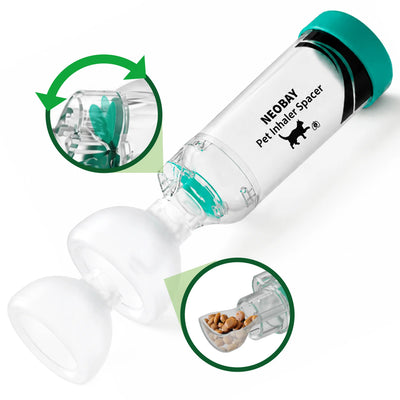
Make each dose count. A cat that's just been through an attack is the cat least likely to cooperate with a mask — which is when doses get wasted. A well-fitting spacer chamber with a flow indicator takes the guesswork out: you can see the valve move with each breath and know she actually inhaled the dose. The Neobay chamber two-pack gives you a spare, which matters more than owners expect during a stressful week.
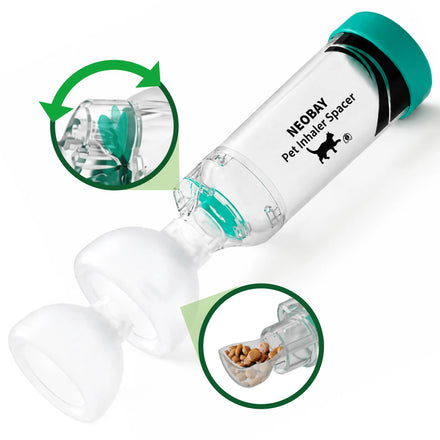
Neobay Cat Inhaler Spacer with Breath Indicator in Australia
- See each breath with the Breath Indicator
- Built-in treat holder makes mask practice easier
- Anti-static chamber helps keep medication airborne
What's Normal After an Attack — and What Isn't
Owners are often blindsided by how behaviourally off their cat seems afterward — the part veterinary handouts tend to skip.
Normal for 12–24 hours: sleeping most of the day, eating less or skipping one meal, hiding, acting "offended" by the whole experience. Cats that have just been handled, puffed, and frightened in rapid succession often need a couple of days to decompress. Warm up something smelly (tuna water on wet food is the classic move), keep water fresh, and let her come to you.
Not normal — call your vet:
- No food at all by 24–48 hours after the attack
- A second attack, even a mild one, inside the 24-hour window
- Sleeping breathing rate that stays above 40 or climbs across checks
- Hiding so persistently she won't emerge for food, water, or the litter tray
- Blue or grey gums, open-mouth breathing, or collapse — emergency vet, now
If you're unsure whether the attack itself warrants an emergency trip, the red flags are in our step-by-step emergency response guide. And if your cat hasn't been formally diagnosed yet — the attack came out of nowhere — the follow-up visit is where that gets sorted; here's how vets actually diagnose feline asthma.
Frequently Asked Questions
How long does it take a cat to recover from an asthma attack?
Most cats are behaviourally back to normal within 24 hours, though the airways stay sensitive for one to two days. Full recovery — breathing rates settling completely, tolerance for play returning — typically takes several days to a week. If improvement stalls or reverses, call your vet.
Why won't my cat eat after an asthma attack?
Exhaustion and stress both suppress appetite, and skipping a meal or two in the first day is common. Try warming wet food or adding tuna water, offered quietly. No food at all by 24–48 hours is where it stops being normal and becomes a vet call.
When can my cat play again after an asthma attack?
Keep the first 24 hours strictly quiet — no chasing or teaser toys, because heavy breathing can re-trigger constricted airways. Light walking is fine immediately. Most cats return to normal play two to three days after a mild attack, assuming their sleeping breathing rate has stayed under 30.
Should I give the Ventolin puffer again if my cat is still breathing fast?
Only within the dosing interval your vet specified — re-dosing more often can cause a racing heart and tremors. A fast-but-calm resting rate in the hours after an attack often reflects recovery in progress, not a new emergency. If she genuinely needs rescue medication again hours later, call your vet first.
Can I leave my cat alone overnight after an asthma attack?
The first night is the worst night for second attacks, so don't schedule a late evening out that day. You don't need to sit awake — do one bedtime breathing count and one late-night check, and keep her sleeping where you'd hear coughing or laboured breathing.
What to Do Next
- Tonight: one bedtime breathing count and one late-night check. Write the numbers down — the trend is the data your vet wants.
- Within 24–48 hours: follow-up call or visit, log in hand. If the attack broke through existing medication, ask directly whether the maintenance plan needs adjusting.
- This week: shore up the system so the next attack is less scary — our complete feline asthma owner's guide for Australia covers long-term management, and the common triggers guide is the place to start a household audit.
Have questions about spacers, dosing technique, or what to track? Visit our FAQ page or contact us directly — we answer owner questions like these every week.
Related Reading
This article is part of our Feline Asthma: The Complete Owner's Guide — symptoms, diagnosis, treatment, and long-term management, all in one place. Looking for a spacer chamber in Australia? Start with the Australian buyer's guide.
Sources:
- Cornell Feline Health Center — Feline Asthma information sheet (prevalence, monitoring).
- Kirschvink N, Leemans J. "Feline allergic asthma and experimental models: the sky is the limit." The Veterinary Journal, 2011; 190(1): 9-10.