Key Takeaways
- Perth Cat Hospital breaks cat inhaler training into nine small goals, from a relaxed approach to several calm breaths, rather than one long attempt.
- A local training guide suggests keeping early reward sessions to around 7–10 treats; stop sooner if your cat loses interest or looks worried.
- When you build time in the mask, add about one second at a time and mix easier repetitions back in instead of making every try harder.
- A five-day cat inhaler training search is a useful planning prompt, not a deadline: some cats move through the steps quickly, while others need longer at one stage.
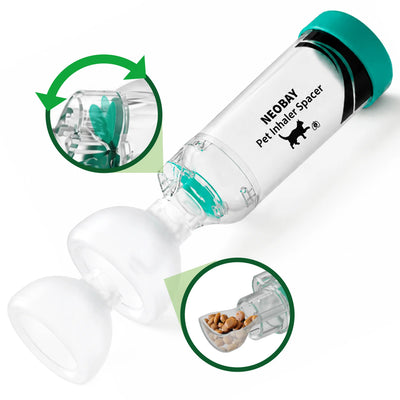
- Neobay Green’s Comfort Feeder lets you place a small treat inside the mask to invite voluntary mouth-in-mask contact during medication-free familiarisation.
Cat inhaler training in Australia works best as a sequence of small, voluntary choices—not a five-day test your cat can fail. Perth Cat Hospital describes nine separate training goals, and Neobay Green’s Comfort Feeder can support the first mask-contact stage by inviting a cat to put its mouth into the mask for a small treat. Follow the routine your veterinarian has prescribed, but let your cat’s relaxed behaviour set the pace.
The old promise that every cat can finish in five days is the wrong starting point. A more useful question is: what is the easiest step my cat can repeat willingly today?
Start with milestones, not a calendar
Mask familiarisation is the gradual, reward-based process of teaching a cat that approaching and entering the mask is safe and voluntary. It comes before asking for a full veterinarian-prescribed inhaler routine.
That distinction matters when you are anxious to get the routine working. A cat may sniff the mask on day one, put its nose inside for half a second on day four, then need several more sessions before it will stay. That is not a failed schedule. It is information about the step that still feels too hard.
Perth Cat Hospital’s Australian training guide is useful because it treats the process as separate goals: calm approach, comfort with handling and sound, voluntary nose-in-mask contact, longer duration, then the assembled routine. Behaviour writer Zazie Todd describes the same logic in plainer terms: the mask and the inhaler sound should become predictors of something the cat likes, not signals that a struggle is coming.
What if my cat will sniff the mask but will not put her nose inside?
Keep rewarding the sniff for now. Move the reward so the next choice is only slightly harder—for example, just inside the opening—then let your cat leave. If she turns away, the right response is to make the next repetition easier, not to hold the mask in place.
A calm five-step practice plan
This is a five-step sequence, not a medical dosing schedule. Keep medication decisions, the MDI and the number of breaths within the instructions from the veterinarian managing your cat’s care.
- Let the equipment appear without a demand. Put the chamber or mask in view, offer a reward for a calm look or approach, then put it away. The first win can be that your cat stays in the room.
- Invite a closer look. Hold the mask still and reward a sniff. A cue such as a quiet word or a light tap on the mask can become an invitation, but only after your cat understands it predicts something pleasant.
- Build voluntary mouth-in-mask contact. Place a small, diet-appropriate treat where your cat can reach it by choosing to put its mouth into the mask. Mark that brief choice with the reward, then end before your cat starts trying to escape.
- Stretch duration in tiny increments. One second longer is enough. Mix in easy repetitions so the task does not feel like it becomes harder every time.
- Add one new element at a time. The assembled chamber, handling and the sound of the prescribed inhaler are separate changes. Introduce them away from your cat first, pair them with a reward, then return to an easier mask-contact step.
The non-obvious part is step five. Owners often treat the chamber, the sound and the medication moment as one hurdle. For a cautious cat, they are three new things. Separating them gives you a clear way to see what is causing the retreat.
| If you see this | Try this next |
|---|---|
| Your cat leaves when the mask appears | Return to a calm look or sniff; make the mask visible before you offer it. |
| Your cat eats the treat but leaves straight away | Keep the duration at the easy level for several repetitions before adding time. |
| Your cat dislikes the sound | Make the sound farther away from your cat and pair it with a reward before bringing it closer. |
| Your cat was comfortable yesterday but avoids the mask today | Take a break, then restart at the last clearly relaxed step rather than trying to catch up. |

How the Comfort Feeder fits the first-week practice
Neobay Green’s Comfort Feeder is a treat-guided attachment: place a small treat inside the mask to encourage your cat to choose to put its mouth into the mask during short familiarisation sessions. It is not medication, a fit claim or a promise that every cat will accept the routine.
For an Australian household, that makes it most useful at step three—not as a shortcut past the earlier steps. If your cat does not want food, do not keep escalating the treat. Use a reward your cat actually values, such as a short play interaction or quiet attention, if that is appropriate for your cat and the situation.

What if treats work for the mask but progress stops as soon as the chamber is attached?
That is a new training picture, not stubbornness. Go back to the same voluntary mask-contact practice with the chamber attached but no inhaler sound or medication. The aim is to preserve the association your cat has already built, then add the next element slowly.
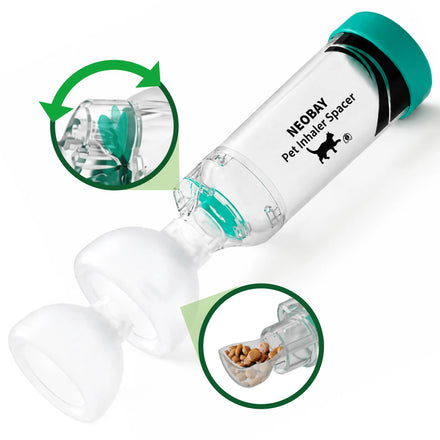
Neobay Cat Inhaler Spacer with Breath Indicator in Australia
- See each breath with the Breath Indicator
- Built-in treat holder makes mask practice easier
- Anti-static chamber helps keep medication airborne
If food-guided mask familiarisation suits your cat, see the Neobay Green One Pack for Australia. The product is a non-medicated pet-only chamber accessory; confirm the prescribed inhaler and routine with your veterinarian.
When the five-day idea is no longer helping
A timeline becomes unhelpful when it makes you push past your cat’s body language. Tail swishing, turning the head away, grabbing at food, leaving the session or becoming unusually still can all mean the current step needs to become easier. End while the session is still neutral. Tomorrow is not a deadline.
Keep a training concern separate from a care concern. If you are unsure how to use the prescribed MDI, whether a reward is suitable for your cat’s diet, or how to handle a missed routine, contact the veterinarian who prescribed it. A spacer article can explain familiarisation; it cannot decide medical use for an individual cat.
For the complete local purchase checklist, use the Australia cat inhaler spacer buyer’s guide. If your main question is what you will pay, delivery and pack value, the Australia price guide is the better next read. And if the mask itself is the sticking point, our reluctant-cat spacer guide gives a more detailed low-pressure starting point.
Frequently Asked Questions
Can I train my cat to use an inhaler in five days?
Some cats move through early familiarisation quickly, but five days is not a reliable deadline. Use the five steps as an order of progression and stay longer at any step where your cat is not relaxed or willing to participate.
Should I force the mask on if my cat keeps walking away?
No. Forcing the mask can make future training harder by teaching your cat to avoid the equipment. Return to a smaller step, reward voluntary interest and ask your veterinarian for individual guidance if you are worried about the prescribed routine.
What does the Comfort Feeder do during cat inhaler training?
The Comfort Feeder holds a small treat inside the mask to encourage voluntary mouth-in-mask contact during gradual practice. It does not contain medication, alter the mask material or guarantee that a cat will accept the routine.
What if my cat is not motivated by treats?
Use a reward your cat values, such as a brief play interaction or calm attention, if it is suitable for your cat. Do not turn the reward into a distraction contest; the goal is a short, voluntary step that your cat can repeat without worry.
Does the Green One Pack include an inhaler or medication?
No. The Green One Pack is a non-medicated pet-only chamber accessory. Your veterinarian prescribes the MDI and medication and should guide the routine for your cat.
What to Do Next
- Confirm the prescribed MDI and the use instructions with your veterinarian before starting the full routine.
- Choose the easiest familiarisation step your cat will repeat willingly today, then keep the session brief.
- Use the AU buyer’s guide when you are ready to compare the wider purchase details.
For the broader device-and-routine explainer, return to our cat inhaler spacer guide. It is the Pillar C resource for this topic cluster. For the full desensitization background behind each step, see our step-by-step guide to training a cat to accept a puffer mask.
For a simple weekly care routine, see our AU cleaning and maintenance guide.
\nSources
- Perth Cat Hospital. AeroKat training in cats.
- Todd, Zazie, PhD. How to Train Your Cat to Use an Asthma Inhaler.
- Trudell Animal Health and International Cat Care. Teach Any Cat AeroKat.