

Key Takeaways
- A standard AeroKat session takes under a minute: prime the inhaler, puff one dose into the chamber, hold the mask gently on, and count roughly 7–10 breaths on the Flow-Vu indicator (Trudell Animal Health).
- Spray the dose into the chamber before the mask touches your cat — actuating against a sealed mask can startle the cat and waste medication.
- Most cats need days to weeks of gradual training before they accept the mask calmly; International Cat Care recommends introducing it with food, step by step.
- Weekly cleaning matters: a 2021 study found feline inhalation chambers can carry bacterial contamination and tested which cleaning methods actually work (J Feline Med Surg, PMID: 32228277).
- If your cat refuses the mask after weeks of trying, a treat-guided chamber design like the Neobay Comfort Feeder gives you a training shortcut at a lower price point.
Using the AeroKat chamber comes down to one habit: medication in, mask on, count the breaths, reward. Vets typically prescribe one puff into the chamber followed by about 7–10 breaths for your cat, and the Flow-Vu indicator on the AeroKat makes each breath visible so you are never guessing whether the dose went in. Here is the full routine, the mistakes that waste doses, and what to do when your cat would rather leave the room.
Before You Start: What You Need
Three things on the table: the chamber, the prescribed inhaler, and high-value treats. The inhaler is the prescription item — usually fluticasone (Flovent) for daily control or albuterol for flare-ups — while the chamber itself is the delivery device that holds the medication so your cat can breathe it in slowly.
Metered-dose inhaler (MDI) — the pressurized canister your vet prescribed; it slots into the rear port of the chamber and releases one measured puff per actuation.
Pick a consistent spot and time. Cats read routine fast, and a session that always happens in the same quiet corner goes easier than one that ambushed them mid-nap.
Step-by-Step: Giving a Dose
- Shake and prime the inhaler per its label. If the canister is new or has sat unused, test-spray into the air first so the first real dose is full strength.
- Attach the inhaler to the chamber and pick the mask size that fits your cat — small for kittens and narrow faces, medium for most adults. The mask should seat around the nose and muzzle without pressing into the eyes.
- Actuate one puff into the chamber before bringing the mask to your cat. Spraying with the mask already sealed can startle them and push medication out the exhaust before they inhale.
- Let your cat settle, then bring the mask to their face from below their sightline rather than straight down. Hold it gently — no clamping.
- Count the breaths on the Flow-Vu flap. Each flutter is one inhalation. Aim for roughly 7–10 breaths per manufacturer guidance.
- Remove the mask and reward immediately — a lickable treat right after the session is what teaches your cat the routine ends in something good.
- Note the session if your vet asked for a log, and wipe the mask if your vet recommended it between full cleanings.
How do I know my cat actually inhaled the dose?
The Flow-Vu indicator is the answer — the flap only moves when your cat inhales through the chamber, so a still flap means no breaths yet, and ten flutters mean the dose is largely delivered. Without an indicator you are counting blind, which is why a breathing cue matters in any chamber you buy.
Why the Chamber Matters: Watch the Difference
A pressurized inhaler releases its plume in under a second — far faster than a cat can be timed to inhale. Sprayed directly, most of the medication hits the mouth and throat or drifts into the room instead of reaching the lungs, where it needs to go to work. The chamber slows that plume into a breathable cloud your cat can inhale over several natural breaths.
Direct MDI spraying wastes most of the dose; a spacer chamber carries it to the lungs over several breaths.
If Your Cat Fights the Mask
Sometimes training stalls. In one r/CatAdvice thread, an owner reported four weeks of gradual bowl-and-treat training with no mask breakthrough. What finally worked was a two-person phase — one holding gently, one applying the mask — followed months later by a one-person routine on a relaxed cat.
The cleverest workaround in that same thread: squeeze a lickable treat packet through the mask opening and let the cat lick toward it, gradually deeper, until the face is in the mask on its own. That food-first instinct is exactly why our step-by-step mask training guide rewards every stage — and why the Neobay chamber builds a Comfort Feeder right into the mask, so treat-guided acceptance is the default rather than a hack.
Keep sessions short and end them on a success, even a small one. A 20-second session that ends with a treat beats a two-minute wrestling match every single time. For the full progression, see how to give inhaled medication without stress.

Cleaning Between Sessions
Once a week, take the chamber apart and wash the mask and casing in warm water with mild soap, then let everything air-dry completely before the next dose. The stakes are not cosmetic: a 2021 study in the Journal of Feline Medicine and Surgery contaminated feline chambers with bacteria and tested cleaning methods, finding that method choice changes how much survives (PMID: 32228277). Follow the manufacturer's disassembly instructions rather than scrubbing valves, and replace the mask when it stops sealing smoothly.
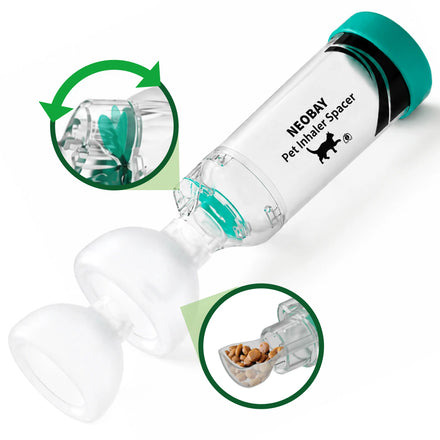
Cámara de aerosol Neobay para gatos con alimentador cómodo — Verde
- See each breath with the Breath Indicator
- Built-in treat holder makes mask practice easier
- Anti-static chamber helps keep medication airborne
Frequently Asked Questions
How many breaths does my cat need per puff?
Manufacturer guidance is roughly 7–10 breaths, counted on the Flow-Vu indicator. If your cat only takes four or five before pulling away, you still delivered a partial dose — note it and try again tomorrow rather than forcing the issue.
How long should a whole session take?
Under a minute once your cat accepts the routine: a few seconds to prime and puff, then the breathing count. The preparation — treats ready, cat calm — usually takes longer than the dose itself.
Can I use the chamber before training is finished?
Yes, with your vet's blessing, if your cat needs medication now. A gentle two-person hold is a legitimate bridge while training continues in parallel, as plenty of owners discover when a plateau drags on.
What if the inhaler hiss scares my cat?
Actuate the puff before the mask goes on — the sound happens away from your cat's ears, and the medication stays suspended in the chamber until they breathe. This is the single easiest fix for sound-sensitive cats.
How often do I replace parts?
Masks wear out first — once the seal stiffens or cracks, replace it. The chamber body typically lasts longer. A spare mask in the drawer means a worn seal never interrupts a daily treatment plan.
What to Do Next
- Run one practice session with an empty chamber and a treat, so the first real dose isn't your cat's first experience with the mask.
- Follow the routine above at the same time daily, and log breaths if your vet asked.
- If cost is tight or your cat stays mask-averse, compare the AeroKat against a complete guide to AeroKat chambers and the AeroKat alternatives comparison before your next purchase.
For a backup device at a second treatment station, the Neobay two-pack with Comfort Feeder keeps a spare chamber ready so you never miss a dose.
Have questions? Visit our FAQ page or contact us directly.
Sources:
- Trudell Animal Health. "How To Use." https://trudellanimalhealth.com
- International Cat Care. "Inhaler Training." https://icatcare.org/inhaler-training/
- Klenk FK, DeSimoi V, Wolf G. "Evaluation of different cleaning methods for feline inhalation chambers after bacterial contamination." *J Feline Med Surg*, 2021. PMID: 32228277
Related Reading
This article is part of our What Is a Cat Inhaler Spacer? — the complete guide to how spacer chambers work, how to choose one, and how they fit into feline asthma treatment.


