Key Takeaways
- An AeroKat alternative is another pet-only chamber purchase option; it does not mean two products are clinically interchangeable.
- A 2025 study found that 18 of 20 cats reached its defined face-mask/spacer acceptance standard, with a median of 6 days and a 2–19-day range; individual cats can need more time.
- For a cat that backs away from the mask, a lower-pressure first session is more useful than trying to complete the entire routine at once.
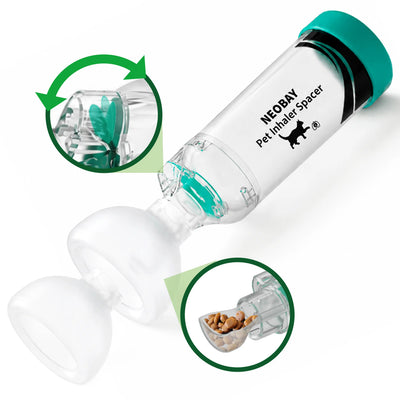
- Neobay’s Comfort Feeder is a small treat holder that supports voluntary familiarisation; it is not medication, a fit guarantee or a replacement for veterinary instructions.
- For Canada shoppers, use the local product page for the current CAD offer and delivery terms, then follow the veterinarian’s directions for the prescribed inhaler.
An AeroKat alternative can be a sensible Canada shopping question when a cat is already backing away from the mask—but the first decision is not which brand can be forced into a routine. It is whether the complete pet-only chamber setup gives you a calm way to begin familiarisation. Neobay’s Canada chamber is a non-medicated accessory used with a compatible veterinarian-prescribed MDI, and its Comfort Feeder gives a familiar treat a place in voluntary practice.
This page is about an accessory purchase and a calm home introduction. It does not diagnose breathing problems, choose medication, set a dose or replace veterinary care.
Why “AeroKat alternative” needs a more specific question
“AeroKat alternative” can mean several different things: a price comparison, local availability check, a parts question or a search for a different home routine. Canada’s AeroKat price, availability and alternatives guide owns the price-and-purchase comparison. This page has a narrower job: helping the owner whose cat turns away from the mask decide what to look for before the first practice session.
That distinction matters. A chamber accessory cannot tell you which inhaler your cat should use, whether a routine needs to change or when medication is appropriate. Those are questions for the veterinarian who prescribed the MDI. It can help you assess whether the listing is clear, whether the included parts fit your planned setup and whether you have a humane way to make the first interaction less abrupt.
A pet-only chamber is a non-medicated accessory that sits between a compatible veterinarian-prescribed MDI and the cat during the routine. The inhaler and medication are separate. An “alternative” is therefore a purchasing option, not a medical-equivalence claim.
What it means when your cat resists the mask
A cat may step back, turn its head, swat, leave the area or stop taking a reward when the mask appears. Those are useful signals that the current step is too difficult. They are not a reason to add pressure.
International Cat Care’s inhaler-training guidance breaks the experience into smaller pieces: the new object in the home, the mask at the muzzle, remaining still briefly, the assembled chamber and any sound linked to the prescribed inhaler. The cat should be able to accept a piece before the next piece is added. The guidance is especially clear on one point: let the cat move its own face forward into the mask instead of moving the mask toward the cat’s face.

What if my cat will sniff the mask but will not put its face inside?
Keep that successful sniff easy and repeatable. Reward the calm approach, then end the session before the cat disengages. Do not turn one good investigation into a longer demand because it finally happened; that is how a useful first step can become something the cat avoids next time.
What to look for in an AeroKat alternative when your cat resists the mask
Start with a full, transparent product listing. Confirm that it is for pets, identify the included masks and accessory parts, read the care information and check current local delivery and support terms. The list should also make clear that the inhaler is not included.
Then assess the familiarisation path. If a cat is uncertain around face-level objects, the setup should let you practise without turning every attempt into a medication event. A small, veterinarian-approved familiar treat can support the earliest voluntary interactions. The reward is not a bribe for restraint; it is a way to let the cat choose to investigate and to stop while the interaction still feels safe.
Comfort Feeder is Neobay’s removable treat holder. It can hold a small amount of a familiar treat at the mask opening during medication-free practice so a cat can choose to approach. It does not change mask geometry, guarantee a fit, deliver medication or replace the guidance from the prescribing veterinarian.
View Neobay’s Canada cat inhaler spacer.
A no-force familiarisation sequence
- Make the accessory ordinary. Put it in a calm area without bringing it to the cat’s face. Allow the cat to look, sniff or ignore it.
- Reward the smallest calm choice. A glance, an approach or a sniff can be enough for one short session. Use a reward that is suitable for your cat and acceptable to the veterinarian.
- Keep the mask still. Let the cat lean forward. If the cat turns away, remove the demand rather than following its face with the mask.
- Change one variable at a time. Do not combine longer duration, a fully assembled chamber and the prescribed MDI in the same first attempt.
- Finish before frustration. A short session that ends while the cat remains comfortable is progress. Repeat the easy step later rather than trying to win a longer session.
The 2025 face-mask/spacer study is useful context, not a deadline: 18 of 20 participating cats reached its acceptance standard, with a median of 6 days and a range of 2–19 days. Your cat’s pace, previous experiences and veterinarian-led routine may be different. Do not use the statistic to push past signs that the cat needs an easier step.

When not to keep experimenting at home
Pause and contact the veterinarian who prescribed the inhaler if the existing routine cannot be completed, practice is repeatedly becoming more stressful or you think the medication plan needs to change. Do not make dose, timing or medication substitutions based on an online article. If you are worried about your cat’s breathing or need urgent clinical direction, contact a veterinary clinic rather than waiting for a Canada delivery window.
Once the cat can calmly investigate the mask, use the forthcoming Canada five-day familiarisation guide for a calendar-based practice sequence. That page will own the day-by-day plan; this page should remain the purchase-and-readiness guide.
Frequently Asked Questions
Is there an AeroKat alternative in Canada for a cat that resists the mask?
There are other pet-only chamber purchase options, including Neobay Canada. Choose by the complete listing, current local terms and whether the setup supports brief, voluntary mask familiarisation; an alternative is not a claim that products are clinically identical.
Should I force the mask on if my cat keeps backing away?
No. Return to an easier, medication-free practice step and let your cat choose to approach. If the veterinarian-prescribed routine cannot be completed, ask that veterinarian for cat-specific guidance.
Can treats help a cat accept an inhaler mask?
A small familiar reward can support a positive association with early practice when it suits your veterinarian’s guidance. Neobay’s Comfort Feeder is a treat holder for that voluntary introduction; it is not medication or a promise that every cat will accept the mask.
Does Neobay Canada include the inhaler or medication?
No. Neobay is a non-medicated pet-only chamber accessory. The MDI inhaler and medication are separate and must be prescribed by a veterinarian.
How long does it take a cat to accept an inhaler mask?
Every cat is different. A 2025 study reported a median of 6 days among participating cats that reached its defined acceptance standard, with a 2–19-day range; that result is not a promise for an individual cat.
Should I buy two chambers because my cat resists the mask?
Not for reluctance alone. Consider a second chamber only when it has a clear household purpose, such as a multi-cat home, a backup or two locations. A calmer practice plan is more useful than buying an extra accessory to solve the first difficult session.
What to Do Next
- Confirm the prescribed inhaler routine with your veterinarian.
- Use one low-pressure familiarisation step and stop while your cat is still comfortable.
- For current CAD product details, view Neobay’s Canada cat inhaler spacer.
- Return to the Canada cat inhaler spacer buyer’s guide for the complete local purchase checklist.
For order questions, visit our contact page. For questions about your cat’s prescribed inhaler, medication or breathing, speak with your veterinarian.
Sources
- Rozanski EA et al. Time to face mask/spacer acceptance in dogs and cats. Canadian Veterinary Journal, 2025.
- International Cat Care. Training a cat to accept an inhaler.
- Neobay Pet. Canada cat inhaler spacer product page.