Key Takeaways
- Open-mouth breathing is an important warning sign in a cat, especially at rest.
- A complete breath is one chest rise and fall; a count does not measure how hard breathing has become.
- Asthma, chest fluid and other illnesses can cause breathing difficulty, so the appearance alone cannot identify the cause.
- Emergency teams may need to stabilise a distressed cat before completing diagnostic tests.
- A non-medicated spacer is not an oxygen source or a substitute for emergency assessment.
Contact a vet immediately if your cat is breathing with an open mouth, struggling or collapsing; do not wait for a certain number or a set number of minutes. A usual settled breathing range is 15–30 per minute, but the emergency signs take priority. Neobay accessories belong in an agreed treatment routine after assessment, not as a reason to postpone help.
What should you do first?
Respiratory distress means breathing is difficult, not simply faster than usual. A cat may stretch their neck, hold their elbows away from their body, work hard with the abdomen or struggle to find a comfortable position. An open mouth is a warning sign that needs immediate veterinary advice.
Stop play and unnecessary handling. Contact your vet or an emergency hospital while arranging care. Say clearly, “My cat is breathing with an open mouth,” and describe any effort, weakness or collapse. If you are alone, put the call on speaker while you prepare the carrier.
Do not create a home waiting tier based on whether the episode has lasted one, five or ten minutes. Nor should a reassuring breath count overrule visible distress. PDSA's breathing advice specifically warns against waiting for a struggling cat to improve.
If an episode has stopped and your cat now looks comfortable, still describe it to a vet promptly. Tell them what happened before it, whether there was a cough, and how long you observed it. Follow their direction about where and when to attend.

How do you get to care without adding stress?
Move gently and keep the surroundings quiet. Let the cat keep the posture that helps them breathe; do not squeeze their chest or force them flat. Use a carrier with good ventilation and avoid wrapping it tightly in a blanket. Keep the car at a comfortable temperature.
Call ahead if possible so the team can prepare. Bring the medication names and your vet's written rescue instructions. A brief video can be useful if it already exists, but making one must not delay the call or journey. The hospital needs the cat more than it needs a perfect recording.
Should I open my cat's mouth to inspect the gums?
Do not force a distressed cat's mouth open or wrestle them for a gum check. Tell the team about colour changes you can see without restraint. Breathing difficulty is enough reason to arrange urgent care even if you cannot see the gums.
Do not offer food, force water or introduce steam, essential oils or a human cold remedy. They do not resolve an unknown breathing emergency, and handling or forced swallowing can make the situation harder. Follow the receiving team's advice during transport.
Why isn't this automatically an asthma attack?
Feline asthma is an inflammatory lower-airway disease that can cause cough, wheeze and episodes of breathing difficulty. But an open mouth does not establish that diagnosis. Fluid around the lungs, heart-related problems, infection, obstruction and other conditions may look similar from across the room.
That uncertainty changes what is safe at home. A treatment that belongs to one diagnosed cat's plan may be wrong for another cat. Do not borrow someone else's inhaler or give extra medication because an online description sounds familiar.
A cat with an asthma diagnosis can also develop a different problem. Mention that diagnosis when you call, along with any missed doses or recent changes, but allow the vet to reassess. Don't label every future breathing episode “just the asthma”.
What might happen at the emergency hospital?
The team first assesses how stable your cat is. They may use oxygen and other treatment before a full examination or imaging; handling a cat that cannot breathe comfortably can be risky. The exact order depends on the cat's condition.
Once it is safer, the vet may discuss imaging, blood tests or other investigations. A chest X-ray can show useful changes, but it does not alone prove feline asthma. History, examination and further tests help distinguish conditions with overlapping signs.
Ask which decision each proposed test will inform. If money is a concern, say so early and request a staged estimate: urgent stabilisation first, then the next tests and ongoing care. Avoid relying on a fixed online emergency price; staffing, time of attendance and treatment needs differ.
No home article can predict survival from the appearance of one episode. Rapid assessment gives the team the best opportunity to identify the cause and respond. A video or low rate cannot provide the same reassurance as an examination.
What belongs in the plan after your cat is stable?
Before discharge, ask what was diagnosed, which signs mean return immediately, and which changes require a phone call. Request a written medicine schedule, any rescue instructions, and a follow-up date. Make sure another household member can find them.
Only introduce or practise an inhaler routine when your vet says your cat is stable enough. Training during a breathing crisis adds work at the wrong moment. If mask use is causing distress, tell the team rather than forcing a session.
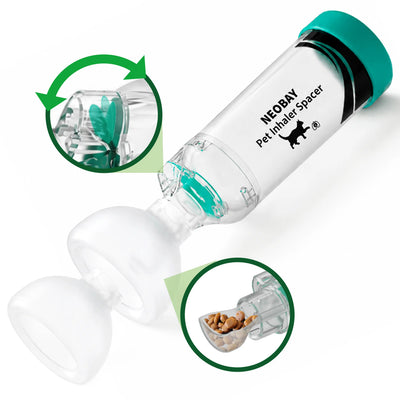
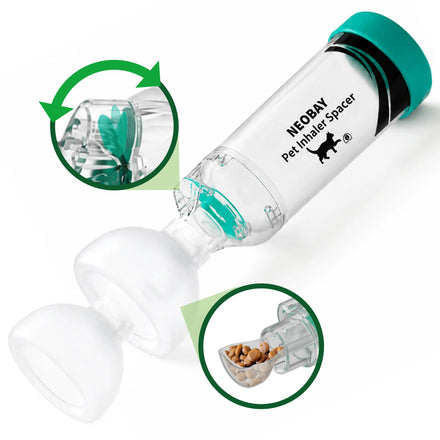
A spacer chamber is a non-medicated accessory used with a vet-prescribed metered-dose inhaler (MDI). The prescription provides the medicine; the chamber holds the aerosol while the cat breathes through its mask. It does not supply oxygen, establish a diagnosis or replace emergency care.
For a stable, diagnosed cat, a Neobay chamber can support the vet-demonstrated routine. A Visual Flow Indicator is an airflow cue, not proof of full medication delivery. Comfort Feeder uses food guidance for mask approach; acceptance varies. Practise during calm periods.
Cat Inhaler Spacer in Canada | Neobay Aerosol Chamber
- See each breath with the Breath Indicator
- Built-in treat holder makes mask practice easier
- Anti-static chamber helps keep medication airborne
At home, record cough episodes and settled sleeping breaths if your vet recommends it. The usual 15–30 range is background information, not a clearance certificate. A repeated rise above 30 needs advice; a sleeping rate around 40 calls for urgent advice. Increased effort or an open mouth means emergency care regardless of either number.

Making a practical plan in Canada
VCA Canada's home-monitoring guidance gives a usual resting or sleeping range of 15–30 breaths per minute and recommends contacting the veterinary team when the rate stays high. Its coughing guidance also separates a cough from an asthma emergency. Use both observations: what the chest is doing and how comfortably your cat can breathe.
A Canadian winter routine can change where your cat sleeps. A bed beside a heating vent, a newly lit fireplace or a long car journey may make one observation less comparable with the next. Note the situation without assuming it explains away breathing difficulty. Keep the record in breaths per minute; there is no need to convert units.
Check your clinic's after-hours arrangement. Some practices refer urgent patients to a different hospital, so keep that address and phone number with the carrier. If your vet prescribes an inhaler, confirm the exact label; salbutamol and fluticasone are different medicines with different jobs. Do not substitute your own medicine or increase the prescribed amount because a home count has changed.
Frequently Asked Questions
Is a cat panting after play safe to ignore?
Do not assume it is harmless. Stop the activity and contact a vet promptly to describe the episode, especially if it is new or repeated. Ongoing open-mouth breathing, breathing effort, weakness or collapse requires immediate emergency care; do not wait for a timer to expire.
Should I count breaths before calling an emergency vet?
No, not if your cat is visibly struggling or breathing with an open mouth. Call and arrange care immediately. A count may add information for a comfortable cat, but it must never become a condition that delays help.
Can I give an asthma inhaler during the journey?
Only follow rescue instructions your own vet has already provided for that cat, and tell the emergency team what you have given. Do not improvise extra puffs or force a mask onto a distressed cat. Medication must not delay the call or transport.
Does open-mouth breathing always mean asthma?
No. Asthma is one possibility, but several chest, airway and other conditions can cause breathing difficulty. Veterinary assessment is needed to identify the cause; having an existing asthma diagnosis does not exclude another illness.
Can a spacer replace oxygen at home?
No. A spacer is a non-medicated accessory for an inhaler and does not produce oxygen. It cannot stabilise an unknown emergency. Seek veterinary care for breathing distress and reserve equipment practice for the stable treatment plan.
What should I send my Canadian clinic before a recheck?
Send the recent sleeping counts with dates, the conditions and any cough video recorded without delay or restraint. Include medicine labels and changes in appetite or activity. Ask the clinic for its after-hours contact and your cat’s individual action threshold; there is no separate Canadian counting unit.
What to Do Next
If your cat is distressed, call the emergency team now. If comfortable, share the observations with your regular vet and ask for an individual monitoring and follow-up plan.
- Cat Sleeping Respiratory Rate: A Vet Benchmark for Canada
- Cat Coughing at Night: Triggers and Vet Advice in Canada
For a stable cat with a prescribed inhaler, our Canada cat inhaler spacer buyer’s guide explains equipment choices. See the Neobay non-medicated spacer and discuss suitability with your vet.
For equipment questions, contact Neobay; diagnosis, prescriptions and emergencies belong with your veterinary team.
Related guide: Home breathing record.
Summer heat and panting: urgent signs
Sources
- VCA Canada Animal Hospitals. Home Breathing Rate Evaluation. Accessed 12 October 2026.
- VCA Canada Animal Hospitals. Coughing in Cats. Accessed 12 October 2026.
- VCA Canada Animal Hospitals. Treatment Instructions for Asthma and Bronchitis in Cats. Accessed 12 October 2026.
- Cornell Feline Health Center. Feline Asthma: What You Need To Know. Accessed 12 October 2026.