Key Takeaways
- A sleeping respiratory rate counts complete breaths while a cat is genuinely asleep.
- VCA describes 15–30 breaths per minute as a usual resting or sleeping range; individual veterinary targets can differ.
- Purring, activity and disturbed sleep make a reading harder to interpret.
- A repeatedly raised sleeping rate is a reason to contact a vet, not a diagnosis of asthma or heart failure.
- Breathing effort, collapse or open-mouth breathing can be urgent even when a count looks reassuring.
Count your cat’s sleeping breaths under consistent conditions and discuss repeated readings above 30 per minute with your vet. Neobay recommends using the number alongside breathing effort and your cat’s own baseline; a spacer is an accessory for a prescribed inhaler, not a way to assess an emergency.
What does the sleeping benchmark actually mean?
Sleeping respiratory rate (SRR) is the number of complete breaths a cat takes in one minute while asleep. One rise and fall of the chest is one breath. It is different from the rate after a game, in a carrier, or on the examination table.
VCA's home-breathing guidance describes 15–30 breaths per minute as a usual range. That is a reference, not a guarantee that every healthy cat always sits inside it. Your vet may set a more cautious threshold for a cat with an existing heart or respiratory condition. Ask for that threshold in writing.
The useful comparison is your cat today against your cat on other settled days. A single count of 31 does not diagnose disease, but a repeated rise above 30 deserves a call. A cat normally near 18 that is repeatedly close to 30 also deserves discussion. Don't wait for a universal cut-off if something has plainly changed.

Which readings belong in the same comparison?
Use a sleeping, comfortably settled cat that is not purring. Watch from a distance and count for a full 60 seconds if possible. A shorter 30-second count multiplied by two is workable, but a missed breath has more effect. If you lose your place, begin a fresh count rather than guessing.
Record whether your cat was asleep or only resting. Those are useful labels, not interchangeable ones. If you woke them by stroking their side, wait until they settle again. Dreaming movements or purring may make the count unreliable; mark that attempt and try another calm opportunity if the cat otherwise looks comfortable.
What if my two readings disagree?
Check whether the conditions differed: awake versus asleep, purring versus quiet, or after activity versus a settled nap. Keep both observations with their labels. If a repeated high number or increased effort remains, contact the vet rather than choosing the lower reading as the “correct” one.
A phone video can help you recheck chest movements and share the observation. It cannot tell you why the rate changed. Keep clips short and avoid waking or restraining a sleeping cat to improve the picture.
Why can the clinic rate be higher?
A car journey, unfamiliar smells and handling can change how quickly a cat breathes. Your vet interprets a clinic rate in that setting; you supply the sleeping record from home. Neither observation cancels out the other.
For example, a comfortable cat may sleep quietly on the sofa yet breathe faster when a carrier appears. Write “carrier out; awake” beside that observation. Conversely, a cat breathing fast in deep sleep has not just been startled by a clinic visit. Share that difference with the team.
Don't use stress as a blanket explanation. A cat with an extended neck, pronounced abdominal movement or difficulty settling needs assessment even if they also seem frightened. Breathing effort matters more than making the spreadsheet look normal.
What can SRR tell you about treatment?
Sleeping-rate monitoring has an established role in the follow-up of some heart conditions. It also gives vets useful information about a cat being treated for respiratory disease. But a raised rate is not specific: different illnesses can produce similar changes.
Nor does a lower count prove that an inhaled medicine reached the lungs or that asthma is fully controlled. Discuss cough episodes, appetite, activity and the sleeping record together. Keep the prescribed schedule until your vet advises otherwise; do not add medication to “fix” a number.
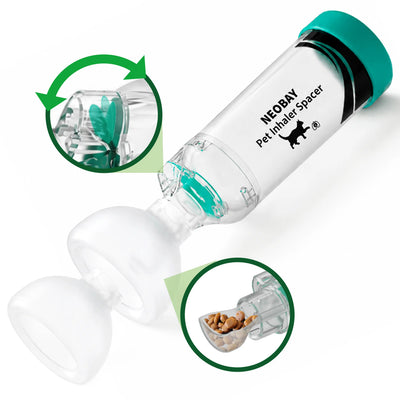
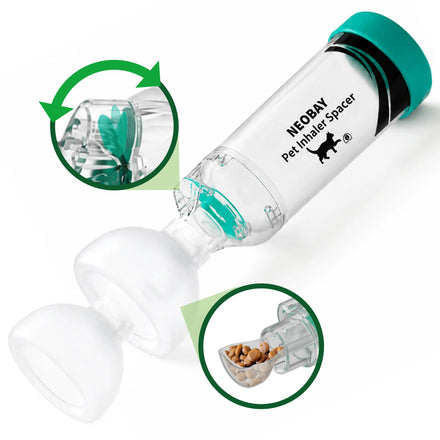
A spacer chamber is a non-medicated accessory used with a vet-prescribed metered-dose inhaler (MDI). The prescription provides the medicine; the chamber holds the aerosol while the cat breathes through its mask. It does not supply oxygen, establish a diagnosis or replace emergency care.
For a stable, diagnosed cat, a Neobay chamber can support the vet-demonstrated routine. A Visual Flow Indicator is an airflow cue, not proof of full medication delivery. Comfort Feeder uses food guidance for mask approach; acceptance varies. Practise during calm periods.
Cat Inhaler Spacer in Canada | Neobay Aerosol Chamber
- See each breath with the Breath Indicator
- Built-in treat holder makes mask practice easier
- Anti-static chamber helps keep medication airborne
When should the benchmark prompt a call?
| Observation | Action |
|---|---|
| Comfortable breathing and the usual sleeping pattern | Continue the monitoring plan your vet agreed. |
| Repeated sleeping readings above 30, or a clear rise from baseline | Contact your veterinary team promptly for individual advice. |
| A sleeping reading around 40 or higher | Seek veterinary advice urgently; do not wait a week to collect a trend. |
| Open mouth, increased effort, collapse or pale/blue gums | Arrange emergency care immediately, regardless of the number. |
The table is a communication guide, not a diagnostic tool. If your vet has already given a lower action threshold, follow it. Avoid repeated counting when your cat is visibly struggling: call, keep handling gentle and arrange transport.

Making a practical plan in Canada
VCA Canada's home-monitoring guidance gives a usual resting or sleeping range of 15–30 breaths per minute and recommends contacting the veterinary team when the rate stays high. Its coughing guidance also separates a cough from an asthma emergency. Use both observations: what the chest is doing and how comfortably your cat can breathe.
A Canadian winter routine can change where your cat sleeps. A bed beside a heating vent, a newly lit fireplace or a long car journey may make one observation less comparable with the next. Note the situation without assuming it explains away breathing difficulty. Keep the record in breaths per minute; there is no need to convert units.
Check your clinic's after-hours arrangement. Some practices refer urgent patients to a different hospital, so keep that address and phone number with the carrier. If your vet prescribes an inhaler, confirm the exact label; salbutamol and fluticasone are different medicines with different jobs. Do not substitute your own medicine or increase the prescribed amount because a home count has changed.
Frequently Asked Questions
Is 30 breaths per minute normal while my cat sleeps?
A rate of 30 can fall at the upper end of VCA’s usual range. Repeated readings above 30, a rise from your cat’s normal pattern, or any change in effort warrant veterinary advice. A number inside the range cannot rule out every illness.
Is a sleeping rate of 40 something to watch for a week?
No. A sleeping count around 40 warrants prompt veterinary advice, even if your cat seems comfortable. If there is open-mouth breathing, pronounced effort, collapse or abnormal gum colour, arrange emergency care immediately rather than continuing to measure.
Can a normal sleeping rate rule out asthma?
No. A cat can have airway disease and still have a normal sleeping count between episodes. Coughing, wheezing and changes in activity should be discussed with your vet alongside the rate; a diagnosis needs more than one home measurement.
Should I count when my cat is purring?
Choose another settled moment if your cat is purring, because chest movements can be difficult to separate. Do not repeatedly disturb a comfortable cat to obtain a reading. If breathing effort is abnormal, seek advice instead of waiting for ideal counting conditions.
Does a falling rate prove my cat got the full inhaler dose?
No. A sleeping rate does not measure medication delivery. Your vet can review the prescription, technique and clinical response; a chamber indicator only offers an airflow cue. Do not use the count alone to increase, reduce or stop the medicine.
What should I send my Canadian clinic before a recheck?
Send the recent sleeping counts with dates, the conditions and any cough video recorded without delay or restraint. Include medicine labels and changes in appetite or activity. Ask the clinic for its after-hours contact and your cat’s individual action threshold; there is no separate Canadian counting unit.
What to Do Next
If your cat is distressed, call the emergency team now. If comfortable, share the observations with your regular vet and ask for an individual monitoring and follow-up plan.
- Open-Mouth Breathing in Cats: Emergency Steps in Canada
- Cat Coughing at Night: Triggers and Vet Advice in Canada
For a stable cat with a prescribed inhaler, our Canada cat inhaler spacer buyer’s guide explains equipment choices. See the Neobay non-medicated spacer and discuss suitability with your vet.
For equipment questions, contact Neobay; diagnosis, prescriptions and emergencies belong with your veterinary team.
Related guide: Home breathing record.
Sources
- VCA Canada Animal Hospitals. Home Breathing Rate Evaluation. Accessed 12 October 2026.
- VCA Canada Animal Hospitals. Coughing in Cats. Accessed 12 October 2026.
- VCA Canada Animal Hospitals. Treatment Instructions for Asthma and Bronchitis in Cats. Accessed 12 October 2026.
- Cornell Feline Health Center. Feline Asthma: What You Need To Know. Accessed 12 October 2026.