Key Takeaways
- A cat's normal body temperature sits between 100.5–102.5°F; heatstroke risk begins above 104°F and organ damage can follow within 20–30 minutes (Garden State Veterinary Services).
- Cats don't sweat to cool themselves — they rely on grooming and finding cool surfaces, which is why panting at rest is almost always a warning sign.
- Panting in a cat is abnormal outside of intense play, acute stress, or genuine overheating — and is one of the classic early signs of feline asthma, affecting an estimated 1–5% of cats (Cornell Feline Health Center).
- A healthy cat's sleeping respiratory rate (SRR) is 15–30 breaths per minute; a sustained SRR above 30 in a cool room is a vet-call trigger.
- For cats already diagnosed with asthma, summer heat above 80°F (26.7°C) raises the risk of triggered attacks and often makes at-home inhaler use more urgent, not less.
A panting cat in summer heat is sometimes normal cooling, sometimes an early asthma flare, and sometimes a heatstroke emergency — the difference comes down to context, gum color, and how fast breathing recovers in a cool room. For cats already on asthma medication, days above 80°F raise the risk of triggered attacks, and a Neobay spacer chamber becomes the rescue you reach for first. Here's a 3-way decision tree, safe cooling steps, and what to monitor overnight.
Most owners see a panting cat in July and immediately think heat. Sometimes that's right. Sometimes it's the first sign of asthma, heart disease, or pain — three things that look identical in the first 60 seconds and demand opposite responses.
Why Cats Pant in the Summer Heat — and Why It's Different From Dogs
Dogs pant constantly. They have a thermoregulation system built around it. Cats do not. **Feline thermoregulation** — the way a cat cools itself through grooming, resting on cool surfaces, and only minor sweating through paw pads — is far less efficient than panting, which is why a panting cat is already past their normal cooling capacity.
So when your cat opens their mouth and pants on a hot day, two things are true at the same time:
- It can be a normal response to brief, intense heat exposure — say, a sunny window nap that ran too long or a fast play session in a warm room.
- It can also be the first visible symptom of an underlying condition that the heat just exposed: asthma, heart disease, pneumonia, pain, or anxiety.
Veterinary consensus from PetMD is blunt about this: "Unlike dogs, cats don't typically pant to cool themselves." Which means the bar for "this is fine" is much higher than most owners assume.
A useful frame: a cat panting during a known trigger (play, a car ride, a hot room) is a yellow flag. A cat panting at rest in a cool, quiet room is a red flag — call your vet or an emergency clinic.
Heat Panting vs. Asthma vs. Heatstroke — The 3-Way Decision Tree
When you see your cat panting, run this in order. Most owners freeze; the tree exists so you don't have to think.
| Sign | Likely Just Heat | Possible Asthma Flare | Heatstroke Emergency |
|---|---|---|---|
| Trigger | Play, warm room, car ride | No obvious trigger, or known trigger (dust, smoke, stress) | Hot environment, no shade, no water |
| Gum color | Normal pink | Pale or bluish tint | Bright red or dark red |
| Body position | Sternal, alert | Hunched, neck extended, lips pulled back | Wobbly, collapsing, vomiting |
| Recovery in cool room | Back to normal in 5–10 min | Panting continues or coughing starts | Panting worsens or cat becomes non-responsive |
| Action | Cool down + monitor | Give rescue inhaler if prescribed, call vet | Wet towel + drive to ER now |
If you take only one thing from this table: gum color is the fastest triage signal you have. Pink is reassuring. Pale, blue, or bright red gums mean you stop reading articles and start driving.
The asthma-flare column is the one Reddit owners miss most often. A cat with undiagnosed asthma will pant after play and recover slowly — owners write it off as "lazy" for months before a real attack lands them in the ER. If your cat pants every time they play, ask your vet about a chest X-ray before summer gets worse.
How to Cool Down a Panting Cat Safely

If you've decided this is heat — not asthma, not heatstroke — the goal is to lower core body temperature without shocking the system. Cats that are cooled too fast can go into shock.
- Move them to the coolest room — tile or hardwood floor, shades drawn, fan or AC running. Target room temperature 65–75°F (18–24°C).
- Offer water, don't force it — a few ice cubes in the bowl can encourage drinking. A dehydrated cat cools more slowly.
- Damp towel on belly, paws, and ears — use room-temperature or slightly cool water, never ice-cold. A gentle fan pointed nearby speeds evaporative cooling.
- Stop the moment breathing normalizes — most heat-panting cats recover within 5–10 minutes once the environment is right. Continuing to cool past that point risks hypothermia.
What not to do: ice baths, alcohol rubs, or forcing water by syringe — all common Reddit "fixes" that cause more harm than the overheating.
Can I keep playing if my cat pants once and then recovers?
No. Cats that pant during play have already crossed their thermoregulation limit, and in undiagnosed asthmatic cats, pushing further can trigger a full attack. End the session, offer water, and if it happens more than once a week, that's a vet-visit trigger.
When Summer Heat Triggers Asthma in Already-Diagnosed Cats
Owners of cats on Flovent or fluticasone often assume summer is the "easy" season — no winter woodsmoke, no spring pollen. It isn't. Hot, humid air holds more allergens, stagnant summer air traps dust and ozone, and AC ducts running for the first time in months stir up exactly the inflammation Flovent is supposed to suppress.
Three summer-specific risks for asthmatic cats:
- Heat-stress breathing — even a well-controlled asthmatic cat pants sooner in 85°F+ heat, which can feel like a flare even when it isn't.
- Humidity-carried allergens — mold counts spike above 60% indoor humidity. A dehumidifier or AC on "dry" mode helps.
- Ventilation dust on first AC run — change HVAC filters before the heat wave, and run the AC for an hour with windows open before letting your cat in.
The rescue protocol stays the same: albuterol through a spacer chamber, 7–10 breaths, vet call if breathing doesn't normalize in 5–10 minutes. Hot weather doesn't change the steps — but it does mean keep the spacer within 30 seconds' reach, not buried in a closet.

How do I monitor my asthmatic cat overnight during a heat wave?
Count their sleeping respiratory rate (SRR) once before bed and once at dawn. Healthy cats breathe 15–30 times per minute asleep; an asthmatic cat trending toward 30+ needs a vet call by morning, and a single reading above 40 needs the ER. Set a phone time-lapse next to their bed if you can't stay awake — a 30-second clip gives you a precise rate.
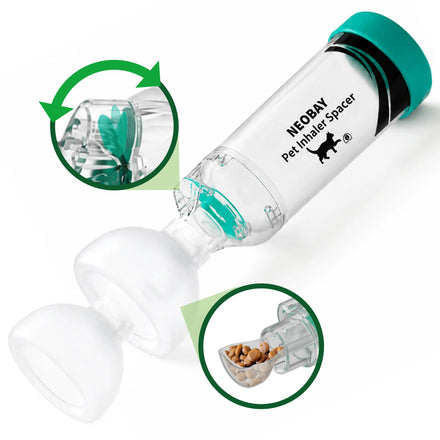
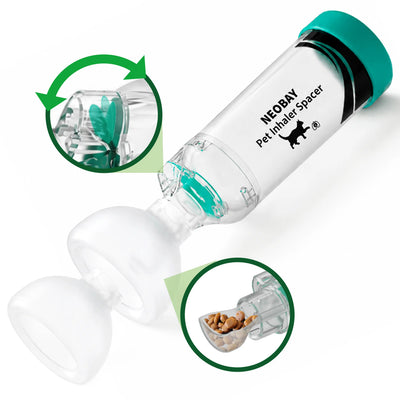
Cat Inhaler Spacer in Canada | Neobay Aerosol Chamber
- See each breath with the Flow Indicator
- Built-in treat holder makes mask practice easier
- Anti-static chamber helps keep medication airborne
Frequently Asked Questions
Is it normal for a cat to pant in hot weather?
Briefly, after play or a hot room, yes — most cats recover within 5–10 minutes once they're in a cool space. Panting at rest, panting that lasts longer than 10 minutes, or panting with pale/blue gums is not normal in any temperature and warrants a vet call.
At what temperature should I worry about my cat overheating?
Cats start to struggle above 80°F (26.7°C), especially with humidity above 60%. Indoor temps above 90°F (32°C) without AC or fans are heatstroke risk, and flat-faced breeds like Persians heat up faster due to their airway anatomy.
How can I tell if my cat is panting from asthma or just heat?
Asthma panting usually comes with a hunched posture, extended neck, and lips pulled back — and it doesn't stop in a cool room. Heat panting stops within 5–10 minutes. If your cat has had "play panting" more than twice in a month, ask your vet about a chest X-ray.
What's a normal sleeping respiratory rate for a cat?
15–30 breaths per minute. Anything above 30 sustained, in a cool and calm cat, is a vet-call trigger. Above 40 breaths per minute at rest is an emergency — don't wait for morning.
Should I change anything about my asthmatic cat's routine in the summer?
Don't adjust the daily Flovent dose on your own. Instead, watch SRR closely, keep the rescue inhaler (albuterol) within reach, change HVAC filters before the first heat wave, and call your vet if you're using the rescue inhaler more than twice a week for summer flares.
What to Do Next
- Run the 3-way decision tree the next time your cat pants — don't guess, and don't wait more than 10 minutes in a cool room before calling your vet.
- Start a sleeping respiratory rate log tonight — 30 seconds a day for a week gives you a baseline you'll be grateful for during the next heat wave.
- If your cat is on inhaled medication, keep the rescue inhaler within reach and pair it with a Neobay spacer with Visual Flow Indicator — the breath counter lets you give the rescue dose confidently when seconds matter.
Multi-cat household or summer travel? The Neobay 2-Pack Aerosol Chamber set keeps a backup where you need it. Have questions about whether what you're seeing is normal? Read our complete owner's guide to feline asthma or visit our FAQ page.
Related Reading
This article is part of our Feline Asthma: The Complete Owner's Guide — the complete hub for symptoms, triggers, diagnosis, and at-home management across every season.
Sources:
- Koehler, R., DVM. "Cat Panting? Possible Reasons and When To Call Your Vet." PetMD, Jan. 21, 2025.
- Rodgers, M., DVM. "Cat Panting: Causes and When it's an Emergency." VEG ER for Pets, updated Jan 2024.
- "Heatstroke in Cats: First Aid and Emergency Steps." Garden State Veterinary Services, Jun 21, 2025.
- Cornell Feline Health Center. "Feline Asthma: A Healthy Cat is a Happy Cat." Cornell University College of Veterinary Medicine.