Key Takeaways
- Reverse sneezing in cats is a rapid snorting inhale, usually under a minute, and not dangerous on its own.
- It's a spasm of the soft palate and throat, triggered by dust, pollen, smoke, eating fast, or excitement.
- Asthma coughing is the opposite direction — air pushed out — with a hacking sound, a hunched posture, and a pattern that often peaks at night or early morning.
- Recording a 30-60 second video of an episode is the single most useful thing you can bring to a vet visit.
- Blue gums, open-mouth breathing, or collapse are ER signs — not reverse sneezing.
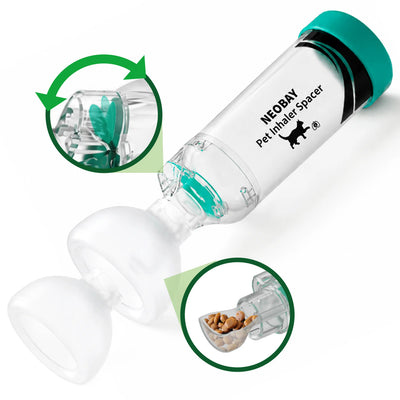
If your cat makes a snorting, honking sound in quick bursts, stops within about a minute, and acts completely normal before and after, it's almost certainly reverse sneezing — not asthma. The fastest way to settle it is a phone video: record the episode, show your vet, and you'll skip the guesswork and a lot of needless panic. If your vet confirms asthma instead, that's when an inhaler spacer becomes part of daily life — Neobay's chamber, with its visual flow indicator, helps you confirm each puff was actually inhaled.
Few sounds make a cat owner's heart drop like a sudden snorting fit. One minute your cat is fine, the next she's standing stiff with her neck stretched out, making a sound like she's trying to breathe in and can't.
It's alarming. And because it can look like choking, gagging, or an asthma attack, most people don't know whether to rush to the ER or watch and wait. This guide breaks down how to tell reverse sneezing apart from an asthma cough by sound, posture, and timing — and exactly when to call the vet.
What Does Reverse Sneezing Sound Like vs. an Asthma Cough?
Reverse sneezing — a reflex where a cat rapidly sucks air in through the nose in short, snorting bursts, driven by a spasm of the soft palate and throat. It is the opposite of a normal sneeze, which pushes air out.
Reverse sneezing and asthma coughing sound different once you know what to listen for. One is an inhale problem; the other is an exhale problem.
| Reverse sneezing | Asthma cough | |
|---|---|---|
| Sound | Snorting, honking, or gagging-like | Dry hacking, sometimes wheezy |
| Direction | Sucking air in | Forcing air out |
| Posture | Neck stretched, standing still | Hunched low, head down |
| Duration | Seconds to under a minute | Several breaths, repeats in bouts |
| Afterward | Instantly normal | May look tired or breathe with effort |
| Typical timing | After eating, drinking, or excitement | Often early morning or at night |
The classic reverse sneeze lasts seconds to about a minute and ends on its own, with the cat normal right after. Asthma coughing tends to repeat, and it often shows up at the same times of day, like a pattern rather than a one-off.
"My cat sounds like he's trying to breathe in and can't."
That's the most common description owners use, and it's exactly how reverse sneezing feels to watch. The cat is actually getting air fine — the spasm makes the inhale noisy, not blocked. That's why episodes end so fast: once the spasm relaxes, the snorting stops and the cat walks off like nothing happened.
Reverse sneezing is not painful and does not damage the airway. The reason it feels scary is that it overlaps visually with choking — which is why the recording tip below matters.
Why Do Cats Reverse Sneeze?
Cats reverse sneeze to clear irritation from the back of the nose and throat. Common triggers include:
- Dust, pollen, smoke, and aerosol scents — air fresheners, candles, cleaners
- Eating or drinking too fast
- Sudden excitement during play
- Flat-faced breeds like Persians and Himalayans, whose airways are tighter
- Occasionally something real: an upper respiratory infection, nasal mites, a polyp, or a foreign body
When a trigger is the cause, the fix is usually environmental — less dust, less perfume, cleaner air. When a health condition is the cause, the cat almost always has other signs, like nasal discharge, coughing, or a change in energy.

How to Record the Sound Your Vet Actually Needs
Here's the thing about reverse sneezing: it almost never happens in the vet's office. So vets at PetMD, Cats.com, and UK telehealth providers alike give owners the same advice — record it.
- Film 30-60 seconds during the episode. Get the whole body, not just the face, so the vet can see posture and neck position.
- Keep filming for 15-30 seconds after it stops, so they can see the "back to normal" part.
- Note what your cat was doing right before — eating, playing, cleaning, resting — and roughly how often episodes happen.
- If there's also coughing, sneezing, or nasal discharge, mention that too. It changes the picture.
That video is worth more than any description you can give over the phone. It's also what lets you skip an anxious, expensive ER visit when the answer turns out to be "nothing to worry about."
When to Worry: A 3-Tier Decision Tree
Most reverse sneezing belongs in the first tier. Here's how to sort it.
Tier 1 — Monitor at home
- Episodes are occasional, under a minute, and your cat is normal before and after
- No coughing, no discharge, no change in appetite or energy
- Action: reduce irritants, keep an eye on frequency, no vet needed yet
Tier 2 — Book a vet visit this week
- Episodes are suddenly more frequent or longer
- New symptoms: nasal discharge, sneezing, coughing, or not eating
- The noise happens during sleep or rest
- Action: bring your video and let the vet examine the nose and throat
Tier 3 — Go to the ER now
- Gums or tongue look blue or pale
- Open-mouth breathing with no sound
- Collapse, staggering, or pawing at the mouth
- Struggling to breathe after the episode ends
- Action: don't wait. These are breathing emergencies, not reverse sneezing.
A note on the heart: some owners hear the snorting and worry it's their cat's heart. Reverse sneezing itself isn't a heart symptom. But if your cat also tires quickly, breathes fast at rest, or your vet has heard a murmur, mention the episodes — that's worth raising, not ignoring.
What to Do During an Episode
Stay calm — the cat picks up on your panic. Speak softly and gently massage the throat. A soft puff of air at the face, or briefly covering both nostrils for a second or two, can trigger a swallow that breaks the spasm. Don't grab the cat, don't try to force water down, and don't hold the mouth open. Let it finish, then note the details for the video.

Frequently Asked Questions
Is my cat reverse sneezing or coughing?
Reverse sneezing is a rapid inhale — snorting, neck stretched, usually under a minute, then instantly normal. A cough forces air out with a hacking sound, often hunched low, and it tends to repeat, especially at night or early morning. When in doubt, record it and show your vet.
Is reverse sneezing in cats dangerous?
On its own, no. Episodes are brief, painless, and self-limiting. It only matters when it's paired with other signs — discharge, coughing, breathing trouble — or when it's suddenly much more frequent.
Can reverse sneezing be asthma?
They're different reflexes. Reverse sneezing is an inhale spasm from throat irritation; asthma is chronic lower-airway inflammation that causes coughing and breathing effort. One episode of snorting isn't asthma. Frequent coughing with a hunched posture is a reason to get your cat checked.
Why does my cat reverse sneeze after eating or playing?
Fast eating, drinking, or excitement irritates the back of the throat and soft palate, which triggers the spasm. It's one of the most common — and most harmless — patterns owners report.
When should I rush my cat to the ER?
Blue gums or tongue, open-mouth breathing, collapse, staggering, or breathing trouble that continues after the episode stops. Those are emergencies regardless of the snorting.
What to Do Next
If today's episode was a one-off and your cat bounced right back, start by removing the likely trigger — dust, smoke, or strong scents — and keep a video ready for next time. If you're seeing coughing that recurs, especially at night, that's worth taking seriously. Start with our guide to feline asthma in cats to learn the signs, and read why coughing often gets worse at night.
If your vet does confirm asthma, the delivery device becomes the main event — and a chamber with a visual flow indicator takes the guesswork out of each dose. Learn how a cat inhaler spacer works in our complete spacer guide.
Sources
PetMD — Reverse Sneezing in Cats: What Causes It and When To Worry (Brittany Kleszynski, DVM) · Cats.com — Reverse Sneezing in Cats: Causes & Prevention (Nat Scroggie, MRCVS) · Joii Pet Care — Reverse sneezing in cats (Carolina Paz, MRCVS)
Not sure what your cat's nasal discharge color means? See Cat Snot Colors Explained.