

Key Takeaways
- Breathing effort, posture and changes from a cat’s usual pattern matter alongside the breathing count.
- Open-mouth breathing, collapse or pronounced effort can require emergency care even without a recorded rate.
- No single test definitively diagnoses feline asthma; history and test results are assessed together.
- A spacer’s flow indicator is a breathing cue, not a measurement of medicine reaching the lungs.
- Rechecks and medicine changes depend on the diagnosis and response, rather than a fixed timetable.
Ask your vet what could be causing the breathing change, which tests are safe and useful now, and what you should do at home or in an emergency. Bring a short video and a symptom log if your cat is comfortable enough; this Neobay editorial checklist helps organise the conversation, while your vet makes the clinical decisions.
You have a video of your cat crouching and coughing, but no idea what to call it. Start with what you saw. In the UK, it also helps to know your practice’s out-of-hours arrangements before you need them; your usual appointment number may redirect elsewhere.
1. First, decide whether your cat needs emergency care
Skip appointment preparation if your cat is struggling to breathe. Open-mouth breathing at rest, marked belly effort, an extended neck with elbows held out, collapse, or blue-grey gums are reasons to seek emergency veterinary help. Do not force the mouth open to inspect gum colour.
The Royal Veterinary College treats respiratory distress as an emergency and warns that handling can worsen an unstable patient. Vets Now advises urgent assessment for breathing difficulties, including out-of-hours care when a regular practice is closed. Ask your practice which service covers your area and save the number.
Call ahead if it will not delay leaving, or ask someone else to call. Keep handling minimal, use a well-ventilated carrier and avoid tight wrapping. Do not force food, water or medication into the mouth. Follow an existing emergency medication plan only as directed by your vet.
A number alone cannot decide urgency. A persistently higher sleeping rate deserves a call to your vet, especially if it is above your cat’s baseline. Visible breathing difficulty is urgent even when the count is below a commonly quoted threshold.

2. Bring observations your vet can actually use
Make one note on your phone. Separate what you observed from what you think caused it:
- Episode details: date, duration, posture, sound, and whether it followed play, eating or resting.
- Was there coughing, retching, sneezing or vomiting? Record what came out, if anything.
- Sleeping breathing: count one chest rise-and-fall as one breath for 60 seconds when your cat is asleep and not purring. Note effort too.
- Changes in appetite, energy, weight and usual activity.
- All medicines and supplements, with labels, doses and the time of the last dose.
Check your practice’s out-of-hours provider and how it shares records with your daytime vet. Take medication labels and previous results if you have them, but do not delay an emergency departure to assemble a folder. Ask whether your cat should stay in the carrier while the team assesses their breathing.
Tell your vet about outdoor access, travel, smoke, dusty litter and any parasite-prevention products. Ask whether lungworm or other regional risks belong on the differential list; do not infer the cause from a cough’s sound.
What if the episode stops before I can film it?
Write down the time, length and visible movements instead. A missed video does not make the concern less real. Never make your cat run or provoke coughing to recreate an episode.

3. Ask what each test would change
If finances are tight, ask which steps are essential today and what waiting would risk. Start with: “What are the main possible causes, and is my cat stable enough for testing?” The team might prioritise oxygen and settling your cat before a detailed examination. That sequence reflects safety, not a lack of investigation.
Differential diagnosis means the list of conditions your vet is considering. Ask which findings support each possibility, what remains uncertain, and whether more than one condition could be present.
| Possible test | Question to ask |
|---|---|
| Chest X-rays | What do the heart, lungs and airways show, and what can these images not exclude? |
| Blood tests | Are we checking general health, infection clues or treatment safety, and what would alter the plan? |
| Heart ultrasound | Is there a reason to investigate heart disease more closely? |
| Parasite tests | Does my cat’s history justify lungworm or heartworm testing? |
| Airway sampling | Will cell analysis or culture help, and is the anaesthetic risk acceptable now? |
Bronchoalveolar lavage (BAL) is an airway wash used to collect cells and other material for analysis. It contributes evidence; it does not independently confirm asthma. Cornell explains that other respiratory diseases can produce similar signs and findings.
Our guide to feline asthma diagnosis explains the wider investigation. Your cat still needs an individual assessment.
4. If medicine is prescribed, request a demonstration
Ask the vet to write the medicine name, strength, dose, timing and purpose. Which is regular treatment, and which is intended for an episode? What should you do after a missed dose, and what signs require a call?
For suspected asthma, ask why the plan uses oral, inhaled or injectable medicine, or a combination. Discuss side effects and monitoring without assuming an inhaled option has no risks. Do not switch routes, taper steroids or borrow a human inhaler without veterinary instructions.
If your vet prescribes a metered-dose inhaler, ask them to check the exact canister, spacer and mask together. A metered-dose inhaler (MDI), sometimes called a pump, releases a measured puff; the chamber and mask are separate accessories used according to the prescribed technique.
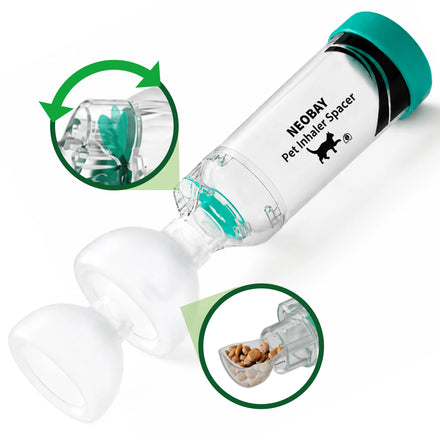
Cat Inhaler Spacer in UK | Neobay Aerosol Chamber
- See each breath with the Breath Indicator
- Built-in treat holder makes mask practice easier
- Anti-static chamber helps keep medication airborne
- “Can I practise the technique here while you watch?”
- “How many breaths and puffs does this prescription require?”
- “What do I do if the mask slips or my cat pulls away?”
- “How should I clean this chamber, and when should parts be replaced?”
The Visual Flow Indicator is a cue for observing breaths through the chamber; it cannot confirm the dose deposited in the lungs. Neobay’s Comfort Feeder is a food-guidance feature for mask familiarisation, not a change to mask geometry or a treatment claim. Ask whether food-based practice suits your cat.
What if my cat refuses the mask during the demonstration?
Stop the struggle and ask for a gradual familiarisation plan and a safe medication plan while learning. Do not restrain a breathless cat to finish practice. Your vet needs to know when the prescribed routine cannot be carried out.
5. Leave with a home plan and a way to report changes
- What breathing rate and effort should I expect for my cat, and when should I call?
- Which signs mean go straight to emergency care?
- What should improve first, and what counts as inadequate response?
- When is the recheck, what will it assess, and could repeat tests be needed?
- Who reviews videos or logs, and who covers evenings or weekends?
But keep the log manageable. A sleeping count, effort note and medication record are easier to maintain than a complicated spreadsheet. Share trends with your vet; do not change the dose yourself. Our home breathing monitoring guide can help you organise observations.

Frequently Asked Questions
Can my cat seem normal at the vet but still need investigation?
Yes. Intermittent coughing or breathing changes can stop before the appointment. Bring a video or description, explain how often it happens and ask what investigation is appropriate. A quiet examination does not automatically dismiss episodes at home.
Does a fast breathing count always mean an emergency?
A count must be interpreted with breathing effort, symptoms and your cat’s usual sleeping rate. Contact your vet about a persistent increase at true rest. Open-mouth breathing, collapse or obvious struggle needs urgent assessment regardless of the number.
Is BAL a definite test for feline asthma?
No. An airway wash can help identify inflammatory cells or infection, but similar findings occur in other conditions. Vets combine those results with the history, examination and imaging; they also consider whether sampling is safe for the cat.
Who should I call if my UK vet practice is closed?
Use your practice’s recorded emergency instructions or its named out-of-hours provider. Vets Now offers emergency services in parts of the UK, but coverage depends on location. Save the receiving clinic’s number and route beforehand, and seek urgent care for a cat struggling to breathe.
Can I tell asthma from heart disease by the cough?
No. A cough does not establish a diagnosis, and breathing changes have several possible causes. Ask your vet which examination findings or tests distinguish the possibilities. Do not choose asthma medicine based on the sound of an episode.
How soon should my cat have a follow-up appointment?
Ask the prescribing vet to set a recheck based on the diagnosis, severity, medicines and response. There is no single timetable for every breathing condition. New or worsening signs should prompt contact sooner than the planned appointment.
What to Do Next
- If breathing looks difficult now, contact emergency care and prepare to leave.
- For a stable cat, save this checklist and choose the questions relevant to the visit.
- Ask for a written medication, monitoring and emergency plan before you go home.
If a spacer is part of the prescribed plan, compare practical options in our UK cat spacer buyer’s guide, then review the Neobay cat inhaler spacer with your vet. The product is a non-medicated pet accessory; it does not diagnose a breathing condition or replace prescribed medicine.
For accessory questions, see our FAQ page or contact Neobay. For clinical concerns, contact your veterinary team.
For help describing an episode to your vet, read our guide to cat coughing sounds and warning signs.
Sources
- Royal Veterinary College. Respiratory distress in cats and dogs.
- Vets Now. Breathing Difficulties in Cats.
- Cornell Feline Health Center. Feline Asthma: What You Need To Know.
