

Key Takeaways
- One complete rise and fall of the chest counts as one breath.
- A 60-second count gives a direct breaths-per-minute result; a 30-second count must be multiplied by two.
- A sleeping, non-purring observation is easier to compare with another sleeping observation.
- VCA describes 15–30 breaths per minute as a usual resting or sleeping range.
- A record of effort, posture and symptoms is useful alongside the number; no home log diagnoses the cause.
Watch your comfortable, sleeping cat from a distance, count complete chest movements for 60 seconds and record the result with the conditions. Repeated readings above 30 per minute or a rise from baseline need veterinary advice; visible distress needs emergency care without more counting. Neobay treats this log as information for your vet, not a test of inhaler delivery.
Set up a routine you can actually keep
Home breathing monitoring is a record of how quickly and comfortably a cat breathes in their normal surroundings. It helps a veterinary team assess changes between visits. It does not replace an examination or tell you which disease is present.
Ask your vet whether monitoring is useful for your cat, how often to record it and what should trigger a call. Some cats with established heart or respiratory conditions need a daily record; a healthy cat does not automatically need constant surveillance. Get an individual plan rather than borrowing another cat's threshold.
Pick an ordinary settled nap, not the moment after play or a stressful car journey. Leave the cat where they are comfortable. You only need a timer and a place to save the result; a notebook works as well as a phone for keeping the history together.

Count a complete breath, step by step
- Check that your cat is sleeping or quietly settled, not purring and not visibly struggling.
- Watch the side of the chest or abdomen without pressing on it.
- Count one rise and the following fall as one breath.
- Use a full 60 seconds when possible. If you count for 30 seconds, multiply the result by two.
- Save the number, time and conditions immediately rather than relying on memory.
For example, 12 complete breaths in 30 seconds gives 24 breaths per minute. Do not count both the rise and the fall separately; that would double the result. Keep the raw count in your notes if you want to check the arithmetic later.
If you lose your place, take a fresh reading during another calm minute. Avoid averaging a reliable count with one made during purring or movement. Label an uncertain attempt as uncertain so the vet knows how much weight to give it.
What if my cat changes position halfway through?
Stop that count and wait for another comfortable settled opportunity if the cat looks well. A change of position can make the chest movements difficult to see. If the cat keeps sitting up because they cannot settle or seems to be working hard to breathe, contact the vet instead of waiting for a neat reading.
Keep a log that answers the vet's questions
Use the same fields each time. The number alone leaves too much guesswork: was the cat asleep, awake, purring or just back from playing? A short note preserves that context without turning the task into a project.
| Field | Example of what to record |
|---|---|
| Date and time | The actual observation time |
| State | Asleep; not purring; settled in usual bed |
| Count | 12 breaths in 30 seconds = 24 per minute |
| Effort and posture | Comfortable, or describe what changed |
| Other information | Cough, appetite, activity, medicine given as prescribed |
These examples show a format, not a target for every cat. Record what you saw. A blank field is better than writing “normal” when you did not check it.
If several people care for the cat, agree how to count and use one shared log. A caregiver counting chest rises while another counts rises and falls will produce incompatible numbers. Include the observer's name when that helps you resolve an unexpected difference.
Know when the log should give way to a call
VCA guidance gives 15–30 breaths per minute as a usual resting or sleeping range. Ask your vet what is appropriate for your cat. An individual baseline and any prescribed threshold matter alongside that reference.
For a comfortable cat, repeated sleeping readings above 30 or a clear increase from the usual pattern merit prompt veterinary advice. A reading around 40 during genuine sleep calls for urgent advice, not a week of additional data. Tell the team if the count was reliable and what else changed.
Open-mouth breathing, pronounced effort, collapse or pale/blue gums require emergency care regardless of the number. Stop collecting data. Keep your cat calm and contact the receiving hospital while arranging transport.
A reading within the usual range cannot exclude every respiratory problem. Recurrent cough, reduced appetite, weakness or a changed sleeping posture also belong in a veterinary conversation. Use the log to describe the cat, not to overrule what you can see.
How does monitoring fit an existing inhaler plan?
Keep monitoring and medicine administration as separate tasks. A sleeping count is a clinical observation; it is not a measurement of aerosol reaching the lungs. A calm count after a session does not prove that the prescribed amount was delivered.
For a diagnosed cat, record missed sessions or problems honestly and ask your vet for help. Do not compensate with extra puffs. Technique, equipment and the underlying illness may all need review, and the count alone cannot distinguish them.
A spacer chamber is a non-medicated accessory used with a vet-prescribed metered-dose inhaler (MDI). The prescription provides the medicine; the chamber holds the aerosol while the cat breathes through its mask. It does not supply oxygen, establish a diagnosis or replace emergency care.
For a stable, diagnosed cat, a Neobay chamber can support the vet-demonstrated routine. A Visual Flow Indicator is an airflow cue, not proof of full medication delivery. Comfort Feeder uses food guidance for mask approach; acceptance varies. Practise during calm periods.
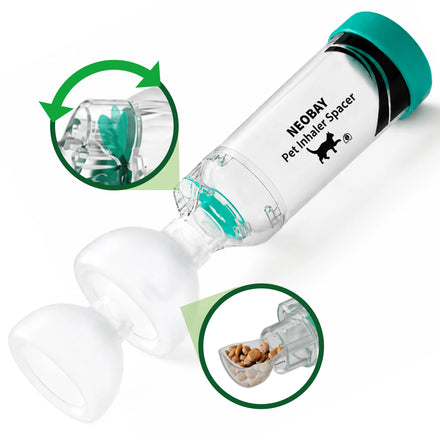
Cat Inhaler Spacer in UK | Neobay Aerosol Chamber
- See each breath with the Breath Indicator
- Built-in treat holder makes mask practice easier
- Anti-static chamber helps keep medication airborne

Making a practical plan in the UK
PDSA advises immediate veterinary contact for a cat struggling to breathe, panting or breathing with an open mouth. Its asthma advice explains why ongoing cough and breathing changes need assessment rather than a home diagnosis. For number-based home monitoring, the VCA guidance below provides a separate reference; it is not a UK emergency-service rule.
Save the out-of-hours number from your usual practice. The receiving hospital may be elsewhere, and it helps to know the route before a stressful night. Phone while arranging transport so the team knows a cat with a breathing problem is coming. Don't delay the journey to find a perfect video or a second reading.
Some UK owners call an inhaler a pump. If your vet discusses Flixotide or salbutamol, ask them to identify which is the regular medicine and what the written rescue plan says. A pharmacy brand name does not tell you the right dose for a cat. Keep the prescription, chamber instructions and emergency number together so another household member can follow the same plan.
Frequently Asked Questions
How often should I count my cat’s breathing?
Follow the frequency agreed with your vet for your cat’s condition. Daily checks may be useful in some established monitoring plans, but constant checking is not automatically necessary for every cat. Ask for the action threshold and how the clinic wants you to share changes.
Do I count one breath on the way in and another on the way out?
No. One rise and fall together make one complete breath. Count for 60 seconds or multiply a reliable 30-second count by two. Counting each movement separately will double the result and can create unnecessary alarm.
Can I count while my cat is awake?
A quietly resting reading can be recorded, but label it as resting rather than sleeping. Compare like conditions wherever possible and avoid purring or recent activity. If you are following a sleeping-rate plan, ask your vet how to handle days when a reliable reading is unavailable.
What should I do with a reading above 30?
For a comfortable cat, repeated sleeping readings above 30 or a rise from the usual baseline warrant prompt veterinary advice. A genuine sleeping rate around 40 calls for urgent advice. Any increased effort, collapse or open mouth means emergency care without continuing the count.
Can a phone app tell me whether treatment is working?
An app can store observations, but a breathing count alone cannot establish treatment success or medication delivery. Share the log with your vet alongside cough, appetite and activity changes. Do not change medicine based on an app score or an isolated reading.
Do I wait until my UK practice opens in the morning?
Do not wait overnight if your cat is struggling, panting or breathing with an open mouth. Use your practice’s out-of-hours arrangement and tell the receiving team what you see. A comfortable cat with recurring cough or raised sleeping counts still needs prompt advice about the next appointment.
What to Do Next
If your cat is distressed, call the emergency team now. If comfortable, share the observations with your regular vet and ask for an individual monitoring and follow-up plan.
- Cat Sleeping Respiratory Rate: A Vet Benchmark for the UK
- Open-Mouth Breathing in Cats: Emergency Steps in the UK
For a stable cat with a prescribed inhaler, our the UK cat inhaler spacer buyer’s guide explains equipment choices. See the Neobay non-medicated spacer and discuss suitability with your vet.
For equipment questions, contact Neobay; diagnosis, prescriptions and emergencies belong with your veterinary team.
Summer heat and panting: urgent signs
Sources
- PDSA. Breathing problems in cats. Accessed 12 October 2026.
- PDSA. Cat Asthma. Accessed 12 October 2026.
- Cornell Feline Health Center. Feline Asthma: What You Need To Know. Accessed 12 October 2026.
- VCA Canada Animal Hospitals. Home Breathing Rate Evaluation. Accessed 12 October 2026.
