Key Takeaways
- Feline asthma involves inflammation of the lower airways. A cough can have other causes, so a veterinary diagnosis comes first.
- Prednisolone and inhaled fluticasone are different ways of prescribing anti-inflammatory treatment; tablets are not automatically an unsuitable choice.
- Two medication roles need clear instructions: regular inflammation control and rescue treatment, if prescribed.
- An airflow indicator can help you observe breathing through a chamber. It cannot confirm the medicine dose deposited in the lungs.
- Inhaled medication can still have side effects, and prednisolone must not be stopped or tapered without veterinary direction.
A move from daily tablets to an inhaler needs two things to work together: your vet's medication plan and your cat's ability to use the equipment. Neobay offers accessories for the equipment discussion, but buying a chamber does not establish whether an inhaled prescription is right for your cat. Keep the existing prescription unchanged until your Canadian veterinary team gives you specific instructions.
This is an education guide, not a case report or a promise that every cat can stop tablets. The practical goal is a routine you can follow accurately, with a clear plan for problems between appointments.
What would change, and what would stay the same?
A corticosteroid reduces inflammation. Prednisolone is commonly given by mouth; fluticasone is an example given by inhalation. A bronchodilator helps open narrowed airways and has a different job. If your vet prescribes salbutamol, ask exactly when and how it is to be used.
VCA Canada's asthma and bronchitis guidance describes oral corticosteroids being used with inhaled treatment in some plans. The route can change, but the need to manage airway inflammation does not disappear just because coughing becomes less noticeable.
Ask why a switch is being considered for your cat: problems giving tablets, unwanted effects, or a proposed approach to longer-term management. Your vet can weigh those concerns against the cat's diagnosis, other conditions and the feasibility of a mask routine.
But a puffer is not a guarantee of a risk-free prescription. VCA Canada's fluticasone information lists changes owners should report, including thirst, appetite, weight and weakness. Keep asking questions after the first inhaler appointment, especially if the routine is difficult or your cat seems different.
Ask for a written bridge between the two routines
A safe transition is more than swapping a pill for a puff. Bring the actual medication containers, your dosing notes and any equipment to the appointment. Explain how often doses are missed and whether another person will share care.
Ask the veterinary team to write down:
- The exact medicine, strength and inhaler format to obtain.
- Which medicine remains scheduled and which is for rescue use, if prescribed.
- Whether oral medicine overlaps with inhaled treatment, and who will authorise each change.
- What to do if you cannot give a scheduled dose or the mask is refused.
- When to return for review and how to reach an emergency clinic.
VCA Canada warns against abruptly stopping prednisolone. Do not design a taper from a blog, reduce the dose because a bottle is running low or stop because a few days seem better. Ask the prescribing clinic for instructions that apply to this cat.
What if the pharmacy offers a different inhaler?
Check with the prescribing vet before substituting it. A similar-looking product or the same named ingredient does not establish that its strength, delivery format and use with the chamber are equivalent. Have the clinic confirm the exact product before your next planned dose.
Check the chamber with the prescription
A metered-dose inhaler is the medicine canister that releases an actuation. A spacer chamber is an accessory between the inhaler and a mask, allowing the cat to breathe from the chamber. The chamber contains no medication on its own.
Ask for a demonstration using the prescribed canister and the actual chamber. The team should check assembly, mask placement and the sequence you will use at home. Follow the instructions for that equipment and prescription rather than combining steps from different videos.
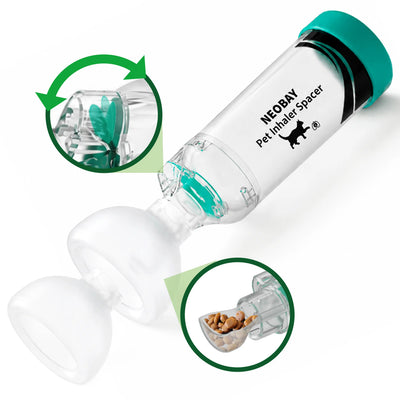
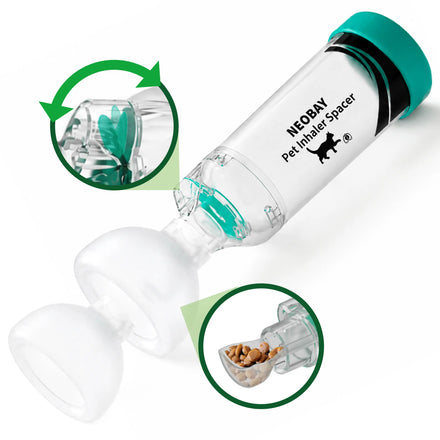
Neobay's Visual Flow Indicator provides a visible cue to airflow. Movement is not proof of a complete dose, a correct lung dose or control of asthma. If the indicator is not behaving as demonstrated, ask the clinic to check technique and equipment before giving any extra medicine.
Comfort Feeder pairs food with the mask so a cat can voluntarily approach and place their face at it. This can support familiarisation, but it does not guarantee cooperation or replace a careful technique check.
Cat Inhaler Spacer in Canada | Neobay Aerosol Chamber
- See each breath with the Breath Indicator
- Built-in treat holder makes mask practice easier
- Anti-static chamber helps keep medication airborne
Make training a separate, low-pressure task
Practise when your cat is breathing comfortably and can choose to move away. Introduce the equipment without rushing to put it on the face. Pair calm investigation with a suitable reward, then build towards the handling steps your veterinary team demonstrated.
Choose a quiet spot and a routine that can be repeated by everyone who helps. Keep a note beside the supplies so two caregivers do not accidentally give the same scheduled medicine. Preparation should make the process predictable, not turn the cat's approach into an ambush.
Chappelle Veterinary Clinic's feline asthma advice specifically tells owners to discuss alternatives if giving medication is too stressful. A frightened cat needs a smaller training step or another prescribed approach, not stronger restraint because an online timetable says training should be finished.
Should I practise the puffer sound with extra medication?
Ask the clinic for an appropriate way to introduce the sound. Do not use additional prescribed doses as training treats or copy instructions for a different device. Training and dosing are different tasks, and your cat still needs the medication coverage your vet has planned.
Our cat inhaler mask training guide and calmer inhaler routine guide can help you prepare questions. Neither sets a deadline for your cat or replaces a hands-on demonstration.

Plan for winter, refills and follow-up
In Canada, remember that medication left in a vehicle or on a porch can encounter freezing temperatures. Ask the pharmacy how the prescribed product must be stored and transported. Follow its labelled directions, and ask what to do if the canister has been exposed to unsuitable conditions; do not assume it is usable because it still sprays.
Arrange refills early enough to avoid an unplanned gap, and record doses rather than guessing how much remains. Ask the clinic or pharmacy how to track the particular inhaler. The accessory and prescription are separate purchases, so checking one does not confirm that the other is ready.
Keep a brief record of coughing, comfortable sleeping breathing, medication given and any new changes in appetite, thirst or activity. Bring it to the review along with questions about the mask. Less coughing is useful information, but is not permission to stop treatment.
Open-mouth breathing, severe effort to breathe, collapse or blue or grey gums require urgent veterinary care. Call the emergency clinic, minimise handling and follow any rescue instructions already prescribed. Do not postpone leaving home to repeat training or obtain a better video.

Frequently Asked Questions
Can every cat with asthma stop daily prednisolone?
No. Whether tablets can be reduced or replaced depends on the individual cat and the response to the prescribed plan. Only the treating vet should direct a change or taper.
Does inhaled fluticasone mean there are no side effects?
No. An inhaled route does not eliminate all risks. Report new changes to your vet and keep the recommended follow-up appointments, even if administration becomes easier.
Is salbutamol the same as the regular steroid inhaler?
No. Salbutamol is a bronchodilator, while a corticosteroid is used to reduce inflammation. Ask your vet to label the roles clearly and provide a written rescue plan if one is prescribed.
What if my cat will not accept the mask?
Tell your vet if mask refusal prevents a scheduled dose. Continue only the handling practice the cat can tolerate and ask about alternatives for the medication plan. Do not wait for an arbitrary training deadline while prescribed doses are being missed.
Can I leave the inhaler in the car during a Canadian winter?
Follow the product's storage instructions and protect it from unsuitable temperatures. Ask the pharmacy how to transport it and what to do after freezing or another storage problem. Appearance alone cannot confirm that a medicine remains suitable.
What to Do Next
Request a medication review and a written plan covering the transition, missed doses and emergencies. Have the clinic check the exact inhaler and mask routine before changing what you give at home.
For an equipment overview, read our Canadian cat inhaler spacer buyer's guide. You can discuss the Neobay chamber available in Canada with your veterinary team. Prescription medication is separate.
For accessory questions, contact Neobay. Ask your vet or pharmacist about prescriptions and medication storage.
Sources
- VCA Canada Animal Hospitals. Asthma and Bronchitis in Cats.
- VCA Canada Animal Hospitals. Fluticasone Propionate.
- VCA Canada Animal Hospitals. Prednisolone/Prednisone.
- Chappelle Veterinary Clinic. Asthma, Feline.