Key Takeaways
- There is no single test that definitively identifies feline asthma; vets combine history, examination and selected investigations.
- Parasites, infection, heart disease and fluid around the lungs can overlap with asthma signs, so a cough alone cannot choose the diagnosis.
- The five groups below are questions for a vet, not a checklist for diagnosing your own cat.
- An unexpected response to a prescription calls for a review of the diagnosis, medicines and administration technique together.
- New breathing difficulty takes priority over a routine second opinion or a planned follow-up date.
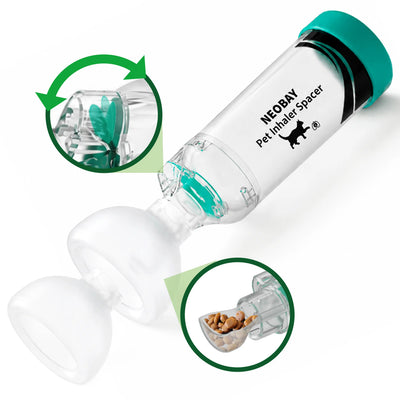
If you are worried your cat was misdiagnosed with asthma, ask for a structured veterinary review rather than stopping the prescription. Cornell confirms there is no single definitive feline asthma test, and five overlapping problem groups are worth understanding. Neobay makes a non-medicated spacer accessory; it cannot confirm asthma or show that a medicine has reached a particular part of the lungs.
“Not improving” is useful information, but it is not proof of a wrong diagnosis. The most productive next step is to describe what has changed and ask which explanation the team needs to investigate next.
What does an asthma diagnosis actually mean?
A diagnosis of exclusion means the vet assesses other plausible causes before settling on an explanation. It does not mean every cat needs every available test, or that the first appointment must produce certainty.

Breathing emergencies can require care before a full investigation is safe. For a stable cat, the vet can build the picture from episodes, examination findings, imaging and selected samples. Ask what supports asthma, what argues against it and what remains uncertain.
Keep the original reports. “The X-ray looked bronchial” is a small part of the story, not a complete diagnosis. A second veterinary team can make better use of the actual images and written findings than of a description remembered from a stressful visit.
Five problem groups your vet may consider
1. Parasites, including lungworm and heartworm-related disease
Some parasites can produce respiratory signs that resemble airway inflammation. Your cat’s hunting, outdoor access, travel and prevention history help the vet judge relevance. Do not assume that being indoors or having one negative test resolves every parasite question.
Cornell describes the diagnostic challenges of feline heartworm disease. Where exposure is plausible, ask which tests are being used and what a negative result can and cannot exclude. That is more useful than declaring heartworm the likely cause from an internet article.
2. Heart disease with breathing changes
A cat with heart disease may develop a breathing problem. A cough does not prove a heart cause, and its absence does not exclude one. The pattern of breathing can guide the examination, but it cannot safely separate heart disease from asthma at home.
The vet may discuss heart-focused imaging or other tests if the history and examination raise concern. Ask what each test would clarify. Do not use a change in sleeping breathing as a reason to give a heart medicine that was prescribed to another animal.
3. Fluid or air around the lungs
Pleural effusion is fluid in the space around the lungs. It has several possible causes and is not simply another word for asthma. Air in that space is a different problem, called pneumothorax.
Either can interfere with expansion of the lungs. A distressed cat may need urgent stabilisation and assessment rather than a routine inhaler adjustment. The veterinary team decides what handling, imaging or sampling is safe at that moment.
4. Respiratory infection or pneumonia
Infection can share signs with asthma, and more than one problem may be present. Tell the vet about appetite, energy, recent illness and contact with other animals. Do not start leftover antibiotics or stop a steroid to see which explanation fits.
When the vet recommends sampling, ask what question it answers and whether your cat is stable enough for the procedure. A useful test is one whose result can help choose the next step; it is not automatically the most invasive one.
5. Other airway or lung conditions
Chronic bronchitis, a growth or an airway obstruction can also enter the discussion. The list changes with the individual cat. A new symptom in an older cat, an unusual breathing noise or a change in the pattern is worth describing, without treating age or sound as a diagnosis.
Ask which alternatives are plausible now and which are less likely. That keeps the review focused instead of turning a list of possibilities into five new fears.
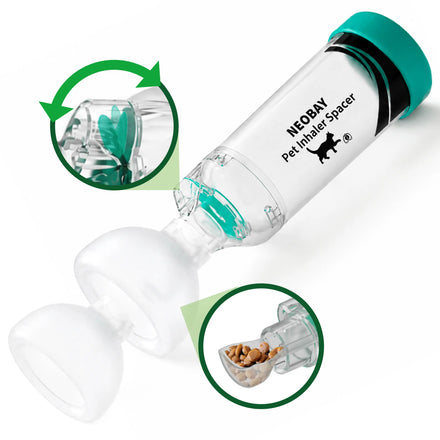
Cat Inhaler Spacer in Canada | Neobay Aerosol Chamber
- See each breath with the Breath Indicator
- Built-in treat holder makes mask practice easier
- Anti-static chamber helps keep medication airborne
Review the diagnosis and the daily routine together
Write down the medicine name, strength, prescribed schedule and what actually happened at home. Missed sessions, a frightened cat, an empty canister or confusion about instructions can all matter. Describe difficulties plainly; the aim is an accurate picture, not a perfect treatment diary.

The airflow indicator moves. Does that prove the diagnosis and dose are right?
No. A moving indicator is an airflow cue, not a diagnostic test or a measurement of lung drug deposition. Ask your vet to observe your cat’s setup and explain which signs and follow-up checks they will use to assess the prescribed plan.
My cat was better briefly. Can I rule out the alternatives?
A temporary change is information for the vet, not a final answer. Record what improved, when it returned and any medicine changes that were prescribed. Do not stop or increase treatment on your own to repeat the experiment.
Build a useful Canadian second-opinion handover
Ask the original clinic to share the records and imaging with the receiving veterinarian, including the radiologist’s report if one exists. A second opinion should build on what is known. It should not require you to remember every test result while an unfamiliar cat is waiting in a carrier.
VCA Canada notes that a lungworm faecal test can miss an infection. If your cat hunts or has travelled, tell the vet. Ask whether the sampling method and timing suit the suspected parasite rather than requesting a repeat of an unspecified “worm test”.
Bring the names, strengths and schedules of all medicines and parasite products. Include what was prescribed elsewhere, what was missed and what your cat actually tolerated. If a label says salbutamol, use that name in the diary so the new team can match the record to the canister.
Before leaving, ask who handles worsening symptoms overnight and how follow-up information will be shared with your regular clinic. A written plan keeps an uncertain diagnosis from turning into disconnected visits without a clear next decision.
Frequently Asked Questions
Can a cat be misdiagnosed with asthma?
Yes, because several conditions can produce similar signs and there is no single definitive asthma test. But persistent signs do not prove the diagnosis is wrong. Ask the vet to review the evidence, possible coexisting problems and the administration routine.
How long should I wait for an inhaler to work?
Use the review interval and emergency instructions your veterinarian gives for your cat. There is no universal waiting period that makes worsening breathing safe. Contact the team sooner if the signs change, recur or do not match the agreed plan.
Can I stop steroids before a second opinion?
Do not stop or change a prescribed medicine without veterinary instructions. Tell both clinics exactly what your cat is receiving and ask how to prepare for any tests. The vet can decide whether a medicine change is appropriate and how to manage it safely.
Does a negative parasite test exclude lungworm in a Canadian cat?
Not always. Test type, sample quality and parasite biology affect what a result can exclude. Discuss your cat’s hunting, travel and parasite prevention history with the vet, who can decide whether different or repeated sampling is useful.
When should I seek emergency care instead of a review?
Seek urgent veterinary assessment for breathing difficulty, open-mouth breathing, collapse or rapidly worsening effort. Do not delay to make a video, obtain a breath count or try a new product. Phone ahead while preparing transport if you can do so without delaying care.
What to Do Next
Arrange a review with the symptom timeline, prescription labels, previous results and a short video if one was safely obtained. Ask three questions: what supports asthma, what else remains possible, and what change means we should call sooner? Request a written follow-up and emergency plan.
For practical follow-up, read what to expect from an asthma investigation and how to record sleeping breathing. Once your vet has a plan, use our Canadian cat inhaler spacer guide to prepare product questions.
The Neobay spacer for Canada is a non-medicated accessory; it cannot identify the cause of difficult breathing. For accessory questions, contact our team. For symptoms, contact your veterinary team.
Sources
- VCA Canada. “Home Breathing Rate Evaluation.”
- VCA Canada. “Asthma and Bronchitis in Cats.”
- VCA Canada. “Lungworm Infections in Cats.”
- VCA Canada. “Pleural Effusion in Cats.”
- Cornell Feline Health Center. “Feline Asthma: What You Need To Know.”
- Cornell Feline Health Center. “Heartworm in Cats.”
- Cornell Feline Health Center. “Dyspnea (Difficulty Breathing).”