Key Takeaways
- Pack five items: the prescribed MDI, a pet-only spacer chamber, a secure carrier, a documents card and a quiet destination routine.
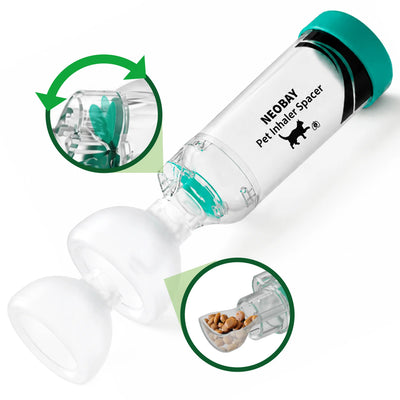
- A cat inhaler spacer is a chamber-and-mask accessory holding no medication — the medication comes from the MDI (metered-dose inhaler) your veterinarian prescribed, and the clinic owns every decision about that routine.
- Australian airlines are not uniform: Virgin Australia's pets-in-cabin trial caps pet plus carrier at 8 kg, Qantas and Rex carry pets as freight, and Jetstar doesn't carry pets (as at 18 August 2026 — confirm with the airline).
- Feline asthma affects an estimated 1–5% of cats (Cornell Feline Health Center); protect the routine rather than changing it on the road.
- If your cat needs prompt clinical help while travelling, contact a veterinarian or local emergency service.
Travelling with a cat who uses a veterinarian-prescribed inhaler is a packing job, not a reason to change the treatment. A Neobay pet-only chamber belongs in a five-item kit — prescribed MDI, chamber, secure carrier, documents card and a destination setup — so the usual routine survives the journey. And the airline numbers are real: Virgin Australia's pets-in-cabin trial caps pet plus carrier at 8 kg, so the two calls that matter are the prescribing veterinarian and the booked carrier.
This article is about organising equipment and routine; it doesn't decide whether your cat is fit to travel, or replace the clinic's instructions.
Start with the split: what the veterinarian decides vs. what you pack
An MDI (metered-dose inhaler) is the pressurised medication canister a veterinarian prescribes, slotted into the rear of a spacer chamber — the part of the kit you carry but never redesign. The treating clinic owns the prescribed routine and any decision about a disrupted one; your half is logistics: inhaler, chamber and carrier clean, protected, reachable and familiar. So before booking, ask the clinic about a delayed leg and who to call at the destination — don't rebuild a medication plan from a checklist.
Does my cat's inhaler routine need to change just because we're travelling?
That is a prescribing question, so ask the veterinarian who prescribed the MDI. What you control is everything around it: a dry chamber, a calm cat and a quiet room at the other end.
Build the five-part travel kit
1. The prescribed MDI, labelled and together
Keep the inhaler, its label and the clinic's instructions in one place, and ask the pharmacist about storage in heat. Virgin Australia suggests asking your vet for enough chronic medication to cover the whole trip, including possible delays. The original labelled packaging helps if an airline or emergency clinic asks what you're carrying.
2. A clean, dry pet-only chamber
Pack the chamber in a protective pouch or rigid container where luggage can't crush it, and if you wash it before departure, let every part air-dry fully before reassembling — the instructions supplied with your chamber take priority. At home, do one calm readiness check: chamber assembled, mask present, and the MDI seating at the rear port as the veterinarian showed you.
3. A secure carrier and a familiar travel setup
Cats travel in a secure, ventilated carrier, not loose in a vehicle. RSPCA Australia is blunt: don't wait until a trip to introduce the carrier — start weeks ahead with positive reinforcement, and a top-opening carrier means the cat never has to be pushed in.
The carrier, the chamber and the mask shouldn't all become unfamiliar at once. If your cat hasn't had calm, voluntary practice around the mask, start well before the trip. On Neobay chambers, the Comfort Feeder — a treat holder supporting voluntary familiarisation, letting a cat approach the mask for food at its own pace — is built for this.
4. A documents-and-contacts card
Store the prescribing clinic's phone number, your cat's medication details and an emergency contact with the kit. One detail worth knowing early: Virgin Australia requires a veterinary certificate issued within 14 days of departure if a pet has a medical condition or is unwell — which covers a cat on a prescribed inhaler.
5. A quiet destination routine
Choose one quiet spot at the destination for the carrier, chamber and bag, and let the cat settle indoors before the usual routine. Owners on public forums describe twice-daily sessions at fixed times — plan flights around them — and basics like low-dust litter worth replicating. If a sitter is involved, show them the equipment and hand over the clinic's contact details.
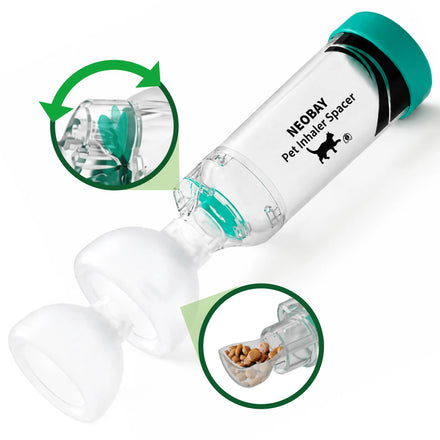
Neobay Cat Inhaler Spacer with Flow Indicator in Australia
- See each breath with the Flow Indicator
- Built-in treat holder makes mask practice easier
- Anti-static chamber helps keep medication airborne
Flying in Australia: each airline sets its own rules
As at 18 August 2026, the major domestic carriers treat pets differently — routes, prices and trial terms change, so confirm before booking.
- Virgin Australia runs Australia's first pets-in-cabin trial: pet plus soft-sided carrier 8 kg or under, carrier no larger than 44×26×28 cm and sealed with cable ties, phone bookings at least 72 hours ahead, pet in the carrier throughout. Selected routes were bookable to 30 September 2026 (Adelaide–Melbourne to 31 January 2027) at an introductory $149 per sector — trial details may change.
- Qantas carries pets in a dedicated hold area; only service animals travel in the cabin, and pets are booked through Qantas Freight — book the pet first, then your own seat.
- Jetstar doesn't transport pets; its help page points customers to Qantas Freight.
- Rex moves pets in a pressurised hold from $5.50 per kg including the carrier, lodged as cargo through Qantas Freight with at least three business days' notice.
Across all of them, the Australian Veterinary Association advises that cats should not be sedated for air transport — pressurised cabins sit at roughly 8,000 feet equivalent, and sedation carries blood-pressure, breathing and temperature risks. Seek veterinary advice early, and trial any vet-prescribed travel medication before the trip, not on the day.
Travelling internationally? DAFF rules apply
Bringing a cat into Australia is a different job: the Department of Agriculture, Fisheries and Forestry (DAFF) guide shows at least six months of preparation, arrival as manifested cargo into Melbourne, then quarantine at Mickleham. One rule matters here: DAFF states medication must not be placed in the cat's crate — items in the crate are destroyed as biosecurity waste on arrival. So the MDI and chamber travel with you or a pet-transport agent, and quarantine has its own strict rules on medicating animals (check DAFF's guide). DAFF also warns that even cats with well-managed chronic diseases can arrive in distress.
What not to leave to travel day
- Do not wait for a parcel if the need is urgent. Contact a veterinarian or local emergency clinic instead.
- Do not change medication, dose or timing to make travel easier. Those are prescribing decisions.
- Do not sedate or add a new calming product on the day. Travel-day "relaxing" products backfire at security screening; the AVA advises against sedation for air transport.
- Do not leave the chamber in a hot car or under heavy luggage. Use a protected, reachable spot and follow the MDI storage guidance from the pharmacist or label.
- Do not assume any airline rule is universal. Confirm the booked carrier's current requirements close to departure.
Frequently Asked Questions
Can my cat fly in the cabin with me in Australia?
On Virgin Australia's trial routes, possibly — if pet plus carrier is under 8 kg. On Qantas and Rex, pets travel in the hold as freight; Jetstar doesn't carry pets. Confirm with the airline you're booking, and ask the prescribing veterinarian about hold travel for your cat.
Can I take my cat's inhaler spacer in the car with us?
Yes — a pet-only chamber packs like any fragile accessory: clean, dry, protected and reachable. Keep the prescribed MDI with it; the medication routine stays with the prescribing veterinarian.
Should I buy a second chamber for travel?
It can make sense for two locations or a multi-cat household, but not one trip — and never as a substitute for calm familiarisation or veterinary guidance.
Does Neobay include the inhaler or medication?
No. Neobay is a non-medicated, pet-only chamber accessory; a compatible MDI and its medication must be prescribed by a veterinarian.
Who do I contact if my cat needs help while we're away?
A veterinarian or the local emergency service — this article can't assess urgency or replace the clinic caring for your cat. Delivery timing is never a reason to wait.
What to Do Next
- Ask the prescribing veterinarian for travel-specific guidance before booking, including cabin vs hold travel.
- Pack the five-part kit and confirm the booked carrier's current pet requirements.
- If mask practice is still a work in progress, start with our guide to training your cat to accept an inhaler mask, read what a cat inhaler spacer actually is, or compare options in our cat inhaler spacer Australia buyer's guide. The Neobay chamber for Australia ships locally.
For product or order questions, visit our FAQ page or contact us. For health or prescribed-routine questions, speak with your veterinarian.
Sources
- Virgin Australia. Pets in Cabin. Accessed 18 August 2026.
- Qantas. Travelling with pets. Accessed 18 August 2026.
- Jetstar. Can my pet fly with Jetstar? Accessed 18 August 2026.
- Rex Airlines. FAQ — Pets. Accessed 18 August 2026.
- Australian Veterinary Association. Medication of dogs and cats for air transport. Accessed 18 August 2026.
- Department of Agriculture, Fisheries and Forestry. Importing cats: Group 3 step-by-step guide. Accessed 18 August 2026.
- RSPCA Australia Knowledgebase. How can I train my pet to feel comfortable in a transport carrier? Accessed 18 August 2026.
- Cornell Feline Health Center. Asthma and Respiratory Infections in Cats. Accessed 18 August 2026.