Kernaussagen
- Realistisch braucht eine Katze 1 bis 6 Wochen, um zuverlässig 7–10 Atemzüge pro Dosis zu nehmen — nicht die „5 Tage", die viele Trainingsvideos suggerieren.
- Ein strukturiertes 5-Tage-Starterprotokoll (Tag 1 nur Kammer → Tag 5 erste echte Dosis) bringt die meisten futtermotivierten Katzen durch die schwerste Phase, aber volle Verlässlichkeit dauert meist noch 2–6 Wochen länger.
- In Reddit-Berichten von Katzenhaltern ist der häufigste Stolperstein das Verlängern der Haltedauer — der Sprung von einer einsekündigen Maskenberührung zu 5–10 Sekunden halten. Manche Katzen brauchen dafür allein 3–5 Wochen.
- Katzenverhaltensspezialisten (International Cat Care, Veterinary Partner) empfehlen täglich 2–5 Minuten Training, leptamotiviert, niemals erzwungen — eine einzige erzwungene Session kann den Fortschritt um Tage zurückwerfen.
- Tierärzte verschreiben parallel zum Inhalator-Training selten ein Prednisolon-Ausschleichen. Ohne diese Überbrückung musst du eventuell dosieren, bevor das Training abgeschlossen ist — genau dann entstehen die meisten „Zwingen oder warten"-Konflikte.
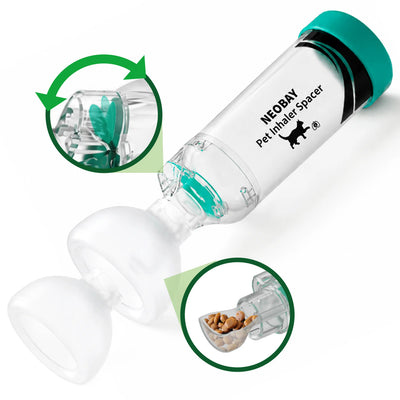
Ein strukturiertes 5-Tage-Starterprotokoll bringt die meisten futtermotivierten Katzen von „Was ist das Ding?" bis zur ersten echten Dosis — aber volle Verlässlichkeit (10 Atemzüge, ohne Gegenwehr, zweimal täglich) dauert typischerweise 2 bis 6 Wochen, basierend auf Reddit-Berichten von Haltern und der phasenweisen Methode von International Cat Care und Veterinary Partner. Der Comfort-Feeder-Aufsatz einer Neobay-Kammer verkürzt Tag 2–3, weil Futter deine Katze dazu einlädt, die Nase selbst in die Maske zu stecken — statt deine Hände. So sehen die ersten 5 Tage wirklich aus — und was du tust, wenn deine Katze wie viele Reddit-Katzen an Tag 3 stockt.
Fragt man auf Reddit „Wie lange hat es gedauert, bis deine Katze den Inhalator akzeptiert hat", schwanken die Antworten stark. Eine Halterin schrieb, ihre Katze habe nach einer Woche die ersten vollen 10 Atemzüge genommen. Eine andere brauchte fünf Wochen, bis ihre Katze die Nase freiwillig länger als eine Sekunde hineinhielt. Eine dritte schrieb „es ist viel schwerer, als die Videos vermuten lassen." Gleiches Gerät, gleiche Diagnose, gleiche YouTube-Tutorials. Der Unterschied ist fast nie die Katze — sondern ob die Halterin einen phasenweisen Plan hatte und die Geduld, dranzubleiben, wenn Tag 3 schiefging.
Warum „5 Tage" das Starterprotokoll ist, nicht die Ziellinie
Die 5-Tage-Zeitachse hier beschreibt das strukturierte Starterprotokoll: Tag 1 Kammer als Leckerli-Spender bis Tag 5 erste echte ausgelöste Dosis. Sie setzt drei Dinge voraus: Deine Katze ist futtermotiviert, wurde nie in eine Maske gezwungen, und du kannst täglich eine 2–5-minütige Session durchziehen. Wenn das passt, bringt dich das Phasenprotokoll der Verhaltensforscherin Sarah Ellis (veröffentlicht von International Cat Care, mitentwickelt mit Trudell Animal Health) zuverlässig bis Tag 5 zur ersten Dosis.
Was länger dauert — manchmal einen Monat oder mehr — ist die Dauerphase: 5–10 Sekunden halten, Toleranz für das Zischgeräusch, 7–10 gleichmäßige Atemzüge. Und Reddit ist voll von Haltern, die genau in dieser Phase feststecken. Sei ehrlich mit dir selbst, bevor du anfängst.
Vor Tag 1: Deine Checkliste

- Behandlungsstation: ein Katzenkörbchen, Stuhl oder eine Matte, nur fürs Training. Jedes Mal derselbe Ort.
- Hochwertiges Leckerli: eine leckbare Paste (Churu, Hartz Lickable), Fleischbabybrei ohne Zwiebel oder Knoblauch oder Thunfischsaft. Trockenleckerli funktionieren nicht.
- Deine Neobay-Kammer mit abgenommener Maske vom Spacer. Comfort-Feeder-Aufsatz bereitlegen, falls im Set enthalten.
- Marker: ein Clicker oder ein konsistentes Wort wie „ja".
- Salzstange oder Leckmatte, um das Leckerli bis in die Maskenöffnung zu verlängern.
Führe den eigentlichen MDI (Inhalator-Dosieraerosol) an Tag 1 noch nicht ein. Der bleibt in der Schublade.
Der 5-Tage-Starterplan
Tag 1 — Kammer = Leckerli-Spender
Lege die Kammerbauteile (Maske + Spacer getrennt) auf die Behandlungsstation. Streue Leckerli darum herum. Nicht bewegen, nicht festhalten. Sobald die Katze innerhalb von etwa 30 cm frisst, markieren und belohnen. 8–10 Wiederholungen. Gesamtdauer: unter 5 Minuten. Wenn deine Kammer einen Comfort Feeder hat, streich jetzt eine dünne Linie Leckerlipaste hinein.
Tag 2 — Maske = etwas, das die Katze selbst wählt
Streiche eine kleine Menge Leckerli auf eine Salzstange und halte sie durch die Maskenöffnung, sodass die Katze lecken kann, ohne das Gesicht hineinzustecken. Über 4–5 Wiederholungen hält die Stange immer tiefer in der Maske, sodass die Katze das Gesicht hineinschieben muss. Beende die Session in dem Moment, in dem die Katze die Nase freiwillig eine volle Sekunde hineinhält. Drücke die Maske niemals zur Katze. Ein erzwungener Kontakt macht einen ganzen Tag zunichte.
Tag 3 — Spacer dazu, auf 5 Sekunden aufbauen
Setze die Maske auf den Spacer. Streiche etwas Leckerli an die Verbindungsstelle. Während die Katze leckt, halte die Maske sanft (nicht drückend) für 1 Sekunde, dann 2, dann 5. Das Medikament bleibt in einer Kammer wie der von Neobay nach dem Auslösen etwa 10–15 Sekunden verfügbar — diese Haltezeit entspricht also direkt einer echten Dosis.
Dies ist der Tag, an dem die meisten Katzen stocken. Der Spacer verändert Gewicht, Geruch und Silhouette des Geräts — für die Katze ist es ein neues Objekt. Wenn deine Katze erstarrt oder sich verweigert, falle für eine Session auf die Tag-2-Mechanik zurück: Behandle den Spacer selbst zuerst als neues Objekt am Boden. Und wenn deine Katze mehr als eine leichte Asthmaform hat, sprich mit deiner Tierärztin oder deinem Tierarzt über eine Prednisolon-Überbrückung, damit du Zeit hast, richtig zu trainieren.
Tag 4 — Zischgeräusch gewöhnen
Betätige den Inhaler hinter deinem Rücken, während die Katze nahe der (nicht aufgesetzten) Maske Leckerli frisst. Verbinde das Zischen mit Futter. Dann betätige ihn in steigender Nähe. Zuletzt betätige ihn in die Kammer, ohne dass die Maske im Gesicht der Katze ist, und belohne sofort. Salbutamol-Notfallsprays klingen meist schärfer als Flixotide — wenn deine Katte geräuschempfindlich ist, frage deine Tierarztpraxis, ob ein „erst sprühen, dann Maske aufsetzen"-Ablauf für dein Medikament vertretbar ist.
Tag 5 — Erste echte Dosis
Baue alles zusammen. Maske sanft aufsetzen. MDI betätigen. Zähle die Atemzüge am visuellen Flussindikator — jede Klappenbewegung ist ein Atemzug. Maske nach 7–10 Atemzügen abnehmen. Belohnen. Gesicht der Katze mit einem feuchten Tuch abwischen. Zieht die Katze bei Atemzug 4 weg, hast du trotzdem einen Teil der Medikation gegeben — nicht nachdosieren. Echte Dosen sind oft leichter als das Training, weil die Katze jetzt riecht, dass die Kammer kein Futter ist.
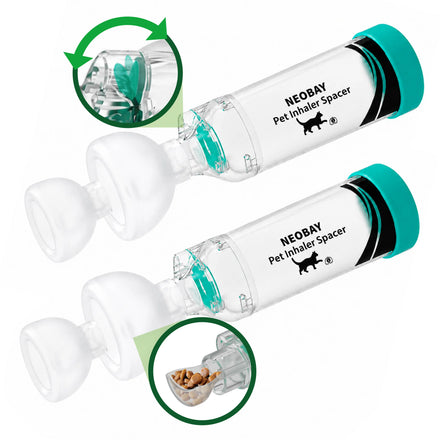
Katzen-Inhalierhilfe mit Aerosolkammer | Neobay
- Zwei Kammern für Mehrkatzenhaushalte oder als Ersatz
- Eine in Gebrauch, während die andere nach der Reinigung trocknet
- Geringerer Preis pro Kammer als zwei Einzelkäufe
Wie es „nach Tag 5" wirklich weitergeht

Das 5-Tage-Starterprotokoll abzuschließen heißt nicht, dass deine Katze zuverlässig ist. Es heißt, du hast den schwersten Teil einmal geschafft. Die meisten Halter brauchen weitere 2–6 Wochen bis zu „zweimal täglich, 7–10 Atemzüge, ohne Theater".
Die Reddit-Nutzerin houshi-2 brauchte zwei Wochen, bis ihre 2-jährige Charlie die Nase eine halbe Sekunde drinhielt. Nach fünf Wochen steckte Charlie die Nase freiwillig hinein, hielt aber noch nicht 10 Atemzüge durch. Die Halterin stieg schließlich auf sanftes Festhalten um — nach sechs weiteren Wochen ging die Katze von „sie bekämpft mich wild" zu „ist nur noch genervt". Eine andere Halterin, Angeljenn8469, nutzte von Tag 1 an Festhalten, weil die Anfälle schwer waren — nach drei Wochen schnurrte die Katze danach. Beide kamen über verschiedene Wege ungefähr an denselben Punkt.
Die ehrliche Version: Manche Katzen schaffen es in einer Woche, die meisten brauchen einen Monat, manche sechs. Das Protokoll ist der Teil, den du steuern kannst. Persönlichkeit und Vorgeschichte deiner Katze nicht — vergleiche deinen Tag 7 also nicht mit dem Tag 7 einer anderen Halterin auf YouTube.
Frage-Antwort — Was, wenn meine Katze so ein „2-Jahre-Ausreißer" von Reddit ist?
Ausreißer haben fast immer eine Vorgeschichte erzwungener Medikamentengabe, Traumata durch Tierarztbesuche oder unbehandelte Schmerzen. Diese Katzen brauchen einen langsameren Neustart: zurück auf Tag-1-Mechanik, eine ganze Woche nur daran, eventuell eine Beratung durch eine Tierärztin für Verhaltensmedizin. Zwei Jahre sind kein Trainingsversagen — sie zeigen, dass die Katze einen anderen Startpunkt gebraucht hätte.
Häufige Fragen
Wie lange dauert es wirklich, eine Katze an den Inhalator zu gewöhnen?
Mit einem strukturierten Phasenprotokoll aus täglichen 2–5-Minuten-Sessions akzeptieren die meisten Katzen innerhalb von 5 bis 7 Tagen die Kammer und nehmen eine erste echte Dosis. Volle Verlässlichkeit — 10 Atemzüge zweimal täglich, ohne Gegenwehr — dauert typischerweise 2 bis 6 Wochen. Katzen mit früheren negativen Erfahrungen brauchen eventuell zuerst 2–4 Wochen Reset-Arbeit.
Was mache ich, wenn meine Katze an Tag 3 stockt?
Falle für eine komplette Session auf die Tag-2-Mechanik zurück: Behandle den Spacer selbst zuerst als brandneues Objekt am Boden und führe dann nur die Maske wieder ein. Setze den Spacer erst wieder auf, wenn deine Katze die Maske von selbst annähert. Nicht drängen — die meisten Tag-3-Blockaden lösen sich in 2–3 Tagen Geduld.
Meine Tierarztpraxis hat kein Prednisolon-Ausschleichen verschrieben — was tun?
Prednisolon überbrückt die Lücke zwischen Diagnose und zuverlässiger Inhalator-Nutzung und verschafft dir 2–6 Wochen Trainingszeit ohne medizinische Notfälle. Wenn deine Katze mehr als eine leichte Asthmaform hat, frage direkt nach, ob ein Ausschleichen sinnvoll ist. Lass dieses Gespräch nicht aus.
Soll ich meine Katze während des Trainings festhalten?
Vermeide Festhalten während des 5-Tage-Starterprotokolls. Manche Halter schwer asthmakranker Katzen nutzen sanftes Umschließen, sobald die grundlegende Maskenakzeptanz steht — eine persönliche Entscheidung, abhängig von medizinischer Dringlichkeit und Wesen deiner Katze.
Brauche ich wirklich zwei Kammern?
Eine reicht für eine Einzelkatze mit einmal täglichem Plan und 24-Stunden-Wasch- und Trockenzyklus. Zwei (ein 2er-Set) helfen bei zweimal täglichem Plan, wenn die Katze noch im Training ist und Sessions über die Waschzyklen hinweg weiterlaufen sollen, oder wenn eine Katze Flixotide und eine andere ein Notfallspray bekommt. Getrennte Kammern verhindern außerdem, sich Medikamentenrückstände mischen.
Wie es weitergeht
- Starte heute mit Tag 1. Fünf Minuten. Leckerli rund um die Kammer, kein Druck.
- Wenn deine Katze einen harten Tag 3 hat, nicht drängen — zurücksetzen und den Troubleshooting-Abschnitt oben nochmal lesen.
Nimmmt deine Katze zuverlässig Dosen, lies unsere Anleitung zum stressfreien Verabreichen von Inhalationsmedikation. Für das ganze Gerätebild lies den Spacer-Guide oder vergleiche Optionen in AeroKat vs. Neobay. Du willst eine Ersatzkammer auf Lager? Sieh dir die Neobay Katzen-Inhalierhilfe mit 2er-Option an. Für den Deutschland-Überblick lies unseren Kaufguide für Katzen-Inhalierhilfen.
Fragen zum Training einer schwierigen Katze? Besuche unsere FAQ-Seite oder schreib uns direkt. Für den ausführlichen Hintergrund zu jedem Schritt lies unsere Schritt-für-Schritt-Anleitung: Katze an die Inhalationsmaske gewöhnen.
Quellen
- Ellis, S. „Training cats for comfort with inhaled therapy." International Cat Care, aktualisiert Sep 2025.
- Koven, P. „Teaching Your Cat To Use an Inhaler." Veterinary Partner (VIN), Jun 2025.
- Trudell Animal Health. „How To Use A Cat Inhaler To Treat Feline Asthma." Aktualisiert Jul 2026.
- r/CatAdvice Community-Thread (houshi-2): „How long did it take to train your cat to accept their inhaler?" Aktualisiert Jun 2026, abgerufen Aug 2026.
- r/cats 16bananas: „My cat has feline asthma. This is my experience training my cat to use a daily inhaler." Mär 2024.
- r/cats vestigialbone: „Tips for AeroKat training?" Feb 2024.