Key Takeaways
- A cat that avoids an inhaler mask is giving feedback: make the next practice step easier instead of holding the mask in place.
- Start with short, medication-free familiarisation sessions. The prescribed inhaler and the dose remain decisions for the veterinarian caring for your cat.
- For Canadian shoppers, product choice and mask practice are separate decisions. Confirm the live CAD price, delivery terms and included parts before ordering a pet-only chamber.
- The goal of early practice is a voluntary approach, not a timed result. Repeat an easy step when your cat looks away, leaves or stops taking the reward.
- If your cat needs urgent clinical help or you are unsure how to follow the prescribed routine, contact the veterinary clinic rather than waiting for a delivery.
If your cat backs away from an inhaler mask, lower the pressure rather than trying to finish the routine faster. Begin with a short, voluntary practice step away from medication, and ask the veterinarian who prescribed the inhaler how to handle the actual routine. For Canadian owners planning a chamber purchase, this guide separates a calm introduction plan from CAD price, delivery and kit questions.
This purchase-and-practice guide covers a pet-only accessory. It does not diagnose breathing concerns, recommend medication, or replace your veterinarian’s instructions.
Why a cat may turn away from the mask
A cat inhaler spacer is a chamber-and-mask accessory used with a compatible inhaler prescribed by a veterinarian. It does not contain medication. But to a cat, the mask can still be a new object with a new shape, smell and position near the face. Turning away is not a sign that the cat is being difficult; it is a reason to make the next interaction smaller and more predictable.
Common signs that a practice step is too difficult include looking away, walking off, flattening the ears, swatting, stopping a favourite treat or becoming tense when the chamber appears. Those signals do not tell you what medication plan is right. They do tell you that the current introduction step is asking for more than the cat is ready to offer voluntarily.
The practical rule is simple: return to the last step your cat can do calmly. That might mean the chamber stays across the room, the mask rests on a blanket, or the reward is offered beside—not through—the mask opening. Short repetitions at that easier step are more useful than a long session that ends in a struggle.
First, separate the veterinary routine from the practice routine
There are two different jobs here.
- The veterinarian-led routine. Your veterinarian determines whether an inhaler is appropriate, which medication is prescribed and how it should be given.
- The familiarisation routine. At home, you can help the cat see the chamber and mask as ordinary, low-pressure objects before asking for more contact.
Keeping these jobs separate makes the early sessions easier to understand. Do not improvise medication practice because a cat is reluctant, and do not assume that a product purchase solves an urgent clinical need. If you need help with the prescribed routine, contact the clinic that knows your cat.
A low-pressure starting sequence
Step 1: Let the chamber exist without asking anything
Place the chamber or its mask at a comfortable distance from the cat during a quiet moment. Offer a small familiar reward somewhere nearby if that fits your veterinarian’s guidance. Do not move the mask toward the cat. The first success can be as small as the cat remaining relaxed in the same room.
Keep this session brief. End it while the cat is still comfortable instead of waiting for hesitation. Repeating a calm 30-second interaction later is usually more constructive than trying to extend the first session.
Step 2: Build a voluntary approach
When the cat can stay relaxed around the object, move the reward a little closer to it over several separate sessions. The cat should be free to step away. Avoid using a hand to guide the cat’s head into the mask or turning the session into a test of how long the cat will tolerate contact.
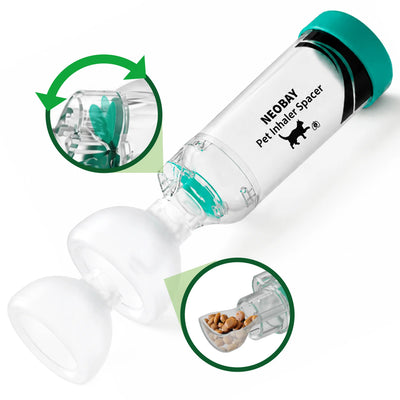
For Neobay Green, the Comfort Feeder is a treat holder designed to support voluntary familiarisation around the mask. It is not a fit guarantee, medication or a substitute for professional instructions. Use only a small reward that is appropriate for your cat, and keep the session about choice rather than restraint.
Step 3: Introduce the mask opening without closing the distance too fast
Once the cat is comfortably approaching, let the cat investigate the mask opening at its own pace. A reward placed at the opening can make the relationship clearer: the cat approaches, receives something familiar and can leave again. If the cat sniffs the edge and walks away, that is still information—not a cue to press the mask onto the face.
The target at this stage is a calm approach, not a sealed mask position or a set number of breaths. Stay at the same step for as many short sessions as the cat needs. A slower start is not wasted time when it reduces the chance that the cat begins avoiding the whole setup.
Step 4: Add only one new thing at a time
When the mask itself has become ordinary, change one variable at a time: hold it closer, briefly touch an area away from the face if the cat accepts it, or bring the assembled chamber into view. Do not combine a new position, a longer duration and a new sound in one session.
If the cat becomes tense, reverse the last change. For example, return to a reward beside the mask for the next session rather than trying again immediately. This gives you a repeatable way to respond without turning reluctance into a confrontation.
What to avoid when a cat is reluctant
- Do not hold the mask on to “get it over with.” Forced contact can make the next voluntary approach harder.
- Do not treat a delivery window as urgent support. Neobay Canada currently shows a planned 5–8 business-day delivery estimate; contact a clinic or appropriate local provider if timing is urgent.
- Do not change medication or dosage to match a training plan. Those choices belong with the prescribing veterinarian.
- Do not add several challenges at once. New object, close contact, sound and duration should be introduced separately.
- Do not read one difficult session as a permanent failure. Go back to an easier, calm step and repeat it later.
Choosing a Canada chamber without confusing the purchase with the training
For a Canadian purchase, compare the accessory listing and the home-practice plan separately. A product page should make it clear that the product is a pet-only chamber, what the kit includes, whether the inhaler is sold separately, the live CAD total and the delivery and returns information.
Neobay Canada lists Blue and Green options with the same core chamber function. The practical choice is colour preference and whether One Pack or Two Pack suits the household. One Pack is a straightforward option for one planned routine. A Two Pack can fit a multi-cat home, a deliberate backup or two locations; it is not a fix for mask reluctance by itself.
For a product comparison and current buying conditions, see the Canada cat inhaler spacer buyer’s guide. It covers the full Canada purchase path, including what to check at checkout. If price is your main question, use the Canada price guide, and treat every retailer number as a dated snapshot rather than a permanent promise.
When to ask for more help
Contact the veterinarian caring for your cat if you are unsure how to follow the prescribed inhaler routine, if your cat’s behaviour changes suddenly, or if you believe your cat needs prompt clinical support. This article cannot determine urgency or tell you whether to delay, change or repeat a prescribed dose.
For ordinary familiarisation setbacks, use an easier step and keep the next practice session brief. The Canada five-day practice guide gives a structured way to plan small daily sessions. Use it as a pacing framework, not as a deadline; your veterinarian’s instructions take priority.
Frequently Asked Questions
What should I do if my cat will not let me put the inhaler mask near its face?
Return to a medication-free, easier practice step. Let the cat see the mask at a distance, offer a familiar reward if appropriate, and stop before the cat becomes distressed. Ask the prescribing veterinarian for guidance on the actual inhaler routine.
Does a cat inhaler spacer include the inhaler or medication?
No. A cat inhaler spacer is a pet-only chamber-and-mask accessory used with a compatible inhaler prescribed by a veterinarian. The prescribed inhaler and medication are separate.
Can a treat help my cat approach the mask?
A small familiar reward can support voluntary familiarisation when it is appropriate for your cat. The aim is to let the cat choose to approach; a treat should not be used to force contact or replace veterinary instructions.
Should I buy Two Pack because my cat is reluctant to use the mask?
Not for reluctance alone. Two Pack can make practical sense for a backup, two locations or a multi-cat household. For mask acceptance, begin with low-pressure familiarisation and ask the veterinarian for routine-specific guidance.
Where can I compare Neobay Canada’s live price and delivery terms?
Use the Neobay Canada product page and checkout for current CAD price, taxes, delivery and returns information. Check the live terms before ordering because they can change.
What to Do Next
- Confirm the prescribed routine with your veterinarian.
- Start with one short, voluntary familiarisation step—without medication—then repeat the easiest calm step later.
- Return to the Canada buyer’s guide to compare the rest of the local purchase path, or visit the Neobay Canada product page when a planned delivery window fits your timing.
For product or order questions, visit our contact page. For questions about your cat’s prescribed inhaler or breathing, speak with your veterinarian.
Sources
- International Cat Care. Inhaler Training.
- Neobay Pet. Canada product page. Check live price, delivery and returns terms before ordering.