

Key Takeaways
- A cough can end in a retch without producing a hairball.
- Night-time coughing is a pattern to describe, not a diagnosis of asthma.
- Smoke, dust and household sprays can irritate airways; finding an exposure does not exclude another illness.
- A normal examination between episodes does not erase a recorded history of recurrent coughing.
- A sleeping breathing count and a cough video provide different information for the veterinary team.
Arrange a veterinary assessment for repeated night-time coughing and review smoke, dust and sprays around your cat’s sleeping area. A usual sleeping range is 15–30 breaths per minute, but an open mouth or increased effort requires emergency care regardless of the count. Neobay recommends equipment checks only as part of a vet-prescribed inhaler plan, not as a diagnosis or a reason to add medicine.
Is that sound a cough, a hairball or something else?
A cough is a forceful expulsion of air from the respiratory tract. A coughing cat may crouch and extend their neck; an episode can end with a retch, which makes it easy to mistake for a hairball. The sound alone is not a reliable diagnosis.
If your cat is otherwise breathing comfortably, record a short video without provoking another episode. Note whether anything was brought up, what your cat was doing beforehand and how quickly they returned to their usual behaviour. Share the clip with the vet rather than trying to decide from a phone speaker.
Repeated coughing deserves an appointment even when your cat eats and plays normally between episodes. Contact the team sooner if the cough worsens or your cat seems unwell. Open-mouth breathing, marked effort or collapse means emergency care; do not keep filming.

What makes a bedroom worth checking?
Start with what happens before bedtime. Litter may be topped up, carpets vacuumed, bedding shaken, candles lit or a room sprayed. Those are useful clues because dust, smoke and aerosols can irritate airways. They are not proof that one item caused the cough.
Keep the check simple. Remove unnecessary fragrance and smoke exposure, choose low-dust unscented litter, and avoid spraying cleaners around the cat. Use suitable cleaning products as directed and let surfaces dry before the cat returns. Do not add essential-oil diffusers as a respiratory remedy.
Wash bedding according to its care instructions and keep the sleeping area comfortable. If you vacuum or shake dusty fabrics, let the cat rest elsewhere until the disturbance has settled. A freshly cleaned room is not automatically an airway-friendly room if it smells strongly of spray.
Should I buy an air purifier before seeing a vet?
A purifier cannot diagnose or treat the cause of coughing. Reducing avoidable irritants is sensible, but persistent symptoms still need assessment. If you consider a unit, avoid ozone-producing products and discuss the wider home environment with your vet rather than relying on a purchase to solve the cough.
Record changes one at a time when practical. “Cough stopped after three things changed” cannot tell you which mattered. And even an improvement after removing fragrance does not rule out an underlying condition.
Why doesn't coughing only at night establish asthma?
Feline asthma is inflammation and narrowing of the lower airways. It can cause intermittent cough and breathing difficulty. Bronchitis, infections, parasites and other problems can also produce cough, so the timing must be interpreted alongside the rest of the history.
A night-time pattern might reflect where your cat spends time or when you can hear them clearly. It does not prove a nightly cortisol change, a particular allergy or a predictable asthma schedule. Avoid drawing a treatment conclusion from the clock alone.
A normal chest examination during a quiet visit does not mean the video is irrelevant. Bring the episode log and ask what the vet needs to investigate. Imaging may help, but chest X-rays alone do not definitively diagnose asthma; the overall assessment and, where appropriate, additional tests matter.
Tell the team about outdoor access, parasite prevention, smoking, building work and any new products. Those details help them choose the next steps. An honest record with a few gaps is better than a confident diagnosis made from one online checklist.
What if my cat already has an inhaled prescription?
Continue the prescribed plan and contact the vet about repeated coughing, worsening symptoms or difficulty giving the medicine. Check what has actually changed: a new canister, missed sessions, a cracked chamber, altered mask positioning or a different caregiver.
Ask the clinic to observe your technique or review a calm demonstration video. They may want to reassess the cat as well as the equipment. Persistent cough is not automatically poor delivery, and a visibly moving indicator does not guarantee the prescribed amount reached the lungs.
A spacer chamber is a non-medicated accessory used with a vet-prescribed metered-dose inhaler (MDI). The prescription provides the medicine; the chamber holds the aerosol while the cat breathes through its mask. It does not supply oxygen, establish a diagnosis or replace emergency care.
For a stable, diagnosed cat, a Neobay chamber can support the vet-demonstrated routine. A Visual Flow Indicator is an airflow cue, not proof of full medication delivery. Comfort Feeder uses food guidance for mask approach; acceptance varies. Practise during calm periods.
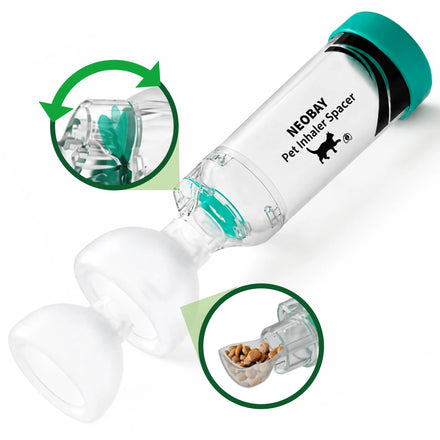
Cat Inhaler Spacer in UK | Neobay Aerosol Chamber
- See each breath with the Breath Indicator
- Built-in treat holder makes mask practice easier
- Anti-static chamber helps keep medication airborne
Do not independently add a bronchodilator, change the schedule or stop the regular medicine because your cat has a quieter night. A prescription change should follow veterinary advice. If the written rescue plan is unclear, clarify it while your cat is stable instead of improvising during a crisis.
Which observations help the appointment?
Keep a brief night log: time, room, activity before the cough, any nearby spray or smoke, duration as observed, and behaviour afterwards. Include appetite and activity changes. Distinguish a cough you heard from one you saw.
Add sleeping-rate observations only when your cat is comfortable and not purring. VCA describes 15–30 breaths per minute as a usual range. Repeated counts above 30 or a clear rise from baseline need advice; a sleeping count around 40 warrants urgent advice. Any breathing effort or open mouth takes priority over counting.
Bring the log, video and medicine labels. Ask which changes can be monitored, what would justify a recheck and which signs require the out-of-hours hospital. The aim is an action plan that another person in the house could follow at midnight.

Making a practical plan in the UK
PDSA advises immediate veterinary contact for a cat struggling to breathe, panting or breathing with an open mouth. Its asthma advice explains why ongoing cough and breathing changes need assessment rather than a home diagnosis. For number-based home monitoring, the VCA guidance below provides a separate reference; it is not a UK emergency-service rule.
Save the out-of-hours number from your usual practice. The receiving hospital may be elsewhere, and it helps to know the route before a stressful night. Phone while arranging transport so the team knows a cat with a breathing problem is coming. Don't delay the journey to find a perfect video or a second reading.
Some UK owners call an inhaler a pump. If your vet discusses Flixotide or salbutamol, ask them to identify which is the regular medicine and what the written rescue plan says. A pharmacy brand name does not tell you the right dose for a cat. Keep the prescription, chamber instructions and emergency number together so another household member can follow the same plan.
Frequently Asked Questions
Is a cat coughing only at night definitely asthmatic?
No. Night-time coughing can occur with asthma, but other respiratory conditions can look similar. Where the cat sleeps, nearby irritants and when you are awake to notice the cough also affect the pattern. A vet needs the history and examination to decide what to investigate.
Should I wait until my cat coughs during the day?
No. A recurring night-time cough is enough reason to arrange veterinary assessment, even if daytime behaviour looks normal. Seek emergency care if coughing is accompanied by an open mouth, breathing effort, collapse or abnormal gum colour.
Can changing litter fix the cough?
Low-dust unscented litter can reduce an avoidable irritant, but it does not establish or cure the cause of coughing. Tell your vet if symptoms change after switching. Continued or worsening cough still needs assessment rather than repeated product changes.
My cat’s lungs sounded normal. Does the video still matter?
Yes. Signs can be intermittent, and the video provides information from outside the consultation room. Share it with an episode log and ask what follow-up is appropriate. Normal sounds at one visit do not make recurring cough irrelevant.
Should I give extra inhaler medicine after a noisy night?
Do not add doses or change the schedule without veterinary instructions. Contact the clinic about persistent symptoms and ask for a technique and treatment review. If your cat is struggling to breathe, seek urgent care instead of experimenting with the inhaler.
Do I wait until my UK practice opens in the morning?
Do not wait overnight if your cat is struggling, panting or breathing with an open mouth. Use your practice’s out-of-hours arrangement and tell the receiving team what you see. A comfortable cat with recurring cough or raised sleeping counts still needs prompt advice about the next appointment.
What to Do Next
If your cat is distressed, call the emergency team now. If comfortable, share the observations with your regular vet and ask for an individual monitoring and follow-up plan.
- Cat Sleeping Respiratory Rate: A Vet Benchmark for the UK
- Open-Mouth Breathing in Cats: Emergency Steps in the UK
For a stable cat with a prescribed inhaler, our the UK cat inhaler spacer buyer’s guide explains equipment choices. See the Neobay non-medicated spacer and discuss suitability with your vet.
For equipment questions, contact Neobay; diagnosis, prescriptions and emergencies belong with your veterinary team.
Sources
- PDSA. Breathing problems in cats. Accessed 12 October 2026.
- PDSA. Cat Asthma. Accessed 12 October 2026.
- Cornell Feline Health Center. Feline Asthma: What You Need To Know. Accessed 12 October 2026.
- VCA Canada Animal Hospitals. Home Breathing Rate Evaluation. Accessed 12 October 2026.
