

Key Takeaways
- Vape aerosol is not just water vapour. Its ingredients vary, and nicotine liquid is a particular poisoning risk if a cat licks a spill or chews a pod.
- Direct research on cats breathing secondhand vape aerosol remains limited. That uncertainty is a reason to prevent exposure, not proof that indoor vaping is safe.
- If your cat may have swallowed e-liquid, contact your vet or an emergency veterinary practice immediately. Do not wait for symptoms.
If you vape at home, the simplest way to protect your cat is to vape outside and keep devices, pods and refills out of reach. Neobay Pet recommends treating a spill or chewed device as a potential poisoning emergency; a chamber for prescribed inhaled medicine cannot protect a cat from household aerosol.

Exposure is not the same as poisoning
Briefly smelling aerosol, regularly sharing indoor air with someone who vapes, and licking concentrated e-liquid are different exposure scenarios. They should not be treated as interchangeable. A single cough cannot identify its cause. Your vet may need to consider infection, asthma, heart disease or other problems. A history of vaping is useful context, not a diagnosis.
If someone in the household is trying to stop smoking, moving vaping outdoors still reduces the cat's contact with aerosol. Air purifiers and open windows may lower some particles but cannot make a nicotine spill harmless or prove indoor air is safe. Keep the same no-vaping rule even if the liquid is labelled nicotine-free.
What can reach your cat?
An e-cigarette produces an aerosol, not plain steam. Depending on the product, it can contain nicotine, fine particles, propylene glycol, glycerol, flavouring chemicals and metals. The amount a cat absorbs from room air is difficult to predict. A cat can also encounter residue on surfaces or fur while grooming, although cat-specific measurements of this pathway for vape aerosol are limited.
The clearest documented immediate hazard is concentrated e-liquid. A leaking refill, discarded pod or damaged disposable device can expose a cat to nicotine. Batteries and broken parts add physical hazards if chewed or swallowed.
What the evidence does and does not show
A 2026 scoping review found a substantial body of research on secondhand tobacco smoke in pets but no eligible study directly measuring health outcomes from secondhand e-cigarette aerosol in dogs or cats. That gap means we cannot assign a precise asthma, cancer or anaemia risk to a cat from ordinary indoor vaping. It also cannot establish a safe exposure level.
High dietary intake of propylene glycol has caused Heinz body changes in cats. This finding does not show that the much smaller, uncertain amount inhaled from a room causes the same effect. It is sensible to minimise exposure without claiming a diagnosis from the aerosol alone.
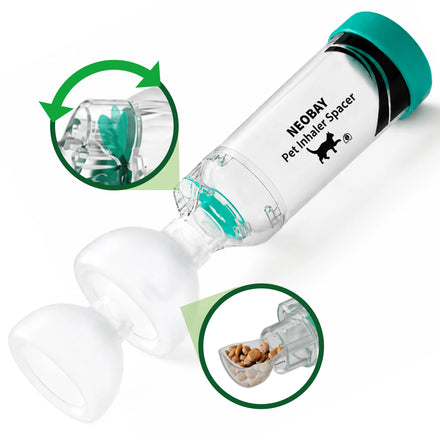
Cat Inhaler Spacer in UK | Neobay Aerosol Chamber
- See each breath with the Breath Indicator
- Built-in treat holder makes mask practice easier
- Anti-static chamber helps keep medication airborne
Signs that need prompt veterinary advice
After a possible e-liquid ingestion, signs can begin quickly: drooling, vomiting, agitation, unsteady walking, tremors, seizures or changes in breathing and heart rate. Call your own vet or an emergency veterinary practice immediately, even if your cat appears well. Keep the product packaging so the team can identify its ingredients and nicotine strength. Do not induce vomiting unless a vet instructs you to.
For coughing, wheezing or repeated breathing changes without a known spill, arrange a veterinary assessment and mention indoor vaping. Open-mouth breathing, collapse or marked breathing effort requires an emergency vet now.
How to reduce exposure at home
- Vape outdoors, away from open doors, windows and your cat.
- Store refills, pods and disposables in a closed cabinet; clean spills before your cat can reach them.
- Wash your hands after handling e-liquid and wipe the surfaces where your cat rests.
- Tell your vet about vaping if your cat has respiratory signs. Follow the vet's treatment plan for any diagnosed condition.
Frequently Asked Questions
Is nicotine-free vape liquid safe around cats?
It removes the nicotine component only if the label is accurate. Other ingredients and particles remain, and cat-specific inhalation studies are sparse. Keep vaping outside.
Can I vape in a different room?
A closed door may reduce exposure, but it does not establish a safe level. Outdoor vaping is the more reliable household rule.
Should I use my cat's inhaler after vape exposure?
Use only medication and doses prescribed by your vet. An inhaler spacer is for delivering prescribed medicine; it is not a treatment for nicotine poisoning.
What if my cat has been near vaping for months?
Arrange a vet visit if your cat coughs, wheezes, tires unusually easily or has changed appetite. Your vet can decide which examination or tests are appropriate. There is no single blood test that proves past exposure to vape aerosol caused a problem.
Should I wash my cat after aerosol exposure?
Do not bathe a stressed or breathless cat without veterinary advice. Move the cat to clean air, remove access to the product and ask a vet what to do if liquid touched the coat or skin.
What to Do Next
If your cat is coughing or wheezing, read our feline asthma guide and arrange a veterinary assessment. If your vet prescribes a metered-dose inhaler, our UK cat inhaler spacer guide explains how a non-medicated chamber fits into the treatment routine.
