Key Takeaways
- Canada uses the Air Quality Health Index (AQHI), a 1-to-10+ scale in four bands: Low (1-3), Moderate (4-6), High (7-10), Very High (10+). It is not the US 0-500 AQI.
- AQHI 4 is the action threshold for a cat with asthma, at the floor of Canada's Moderate risk band.
- During a smoke event, Environment and Climate Change Canada recalculates the AQHI from PM2.5 alone, hourly, so a reading can jump from Low to High in one afternoon.
- Canada's 2023 wildfire season burned more than 14.6 million hectares across over 6,800 fires and led to more than 230,000 evacuations.
- Canada's rescue bronchodilator is salbutamol (Ventolin); the daily inhaled controller is fluticasone propionate (Flovent).
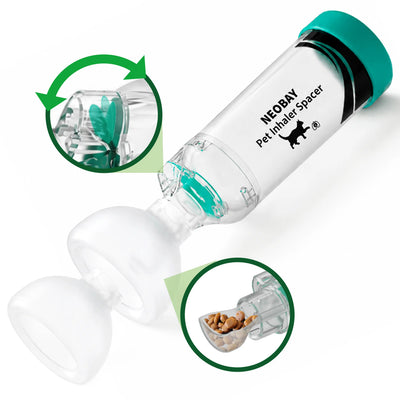
Wildfire smoke can tip a cat with asthma into trouble at AQHI 4, a number few Canadian owners are told to watch. At that reading, close windows and doors, run a certified portable air cleaner, and have a Neobay aerosol chamber pre-loaded with salbutamol within reach. Call your vet the moment your cat's resting breathing rate climbs or open-mouth breathing appears.
Health Canada notes smoke can travel thousands of kilometres from the fire zone, so air far from the fire can be as bad as beside it. Cats breathe the same fine particles, through smaller airways.
Why Wildfire Smoke Hits Cats With Asthma Harder
Wildfire smoke — a mixture of fine particulate matter (PM2.5), carbon monoxide, nitrogen dioxide, ozone, and volatile organic compounds released by burning vegetation, which can drift thousands of kilometres downwind.
Feline asthma — a chronic inflammatory disease of the small airways in which the bronchi narrow in response to triggers, managed with a daily inhaled corticosteroid and a rescue bronchodilator given through a spacer chamber.
PM2.5 particles bypass a cat's nasal filtration and settle deep in the bronchi, where asthma inflammation already lives. A cat stable on a daily controller for months can start coughing within hours of the first smoke plume.
Health Canada flags people with existing lung or heart conditions as higher risk, along with those 65 and older, infants, and pregnant people. A cat with asthma is the veterinary equivalent. The BC SPCA adds a route that does not apply to dogs: cats swallow the particles that settle on their coat when they groom.
The Canadian AQHI: What the Numbers Mean for a Cat With Asthma
AQHI — the Air Quality Health Index, Environment and Climate Change Canada's 1-to-10+ scale for short-term air quality risk, in use since June 24, 2007, and not comparable to the 0-500 AQI scale.
The index blends ground-level ozone, fine particulate matter, and nitrogen dioxide. During a smoke event, ECCC switches the formula and calculates it from PM2.5 alone, hourly, so the number tracks the smoke rather than a daily average.
| AQHI | Risk Category | What It Means for a Cat With Asthma |
|---|---|---|
| 1-3 | Low risk | Normal routine. Catio and balcony time can continue. |
| 4-6 | Moderate risk | Act on the first Moderate reading. End outdoor access, close windows and doors, start the air cleaner. |
| 7-10 | High risk | Keep your cat indoors. Move food, water, and litter into the filtered room, and watch for coughing. |
| 10+ | Very high risk | Smoke emergency. Confine your cat to the filtered room and keep a loaded chamber within reach. |
AQHI 4 is the number to write on the fridge. It is where Canada's Moderate band begins and where official guidance asks sensitive groups to change their behaviour, so for an asthmatic cat it is the day the catio closes. Québec publishes Info-Smog instead of the AQHI, so a Montreal reading will not match the federal page.
My condo's hallway vents pull outside air into my unit. Am I still exposed at AQHI 4?
Yes. Health Canada notes indoor pollutant levels are often lower than outdoors during smoke, but can still be elevated. Keep windows and doors closed, limit exhaust fans, and run a certified air cleaner where your cat sleeps.
Build a Cleaner Air Room

Health Canada's indoor list is short: closed windows and doors, the best filter your ventilation can handle, a certified portable air cleaner that filters fine particles, and regular filter changes. Concentrate that equipment in one room.
Three rules:
- HEPA filtration running around the clock. The BC SPCA names a HEPA purifier as the standard measure for pets.
- No indoor pollution sources. No candles, incense, frying or broiling, smoking or vaping, and skip vacuuming because it lifts settled particles.
- Windows and doors closed, with a towel along the gap if the room opens onto a shared hallway.
Put water, food, and the litter box inside. Health Canada notes one conflict: when extreme heat and poor air quality overlap, keeping cool beats keeping the windows shut.
The federal AQHI says Moderate, but my city's page says something different. Which do I follow?
Follow the reading for your community and the alerts issued for it, because the AQHI is a local monitoring average that can differ from one station to the next. ECCC publishes community values and alerts through weather.gc.ca and the WeatherCAN app.
Rescue Medication in Canada: Salbutamol and Your Spacer
Rescue bronchodilator — a fast-acting inhaled medication that relaxes tightened airway muscles during an active asthma flare; in Canada the drug is salbutamol, sold as Ventolin.
The naming matters when you refill here. Health Canada's Drug Product Database lists Ventolin Inhaler 100 mcg (Glaxo Canada) as containing SALBUTAMOL, and lists Flovent Inhalers and Flovent Diskus as fluticasone propionate, so Canada keeps the Flovent brand.
Your smoke-event protocol:
- Watch for early signs: coughing, wheezing, a resting breathing rate above your cat's normal, or the BC SPCA's flags of less activity, lost interest in food, or more hiding.
- Give one puff through the chamber, following the breath count your vet prescribed.
- Repeat once if symptoms have not eased, then call your vet.
- Never change the dose of a daily controller such as Flovent yourself, and never adjust a prescription without veterinary guidance.
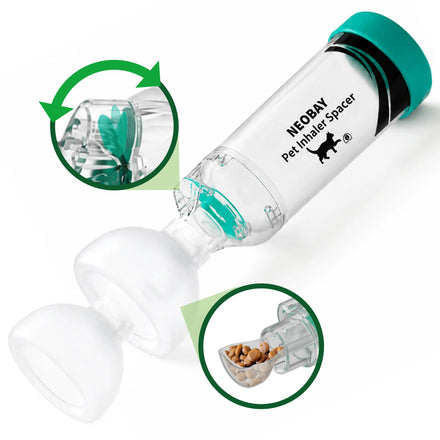
Cat Inhaler Spacer in Canada | Neobay Aerosol Chamber
- See each breath with the Breath Indicator
- Built-in treat holder makes mask practice easier
- Anti-static chamber helps keep medication airborne
Keep the chamber loaded and within reach, and keep a second in your evacuation bag. Our walkthrough on giving inhaled medication without a struggle covers handling, and what a cat inhaler spacer actually is explains how the chamber, mask, and flow indicator work.
When to Call the Vet

Health Canada lists wheezing, chest pain, a severe cough, shortness of breath, dizziness, and heart palpitations as symptoms needing medical attention. The BC SPCA's cat list covers behaviour: less activity, lost interest in food, more hiding, and breathing faster or with more effort.
For a cat with asthma, any of these is a same-day call:
- Open-mouth breathing at rest, always an emergency in cats
- Breathing visibly faster or harder than your cat's normal resting pattern
- A cough that does not ease after one rescue dose of salbutamol
- Wheezing you can hear without a stethoscope
- Gums or tongue that look blue or grey
- Lethargy, stumbling, or disorientation
- Refusing food or water
To measure at home, count chest rises for 15 seconds while your cat sleeps, then multiply by 4. Our guide to why a cat wheezes covers other causes worth ruling out, and our guide to how vets diagnose feline asthma explains what happens at the appointment.
Frequently Asked Questions
What AQHI level means I should keep my cat with asthma indoors?
Bring your cat inside at AQHI 4, the start of Canada's Moderate band, and keep them in until the reading returns to Low (1-3). Canadian guidance already asks at-risk people to cut strenuous outdoor activity at Moderate, and a cat with asthma sits in that sensitive group.
Can wildfire smoke trigger a flare in a cat that has been stable for months?
Yes. Smoke particles reach the lower airways and set off inflammation even when a daily controller has been keeping symptoms quiet. Have the salbutamol inhaler and spacer chamber ready before the smoke arrives.
Is an air conditioner enough, or do I need a HEPA purifier?
An air conditioner on recirculate cuts how much outdoor air gets in, but does not filter fine particles. Health Canada calls for a certified portable air cleaner plus regular filter changes.
Does the AQHI work the same everywhere in Canada?
No. Every province and territory publishes the AQHI except Québec, which uses Info-Smog instead. Follow Info-Smog and your regional air quality alerts.
Should I raise my cat's Flovent dose when the AQHI hits High?
Do not change a controller dose without your vet's instruction. Flovent is a daily controller, not a rescue medication, so increasing it is not the response to an acute flare. Use the prescribed salbutamol inhaler and call your vet if symptoms continue.
What to Do Next
- Install the WeatherCAN app or bookmark weather.gc.ca and turn on AQHI notifications, so you hear about a Moderate reading before smoke reaches your street.
- Set up a cleaner air room with a certified portable air cleaner, and move your cat's food, water, and litter box inside.
- Check the expiry date on your cat's salbutamol inhaler and confirm your spacer chamber is assembled and in the house.
If your cat has no spacer chamber yet, the Canadian cat inhaler spacer buyer's guide walks through what to look for, and the Neobay inhaler spacer for Canada ships with the chamber, mask, and flow indicator you need. For the wider picture, see our complete owner's guide to feline asthma and our list of common asthma triggers.
Have questions? Visit our FAQ page or contact us directly.
Sources:
- Health Canada. "Wildfire smoke and your health," May 2024. canada.ca
- Environment and Climate Change Canada. "About the Air Quality Health Index." canada.ca
- Environment and Climate Change Canada. "Wildfire smoke, air quality and your health." canada.ca
- Natural Resources Canada. "Forest fires." natural-resources.canada.ca
- Health Canada. "Drug Product Database." health-products.canada.ca
- BC SPCA. "Helping your pets in an air quality advisory," August 7, 2026. spca.bc.ca
- Environment and Climate Change Canada. "Air Quality Health Index," weather.gc.ca. weather.gc.ca